




Bottom line: Lab-grown diamonds can be insured like mined diamonds. Keep the sales receipt, grading report, clear photographs and any appraisal; then compare whether a homeowners rider or specialist jewelry policy covers loss, theft, damage and mysterious disappearance.
A grading report, an appraisal and an insurance policy do different jobs. The grading report describes the diamond, the appraisal estimates a replacement value, and the policy states which losses the insurer will cover.
| Document | What it does | What it does not do |
|---|---|---|
| Sales receipt | Records what you bought and paid | Describe every grading characteristic |
| Diamond grading report | Identifies the stone and records the 4Cs, measurements and other characteristics | Set a retail or insurance value |
| Appraisal | Describes the finished jewelry and estimates replacement value for a stated purpose and date | Guarantee what an insurer will pay |
| Insurance policy | Defines covered events, limits, deductibles and claim settlement | Replace missing documentation automatically |
Lab-grown diamond grading reports and insurance
“Diamond certification” is common shorthand, but independent laboratories issue grading reports rather than guaranteeing a diamond’s value. GIA, IGI and GCAL are among the established laboratories you may encounter.
A report can help identify the stone through its measurements, grading details and report number. It also gives an appraiser and insurer a clearer basis for finding a comparable replacement. Keep the complete PDF or paper report, not only a retailer’s product-page summary.
Compare the report number with any girdle inscription and the seller’s invoice when the jewelry arrives. Also check that the stated shape, carat weight and measurements match the purchase. This simple record check is more useful than treating the report as a guarantee of price or future value.
Read our guide to lab-grown diamond grading reports.
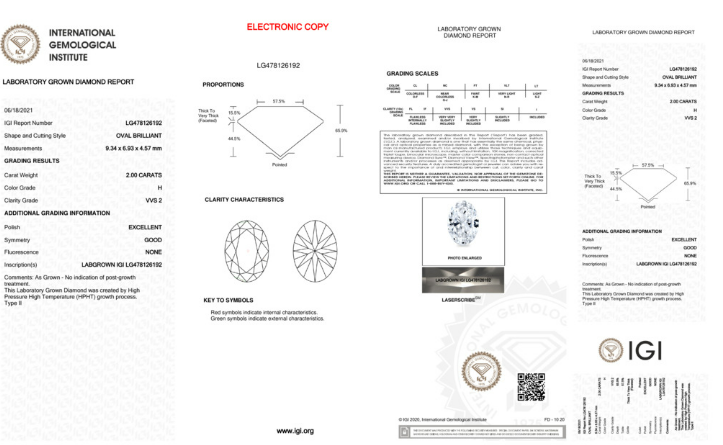
Example IGI lab-grown diamond grading report
How to get an appraisal for lab-grown diamond jewelry
Ask the insurer what documentation it requires before paying for an appraisal. A detailed receipt may be sufficient for some purchases, while higher-value or custom jewelry may require a formal appraisal.
Choose an independent appraiser with recognized gemological training, professional appraisal credentials and experience valuing lab-grown diamonds. GIA and IGI grade diamonds; they are not recommendations for a local insurance appraiser.
A useful appraisal should identify the diamond and setting, describe condition and construction, state the valuation purpose and effective date, explain the market used, and estimate a realistic replacement cost. The appraiser should inspect the piece under magnification, record measurements and compare current replacement options.
An insurance appraisal is different from a resale valuation. Its purpose is normally to estimate what it would cost to replace the jewelry through the relevant market, including the setting, labor, taxes and a comparable diamond. It should not imply that you could sell the ring for the appraised figure.
Bring:
- The jewelry
- Sales receipt and order details
- Diamond grading report
- Any warranty or service-plan documents
- Clear photographs and prior appraisals, if available
Lab-grown diamond prices can change quickly. An inflated appraisal can lead to unnecessarily high premiums without guaranteeing a larger claim payment. Ask how the replacement value was calculated and update it when the market, setting value or policy requirements materially change.
How to choose lab-grown diamond jewelry insurance
You can often schedule jewelry on a homeowners or renters policy, or buy a specialist standalone jewelry policy. Compare the coverage rather than choosing on premium alone.
Homeowners rider or specialist policy?
A scheduled rider may be convenient because it sits alongside your existing home or renters insurance. Check whether making a jewelry claim could affect the wider policy and whether the coverage follows the ring outside the home.
A specialist policy may offer broader jewelry-specific claims handling, repair options and worldwide protection. The better choice depends on the wording, deductible, settlement method and price—not the policy label.
Ask each insurer:
- Does it cover theft, accidental damage, loss and mysterious disappearance?
- Is coverage worldwide, including travel?
- Is there a deductible?
- Will the claim be settled by repair, replacement or cash?
- Can you choose the jeweler or replacement diamond?
- How is a comparable lab-grown diamond defined?
- Are newly acquired pieces covered temporarily?
- How often must the appraisal or value be updated?
- Are preventive repairs or damaged prongs covered?
A jeweler’s warranty and shipping insurance are not substitutes for ongoing jewelry insurance. Warranties normally address specified workmanship problems; shipping coverage normally ends after delivery.
Replacement terms matter for lab-grown diamonds
Lab-grown diamond prices have fallen substantially, while gold, platinum and skilled setting work still carry meaningful costs. A good policy should explain how it selects a comparable replacement at the time of loss. Check whether you may use your preferred jeweler and what happens if the exact design or grading combination is unavailable.
If the policy pays replacement cost, the appraisal figure is usually a coverage limit rather than an automatic cash payout. If it pays cash value, ask how depreciation and current market prices are calculated.
Documentation and appraisal updates
Store digital copies of the receipt, report, appraisal and photographs somewhere separate from the jewelry. Photograph the full piece, hallmark, setting and any report-number inscription that can be captured clearly.
Review coverage after resizing, resetting the diamond, adding stones or making another material alteration. Otherwise, follow the insurer’s update requirements and reconsider the insured value when current replacement prices have changed substantially.
Lab-grown diamond insurance FAQs
Can lab-grown diamonds be insured?
Yes. Insurers can cover lab-grown diamond jewelry in much the same way as mined-diamond jewelry. Eligibility and required documents depend on the insurer and value of the piece.
Does a diamond grading report show its value?
No. A grading report describes quality characteristics and identifies the diamond. A receipt or appraisal supplies price or replacement-value information.
Do I need an appraisal to insure a lab-grown diamond ring?
Not always. Some insurers accept a detailed receipt for lower-value or recent purchases, while others require an appraisal above a threshold. Ask before commissioning one.
How often should I update the appraisal?
Follow your insurer’s rules and update after a material change to the jewelry. Because lab-grown diamond and precious-metal prices can move in different directions, check that the stated replacement value still reflects the cost of replacing the entire piece.
Final insurance checklist
- Keep the receipt and independent grading report.
- Ask the insurer whether it needs an appraisal.
- Compare covered events, exclusions, deductible and claim settlement.
- Store documents and photographs away from the jewelry.
- Review the replacement value after material changes or when the insurer requires it.
Questions and experiences
Join the discussion
Ask a question or share your experience. We review comments before publishing them.