




Our QVC lab-grown diamonds review
QVC is a legitimate retailer, and its lab-grown diamond jewelry can appeal if you enjoy seeing a piece demonstrated before buying. But it is not our first choice for a diamond purchase. The finished-jewelry selection gives you less control over the stones than a specialist jeweler, and the information in a product presentation is not always enough for a useful quality comparison.
We rate QVC 2.3/5. We would consider a particular design at a competitive price, but compare its specifications and return costs before ordering.
Who is QVC?
QVC is known for television and online shopping across many categories. Jewelry is part of that wider business. Its Fire Light range specializes in lab-grown diamond jewelry, while other brands also appear in the diamond catalog.

QVC remains in business. Its parent company completed its financial restructuring in August 2026, and the lab-grown jewelry catalog and Fire Light programming remain active. The restructuring should not be confused with a retailer closing down.
Does QVC sell diamonds?
Yes. QVC sells diamond jewelry, including lab-grown pieces. Read the material description carefully: its wider jewelry range also includes simulants such as Diamonique, which are not diamonds.
Are QVC's lab-grown diamonds real?
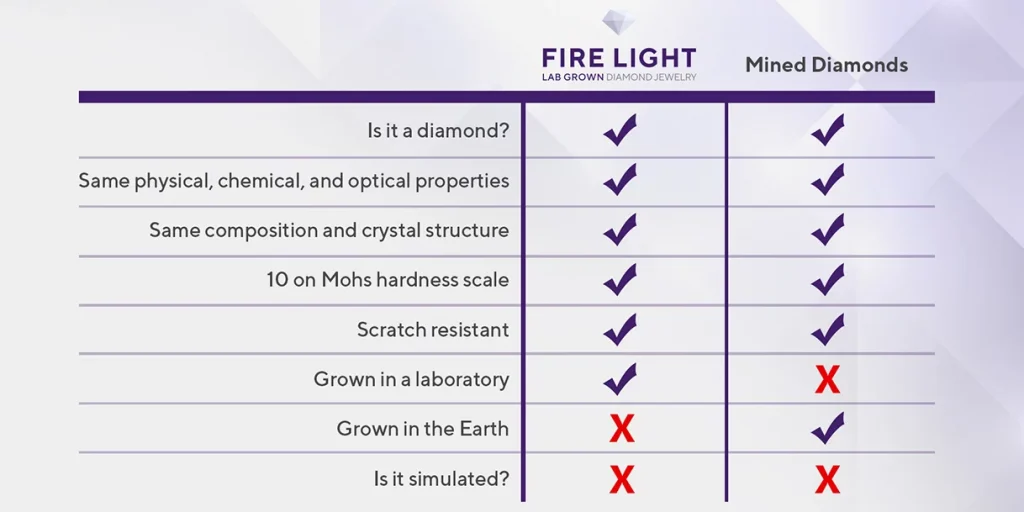
Yes. A lab-grown diamond is a real diamond, not cubic zirconia or moissanite. That does not mean every piece offers the same quality or value. The stone's cut, size, grades and setting still matter.
Is QVC a good place to buy diamond jewelry?
It can suit someone who likes a particular finished design and QVC's shopping format. We generally prefer specialist jewelers for a larger diamond purchase because they make it easier to compare individual stones, grading reports and prices.
QVC's diamond inventory
Lab-grown diamonds at QVC
The current lab-grown diamond catalog includes finished rings, earrings, necklaces and bracelets. Our review focused on Fire Light, so that collection supplies many of the examples below.
Can you choose a loose diamond?
QVC's main appeal is the completed piece rather than a loose-diamond search. You choose a jewelry design and its available options. You do not get the same stone-by-stone comparison process that we use at Ritani or other specialist sellers.
That is convenient for a small gift. For a large center diamond, we would rather choose the exact stone and inspect its report before selecting a setting.
Jewelry designs and presentations
We found both familiar styles and more decorative pieces. Some are simple enough for everyday wear; others place more emphasis on the setting and a cluster of smaller diamonds.
The designs we compared included solitaire and halo studs, eternity rings and tennis bracelets. Round diamonds made up much of the selection, alongside emerald and oval shapes and a smaller choice of pears and hearts. The range covered familiar gifts well, but we found more design choice at the specialist jewelers we recommend.
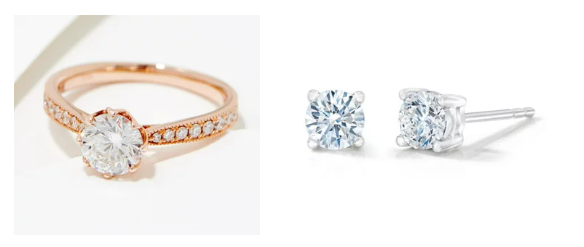
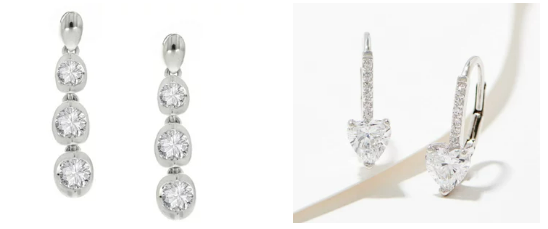
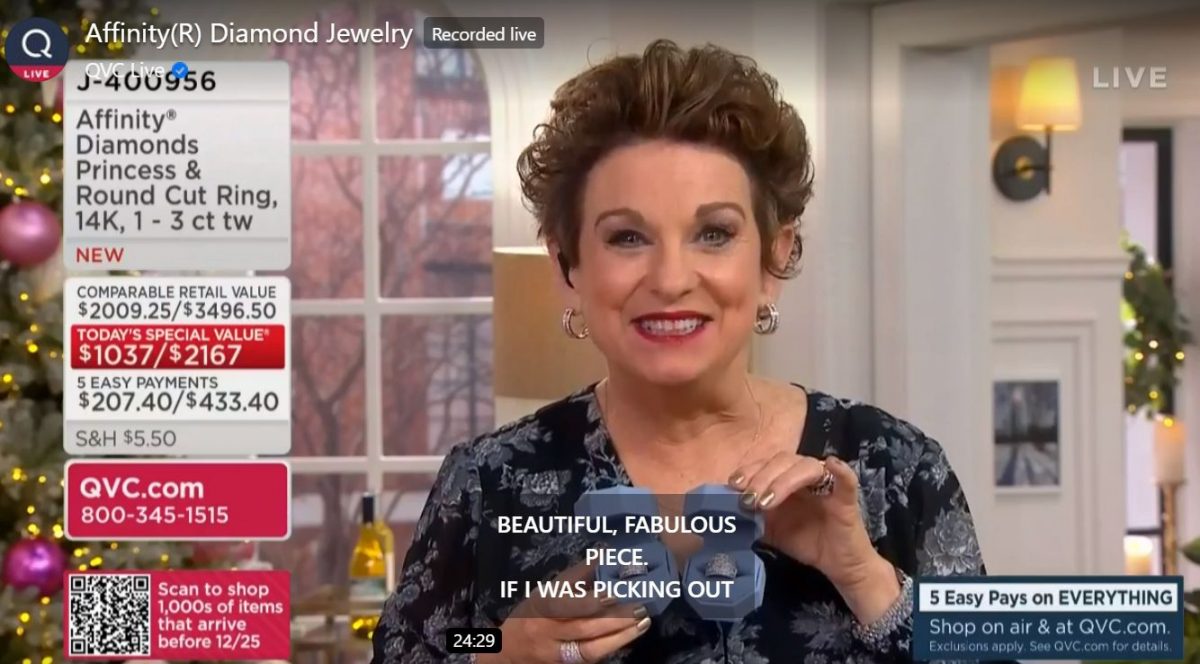
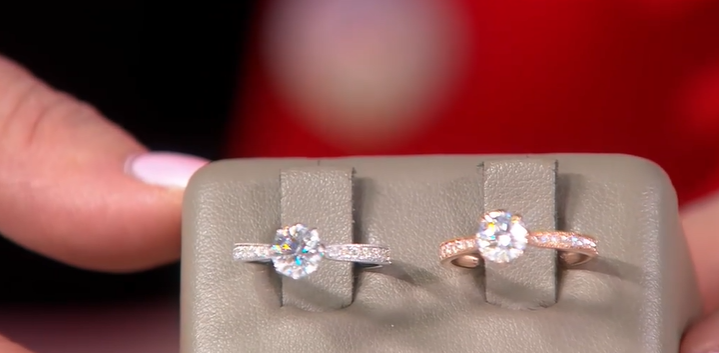
The video presentations are useful for seeing scale and movement. Look at how high a ring sits, the length of a pendant and the size of earrings on a person. Those details can be more helpful than a heavily enlarged product photograph.
Diamond quality at QVC
The quality information varies by piece. A minimum clarity grade and a broad color description give you a starting point, but they do not answer every question about a larger diamond.
Cut quality and sparkle
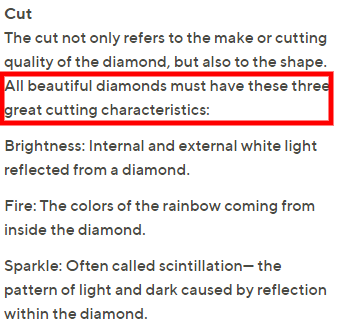
Cut is especially important because it affects how a diamond handles light. “Round” describes the shape, not the quality of the cut. Equally, a missing cut grade is not proof that a diamond is poorly cut.
For a substantial center stone, ask for the individual report and clear views of the actual diamond. For tiny accent stones, separate reports are less practical; the finished piece's appearance and construction matter more.
What is the Brilliant Rose cut?
Our 2023 QVC research included a Fire Light design marketed as Brilliant Rose. Its illustration showed an 80-facet arrangement beside a conventional round brilliant.
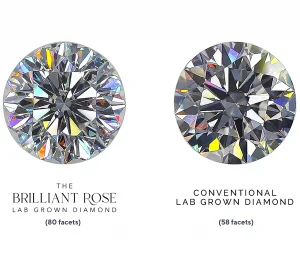
This is not a reason to confuse it with a traditional rose-cut diamond, which has a different structure and appearance. The name alone does not tell you how well the stone performs.
Are more facets automatically better?
No. More facets can change the pattern of reflections, but the number is not a quality grade. We would judge the diamond's brightness, contrast and appearance, not buy it simply because the presentation promises extra sparkle.
Our preference is for a well-cut diamond that looks good to the buyer. A proprietary cut can be a matter of taste; it is not, by itself, evidence of either superior quality or a scam.
The Brilliant Rose examples in the presentations we watched did not give us the lively brightness we wanted. We preferred a well-cut round brilliant and would not pay extra for the facet count alone.
Carat, clarity and color
These details help you compare pieces, provided the descriptions refer to the same thing.
Carat weight
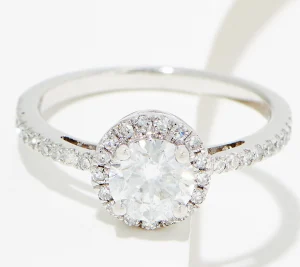
Check whether the weight describes one diamond or the total across the jewelry. A one-carat-total-weight pair of studs usually has about half a carat in each ear. A halo ring can spread much of its weight across small accents.
Clarity
A minimum VS clarity statement can be reassuring, but ask whether it applies to all diamonds or only the main stone. You do not need a flawless grade to buy attractive jewelry. We care more about whether inclusions affect its appearance.
Color
For white diamonds, D–F is the colorless range and G–J is near-colorless. A description such as “near-colorless” covers several grades, which can carry different prices. Do not assume the precise grade from a photograph.
For a large solitaire, an exact grade helps. For a cluster of small stones, good matching can matter more than chasing the highest possible grade.
Diamond certification at QVC
Does every QVC diamond have a GIA report?
Do not assume that it does. A current Fire Light flexible ring listing describes the use of GIA expertise in its quality-assurance process. That is different from an individual GIA grading report for each diamond.
Likewise, a certificate of authenticity supplied through QVC is not automatically an independent report identifying a specific stone.
For a larger diamond, ask for the grading laboratory, report number and exact grades. A clear answer makes it easier to compare the purchase with other sellers. For a multi-stone piece, establish what the document actually covers.
QVC lab-grown diamond prices
We found a mixed picture rather than a simple rule that QVC is always expensive. The price of the finished jewelry needs to be compared with its diamond weight, quality, metal and design.
What our past comparisons showed
Prices below were recorded for our published comparison. Use our diamond price guides and the seller's listing to set a budget for a purchase today.
| Jewelry compared | QVC example | Other example | What to compare |
|---|---|---|---|
| Diamond studs | 0.9 carat total weight, $922.79 plus $5.50 shipping | Ritani, 1 carat total weight, $1,356 | Each stone's weight, stated grades, metal and backing |
| Diamond pendant | 2 carats, $4,598 | Brilliant Earth custom option, $3,190 | A reason to compare alternatives carefully, including the stone and setting |
Diamond stud earrings
The QVC studs cost less, but their 0.9-carat total weight meant about 0.45 carat in each ear, versus about 0.50 carat for Ritani. We would not choose on price alone: the cut information, stated grades and setting determine what the extra money buys.
If you like a QVC pair, compare the size of each stone, the metal, the backing and the return costs. Those details matter more than which headline price looks lowest.
A two-carat pendant
We found a Brilliant Earth diamond and pendant setting totaling $3,190. That was $1,408 less than the QVC pendant—about 31% lower in this comparison. Building the pendant let us choose the individual diamond as well as the setting, instead of accepting a fixed combination.
We would repeat that type of comparison for a purchase today: choose a similar chain and setting, match the main diamond's specifications and compare the total cost. See our two-carat price guide for a starting point.
Shipping and returns
Check the shipping charge and estimated arrival date on the specific listing. Promotions can change these, so do not assume every diamond order includes free delivery.
Returns and exchanges
QVC's return policy gives eligible purchases 30 days from receipt. Refunds generally exclude the original shipping and handling charge and the Q Return Label fee.
Check eligibility before ordering, keep the packaging and paperwork, and allow time to inspect the piece. A return window is useful, but it is better to resolve questions about grading and sizing before paying.
What QVC customers say
Trustpilot displayed a 1.6/5 score from 1,379 reviews when we checked in September 2026. Positive accounts mentioned orders arriving promptly and purchases meeting expectations. Recurring concerns involved missing or cancelled orders, delivery, customer support, returns and prices. This is feedback about QVC's broad retail business rather than lab-grown diamond jewelry alone, but it is relevant when judging fulfillment and after-sale support.
Read QVC customer reviews on Trustpilot
Our final QVC verdict
QVC's strength is its presentation of finished jewelry. It can help you picture how a piece will look when worn, and there may be a design you do not find elsewhere.
Our 2.3/5 rating reflects a weaker overall fit for the diamond buyer who wants detailed stone information, control over the selection and an easy comparison of value.
What we like
- Video demonstrations help show the jewelry's scale and movement.
- Finished designs offer a straightforward shopping route.
- Eligible purchases have a 30-day return window from receipt.
What we would improve
- More specific diamond information, especially for larger stones.
- Clearer distinctions between quality assurance, authenticity documents and individual grading reports.
- Easier comparison with specialist jewelers, including return and shipping costs.
QVC versus specialist jewelers
The right alternative depends on whether you want a finished piece or a diamond you can choose individually. These sellers provide more detailed comparison tools, stronger value or a broader selection of diamond jewelry.
| Jeweler | Best for | Our rating | Shop |
|---|---|---|---|
| Ritani | Low prices, loose-diamond choice and transparent cost details | 4.7/5 | See at Ritani |
| Grown Brilliance | Distinctive finished jewelry and premium presentation | 4.5/5 | See at Grown Brilliance |
| Brilliant Earth | Design choice, shopping tools and showroom access | 4.5/5 | See at Brilliant Earth |
| With Clarity | Comparing engagement-ring designs and center diamonds | 4.5/5 | See at With Clarity |
| Blue Nile | A large diamond selection and the James Allen collection | 4.6/5 | See at Blue Nile |
Read our Ritani review, Grown Brilliance review, Brilliant Earth review, With Clarity review and Blue Nile review for our full assessments.
How we reviewed QVC
We researched QVC's lab-grown jewelry catalog, watched its product presentations, examined the supplied diamond information and compared specific earrings and pendants with competing sellers. The screenshots above document the products and information we examined.
In September 2026, we checked the active catalog, Fire Light product information, certification wording, return policy, company information and current customer feedback.
What matters to us
We start with the questions a buyer needs answered: What diamonds am I getting? How will the jewelry look? Is the price reasonable? What happens if it is not right for me?
QVC's presentations help with the second question. We would like more detail on the first before recommending a large diamond purchase.
How we arrive at the rating
Our assessment weighs diamond information, jewelry selection, buying tools, price, service and returns. The 2.3/5 score keeps QVC below the specialist jewelers we recommend most often.
Questions and experiences
Join the discussion
Ask a question or share your experience. We review comments before publishing them.