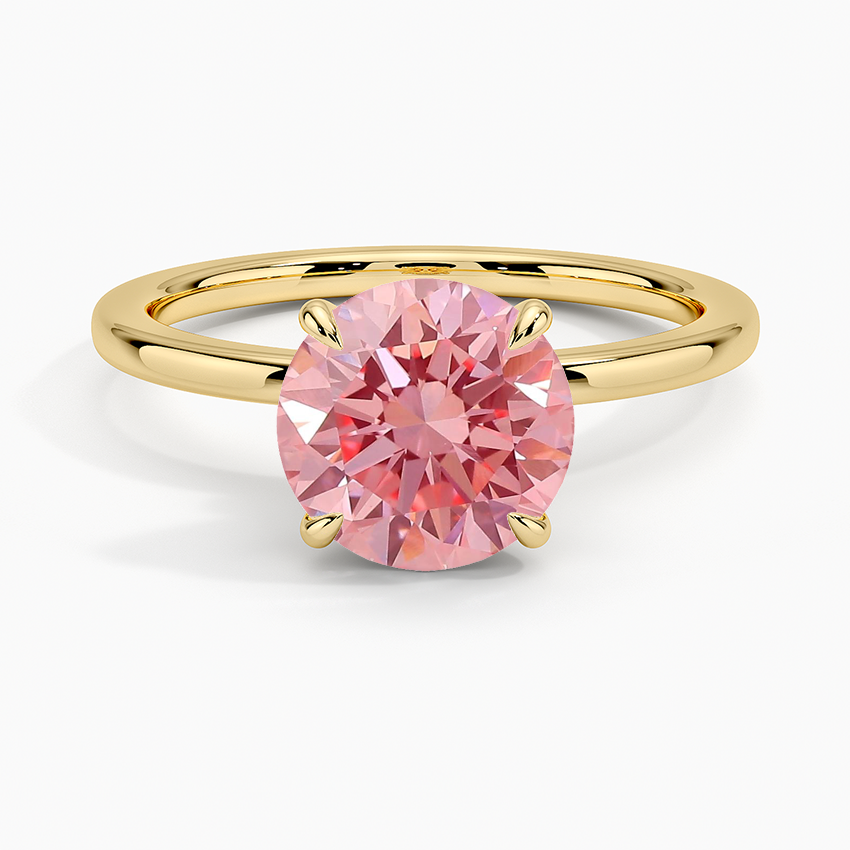





Pink lab-grown diamonds: the short answer
Pink lab-grown diamonds are real diamonds with a pink body color. Their color may be created during growth, by treatment after growth, or by a combination of both. They give buyers the look of a pink diamond without the extraordinary rarity premium attached to naturally pink stones.
For most shoppers, the best pink lab-grown diamond is an attractive, evenly colored stone with a verified report and eye-clean clarity. Do not assume Fancy Vivid is automatically better than a softer Fancy or Fancy Intense pink. The right shade depends on the jewelry and your taste.
Our broader fancy-color lab-grown diamond guide explains how hue, tone, saturation and color modifiers work across pink, blue, yellow, green, orange and red diamonds.
Compare pink diamonds at Ritani
How are pink lab-grown diamonds created?
Pink lab-grown diamonds can be produced from CVD- or HPHT-grown material. Many receive post-growth treatment, including irradiation and controlled heating, to create nitrogen-vacancy color centers. GIA has also documented pink CVD-grown diamonds with color related to the growth process rather than the usual multi-step treatment.
GIA's research overview documents several growth and treatment routes for fancy-color lab-grown diamonds. That is why it is inaccurate to say pink lab-grown diamonds are always CVD-grown and always irradiated.
Treatment is not automatically a quality problem. It should be disclosed, and the report should describe the growth method and any detected post-growth treatment.
Are pink lab-grown diamonds real diamonds?
Yes. A pink lab-grown diamond has diamond's chemical composition and physical properties. It is not the same as pink sapphire, morganite, cubic zirconia or glass.
The word lab-grown describes its origin, not whether it is diamond. Sellers should use that qualifier clearly. A reputable grading report can confirm the material, laboratory-grown origin, color description and detected treatment.
Lab-grown and natural pink diamonds can look alike without being equivalent collectibles. Specialist instruments can identify growth features and treatments that are not visible to a shopper. That distinction is why the report and laser inscription matter.
Can you tell a lab-grown pink diamond from a mined one?
Not reliably from a product photo or with the naked eye. Both can have attractive pink color, and neither a setting nor a seller's lighting proves the diamond's origin. The useful lesson is that appearance is not an origin test.
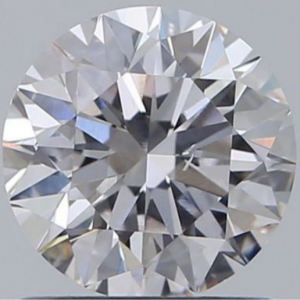
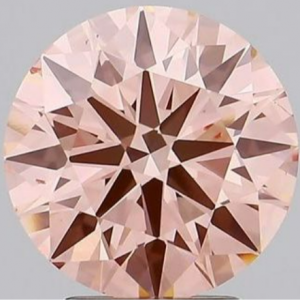
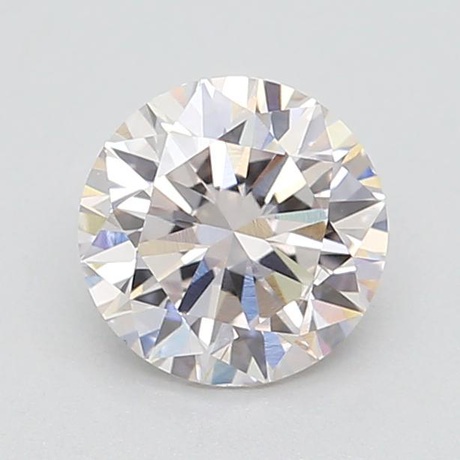
Two of these diamonds were mined and two were lab-grown. Try the quiz and see whether the photographs give their origins away.
Try the visual quiz
Can you spot the lab-grown pink diamonds?
Two of these diamonds were mined and two were lab-grown. Make a choice for each before revealing the answer.
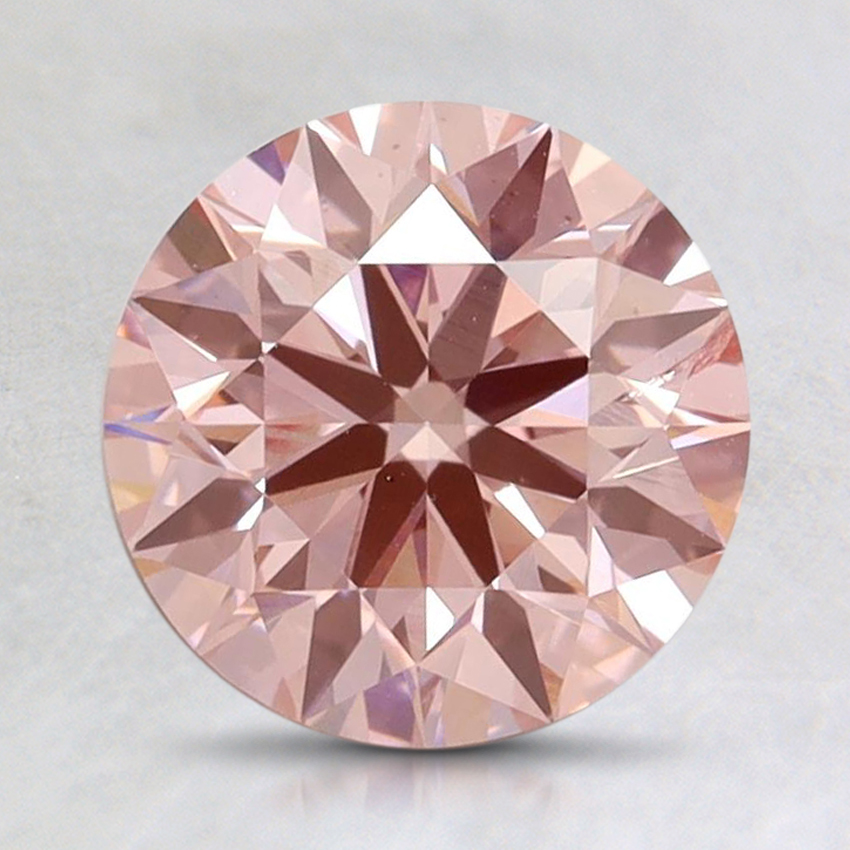
What should you compare instead?
Match the report number to the laser inscription where practical, verify the report on the grading laboratory's website, and confirm that the invoice clearly identifies the diamond as laboratory-grown. Those checks are more dependable than trying another visual comparison.
Why pink lab-grown diamonds cost less than mined pink diamonds
Natural pink diamonds are scarce because their color is usually tied to unusual deformation in the crystal as it formed underground. GIA's study of more than 90,000 pink and related natural diamonds found plastic deformation behind the color in 99.5% of the sample.
Laboratory production does not recreate that geological rarity. Manufacturers can grow more diamond material and apply controlled treatment to produce strong pink color. The result can be just as suitable for jewelry, but it belongs to a different supply and resale market.
No fixed savings percentage is reliable for every pink diamond. Prices vary too much by hue, intensity, size, clarity and seller. Compare live stones with the same broad specifications, and remember that a natural pink auction record is not a normal shopping benchmark.
What pink lab-grown diamonds cost in 2026
As a broad market benchmark, BriteCo's 2026 appraisal data found typical 2025 prices of $2,057 per carat for lab-grown engagement-ring diamonds and $8,428 for mined diamonds—about 76% less for lab-grown diamonds. That comparison covers engagement-ring diamonds generally rather than pink stones alone.
The saving can be substantially greater for pink. A naturally colored pink diamond carries an additional rarity premium, while laboratory growth and treatment make stronger pink colors available in much larger quantities. Start with the current price of a colorless lab-grown diamond in the same size, then decide how much the particular hue and intensity are worth to you.
See BriteCo's 2026 diamond price data.
Can you guess how the pink color was produced?
Not from the shade alone. A pink lab-grown diamond may get its color during growth, through treatment, or through both. Two stones with similar face-up color can therefore have different growth and treatment histories. Read the individual report instead of assuming that a particular shade proves one process.
Why you might choose a pink lab-grown diamond
- You want a colored center stone without moving to sapphire or morganite.
- You prefer a romantic or distinctive look to a traditional white diamond.
- You want a larger or stronger pink appearance than the same budget would buy naturally.
- You are buying jewelry to wear, not a scarce natural collectible.
- You want a choice of blush, peach, purplish pink and vivid pink appearances.
The main drawback is value retention. Lab-grown prices have fallen over time, and a pink lab-grown diamond should not be presented as an investment. Buy the design because you want to wear it.
Pink lab-grown diamond engagement-ring ideas
Solitaire: lets the pink diamond carry the design. White prongs can create contrast; rose gold gives a softer, warmer look.
Colorless halo: makes the center color stand out and can give a smaller pink diamond more visual presence.
Three-stone ring: pair pink with colorless side diamonds, or use pink side stones around a white center.
Bezel setting: modern and protective, but compare the finished piece because more surrounding metal can change the apparent color.
Toi et moi: pairs pink with a colorless diamond or another colored gem for a deliberately asymmetric look.
Oval, radiant, cushion and pear shapes are common choices because they show color well. An emerald cut can look elegant, but its open facets make clarity and color zoning easier to see.
Pink diamond examples and ring designs
The large loose diamond and two finished rings below show different color strengths, shapes and settings. The 5.05-carat James Allen diamond was listed at $30,980 in 2023; James Allen has since closed as a standalone store, so compare today's prices elsewhere.
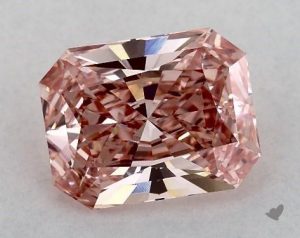
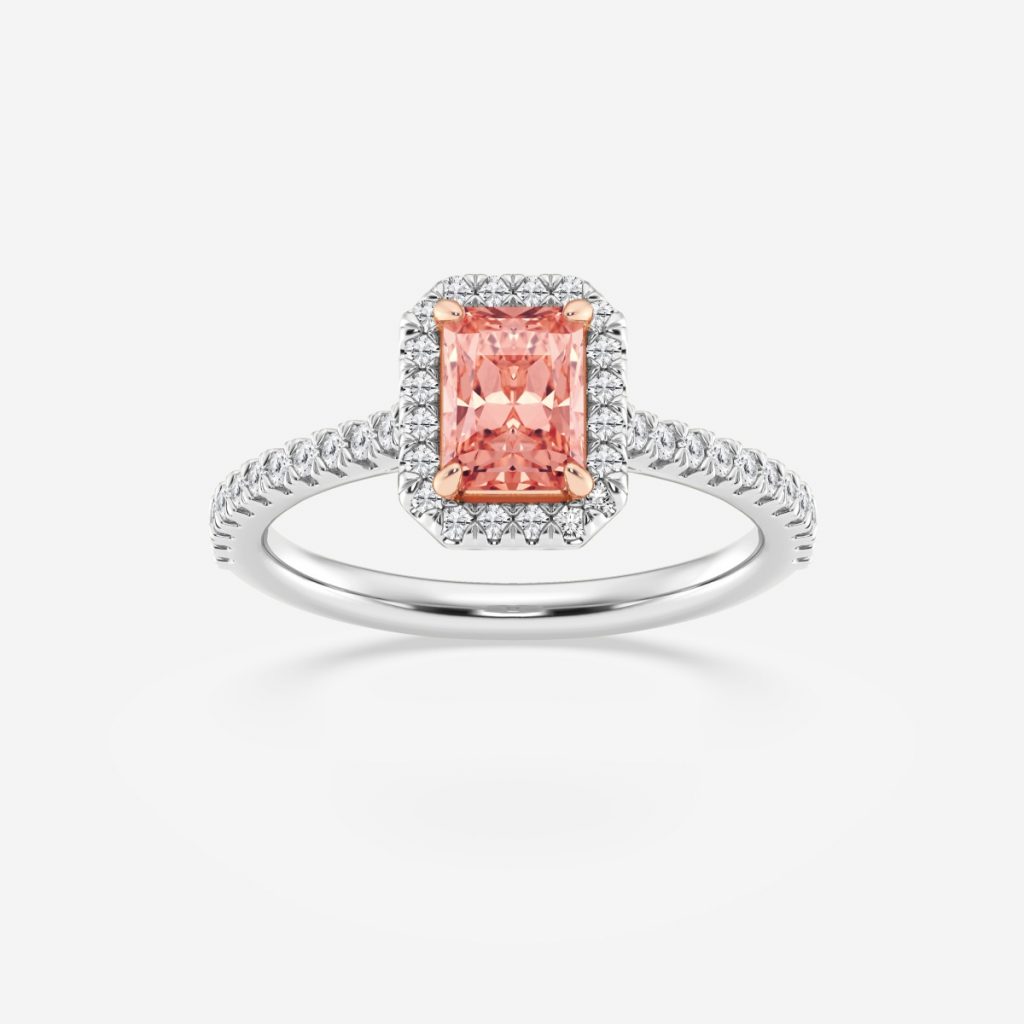
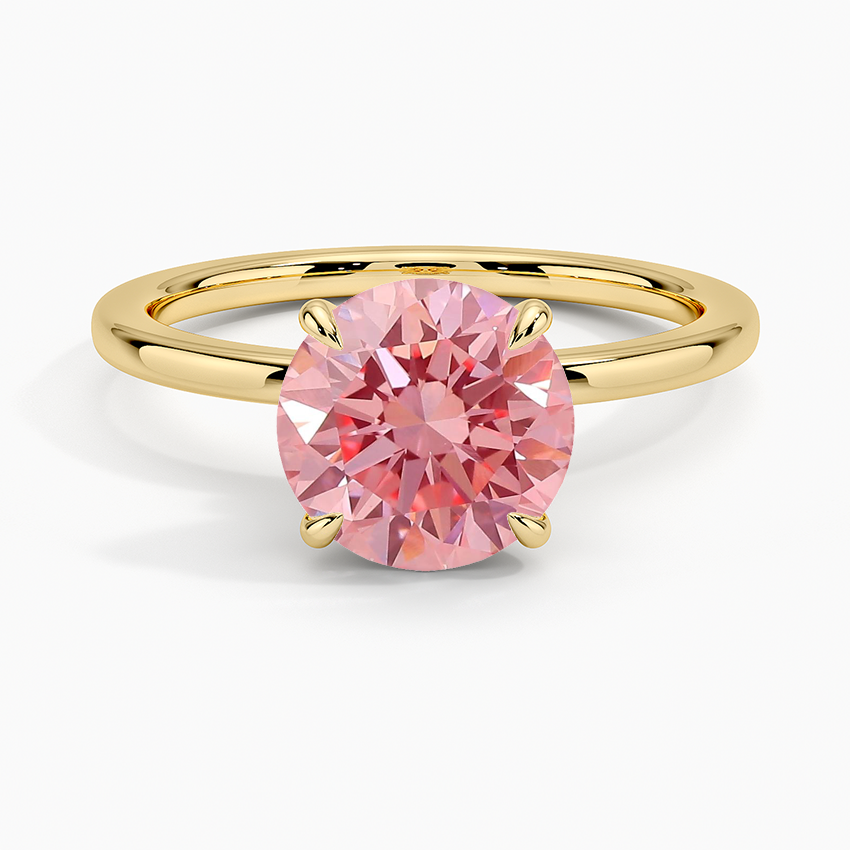
The 2023 price gives historical context; the ring examples show how color strength, shape and setting change the finished look.
Compare current pink diamonds at Ritani
How to choose the color
Read the words in the correct order. Purplish pink is mainly pink; pinkish purple is mainly purple. Orangy pink can appear peachy. Brownish pink is usually more muted and may be excellent value if you like a dusty rose color.
Then look beyond the label:
- Is the pink even across the face of the diamond?
- Does the center go dark in the seller's video?
- Does the color still look pink in neutral lighting?
- Will the metal warm or cool the final appearance?
- Is the seller showing the actual stone or only a sample image?
Compare pink color directions
These examples show why “pink” is only the beginning of the description. A purple modifier makes pink feel cooler, red can make it stronger, and orange or brown can create a peachier appearance.
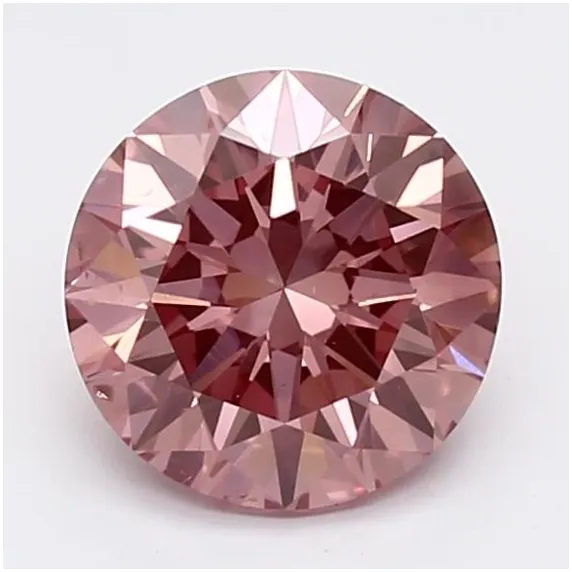
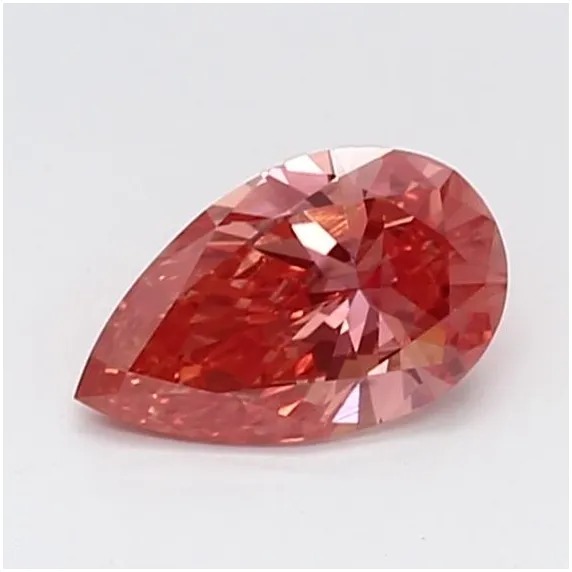
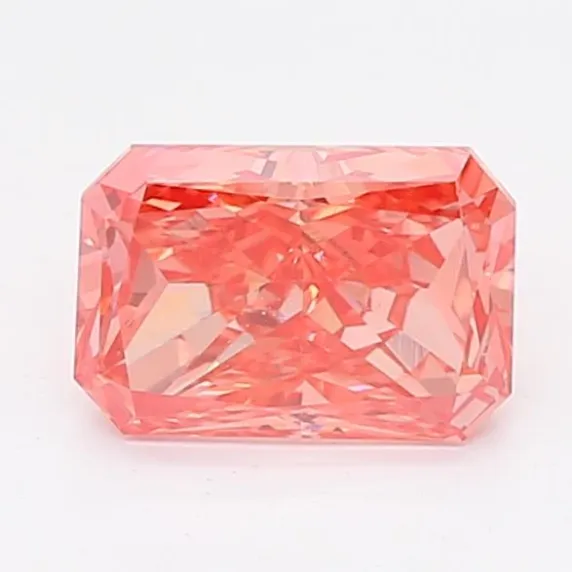
Use these examples as a visual guide, then check the color wording on each diamond's grading report.
GIA's fancy-color grading explanation separates hue, tone and saturation. Those terms are more useful than treating fancy colors as an extension of the D–Z scale.
Tips for saving on pink lab-grown diamonds
- Compare Fancy, Fancy Intense and Fancy Vivid. A softer grade may look better in your setting and cost less.
- Accept an eye-clean clarity grade. VS and carefully chosen SI stones can be better value than VVS.
- Try modifying hues. Purplish, orangy or brownish pink may suit you better than a pure pink.
- Compare measurements around milestone weights. A well-spread 0.90-carat stone can look close to one carat.
- Use a halo or three-stone design. The setting can provide visual size without putting the whole budget into the center.
- Compare the complete ring price. A low loose-diamond price can be offset by an expensive setting.
- Keep the return period available. Pink is difficult to judge consistently on a screen.
Where to buy pink lab-grown diamonds
Colored-diamond inventories change quickly, so compare the exact hue, intensity and grading report. These jewelers offer different strengths in loose-diamond value, finished jewelry and showroom support.
| Jeweler | Best for | Our rating | Shop |
|---|---|---|---|
| Ritani | Prices, loose-diamond selection and value | 4.7/5 | See at Ritani |
| Brilliant Earth | Premium settings, showrooms and guided shopping | 4.5/5 | See at Brilliant Earth |
| Grown Brilliance | Finished jewelry and distinctive ring designs | 4.5/5 | See at Grown Brilliance |
Ritani
Ritani is our first stop for loose pink lab-grown diamonds. Its colored-diamond filters make it easy to compare intensity, shape and clarity, and its prices are often among the lowest. Open the report and video for every finalist because pink category results can include several modifiers.
Brilliant Earth
Brilliant Earth has a dedicated colored lab-grown diamond selection and a wide range of settings. It is generally more expensive, but it is a strong comparison for shoppers who value its designs, showrooms and service.
Grown Brilliance
Grown Brilliance is especially useful for finished pink diamond jewelry. Its fancy-color collection has included rings and other pieces in pink, yellow and blue, which saves you from matching a loose stone and setting yourself.
We now rate Clean Origin below our main recommendations. James Allen is no longer a standalone store and now appears as a collection at Blue Nile. For a pink loose-diamond search today, we would begin with the three options above.
Pink lab-grown diamond FAQ
Does a pink lab-grown diamond fade?
Color produced by established growth and treatment methods is intended to be stable in normal wear. Still, keep the grading report and tell a jeweler about the diamond before repair work involving heat, because treatment history can affect handling.
Is pink diamond more durable than morganite?
Diamond is harder and generally better suited to everyday wear. That does not make a ring damage-proof: a hard knock can chip a diamond or bend the setting.
Should I choose rose gold or white gold?
Rose gold blends with pink and creates a warm, soft appearance. White gold or platinum gives more contrast. If possible, preview the same color family in both metals before deciding.
Questions and experiences
Join the discussion
Ask a question or share your experience. We review comments before publishing them.