




The best diamond gift for Mom is one she will enjoy wearing, whether that means small studs for every day or a bracelet saved for special occasions. Start with the metal, size and styles she already chooses. A meaningful design does not have to be the biggest or most expensive piece.
Lab-grown diamonds make these gifts more affordable than comparable mined-diamond jewelry. You can put the saving toward a larger stone, a more detailed setting or simply a smaller bill. The seven ideas below cover different tastes and budgets, with specific designs to help you picture the choice.
How lab-grown diamonds are different
Lab-created diamonds are real diamonds, grown in controlled equipment rather than mined from the ground. They have the same crystal structure, hardness and optical properties as mined diamonds. They are not cubic zirconia or other diamond lookalikes.
There are two main growth methods. High pressure, high temperature (HPHT) uses heat and pressure; chemical vapor deposition (CVD) builds diamond on a seed using carbon-containing gas. The diamond is then cut and polished into its finished shape. GIA explains the two growth processes.
Cultured pearls offer a useful comparison: people start and control the process, but the resulting material is still pearl. In the same way, a laboratory-grown diamond is diamond. Its origin is different, not its identity as a gemstone. Our guide to whether lab-grown diamonds are real explains the distinction in more detail.
Benefits of lab-created diamonds
- More diamond for the budget. Lab-grown diamonds can cost around 80% less than mined diamonds, although the saving varies by stone and seller. BriteCo's 2026 report put 2025 engagement-ring diamond prices at $2,057 per carat for lab-grown and $8,428 for mined, a difference of about 76%. The setting and metal still contribute to a finished piece's price.
- Less reliance on mining. Growing the stone avoids the mine and its associated excavation, roads, pollution and community impacts. The environmental benefit is strongest when the grower uses renewable or lower-carbon electricity.
- A different sourcing choice. Lab-grown diamonds avoid the mined-diamond extraction chain and its conflict risks. Look for clear information about the grower, working conditions and materials rather than treating lab-grown origin alone as a guarantee about the whole supply chain.
The lower price does not mean less sparkle. Cut, proportions and the setting still determine how attractive the finished jewelry looks. For the price figures above, see BriteCo's diamond price report.
7 lab-grown diamond gifts for Mom
Buying online gives you time to compare sizes, specifications and the complete price without a rushed store visit. A good local jeweler can also be helpful, especially when Mom would like to try a piece on. Either way, choose the style first and compare similar pieces before buying.
The design examples below show jewelry from 2025. James Allen is now a collection at Blue Nile, so its examples link there. The other links lead to the relevant jeweler's collection.
Three jewelers to compare
These are useful starting points for the styles below. Our linked reviews explain the purchase experience and price comparisons behind each recommendation.
| Jeweler | Our rating | Best for |
|---|---|---|
| Ritani | 4.7/5 | Prices, loose-diamond choice and straightforward jewelry designs |
| Grown Brilliance | 4.5/5 | Finished jewelry, designer pieces and detailed settings |
| Blue Nile | 4.6/5 | A broad jewelry range and the James Allen collection |
1. Lab-grown diamond stud earrings
Diamond studs are a popular gift because they work with casual clothes, workwear and an evening outfit. If Mom likes earrings she can leave in all day, compare their size and backing as carefully as the total diamond weight.
There are many shapes and settings to choose from. A simple round stud is familiar; a halo adds a wider sparkling outline. Lab-grown pricing lets you consider a larger pair without paying the mined-diamond premium.
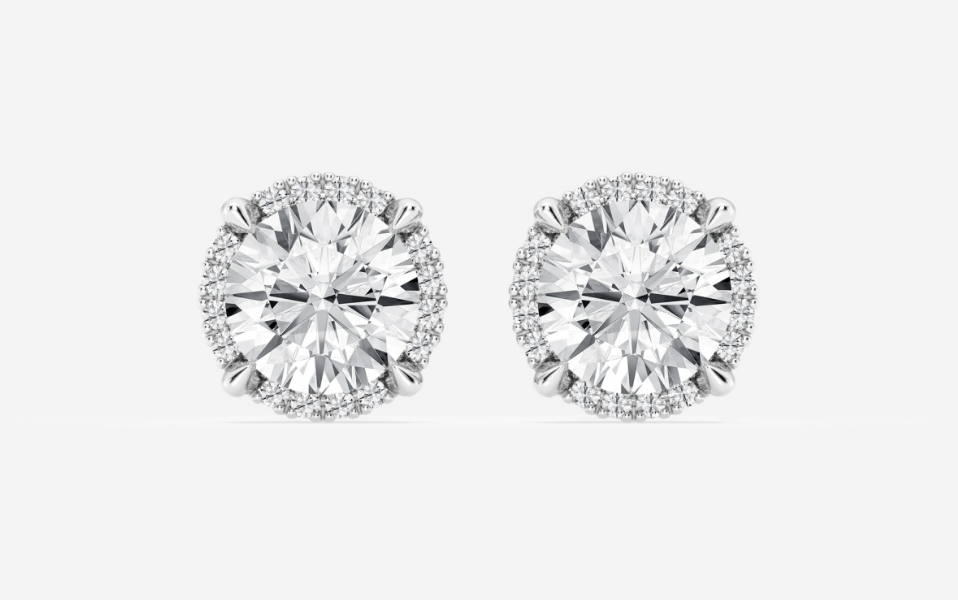
The Badgley Mischka hidden-halo design below is our more decorative choice. The pair has 2 3/8 carats total weight, with small diamonds around the main stones. It gives more sparkle and presence than a plain stud.
2. Lab-grown diamond tennis bracelets
A tennis bracelet is another classic gift. It was once usually called a diamond line bracelet. The modern name is associated with tennis player Chris Evert, who wore a diamond bracelet while playing. The familiar story tells of a match being paused to find it after it came loose; the design became widely known as a tennis bracelet.
A continuous line needs more stones than a simple pendant, so bracelets often cost more. Lab-grown diamonds make larger total weights and more detailed designs easier to afford.
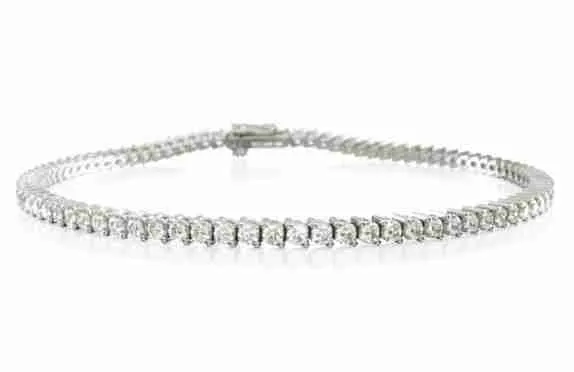
We like five carats total weight as a balance of visible size and wearability. The James Allen design below used 49 diamonds, F–G color and VS2–SI1 clarity. Its three- and seven-carat versions offered different sizes. Compare the individual stone sizes and bracelet length, not just the total weight.
For any tennis bracelet, check the clasp and safety catch. A secure fit and a comfortable length are more useful than an extra carat if the bracelet slips around or catches on clothing.
3. Lab-grown diamond bar necklaces
The clean lines of a bar necklace suit someone who prefers a simple, geometric design. They recall the angular jewelry associated with the Art Deco era of the 1920s and 1930s, but can look equally at home with modern clothes.
The five diamonds in the James Allen Aura design can represent a family of five, with Mom at the center. That is a personal meaning you can give the piece, rather than a rule about who should wear it.
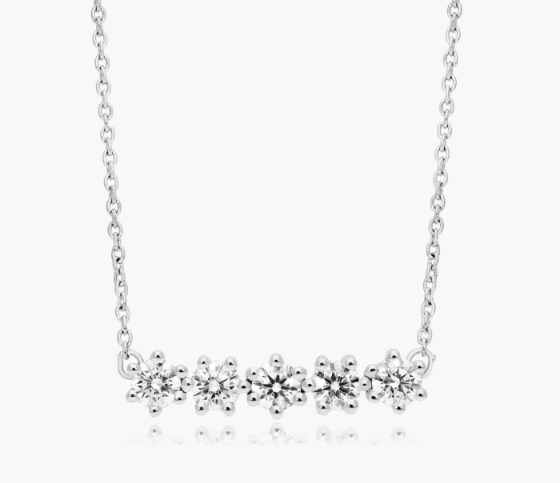
Bar-style necklaces are not limited to one straight horizontal row. A graduated or gently curved design creates a softer line across the neckline. The Luminance example adds space between its diamonds rather than joining them into one solid bar.
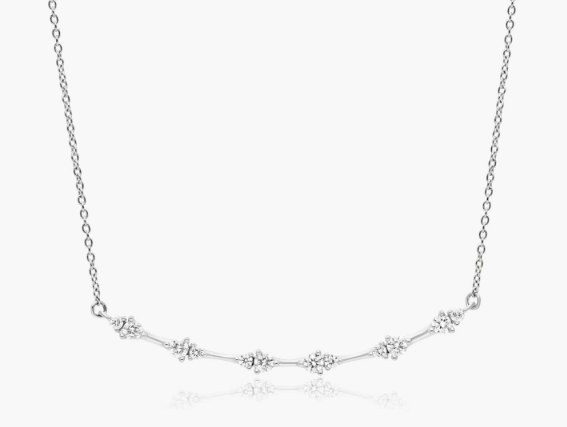
The design was offered in yellow, white and rose gold. Match the metal to the jewelry Mom wears most, and compare the chain length with a necklace she already finds comfortable. This is a style she can dress up for dinner without needing a large pendant.
4. Lab-grown diamond cross necklaces
A cross can be a gift of faith, a family symbol or simply a design the wearer likes. Religious pendants are often chosen for milestones and holidays, but the meaning should come from Mom's own preferences rather than the giver's assumptions.
Our Ritani example has 11 lab-grown diamonds and one carat total weight. It shows how a familiar cross design can make a substantial gift without needing one large center stone.
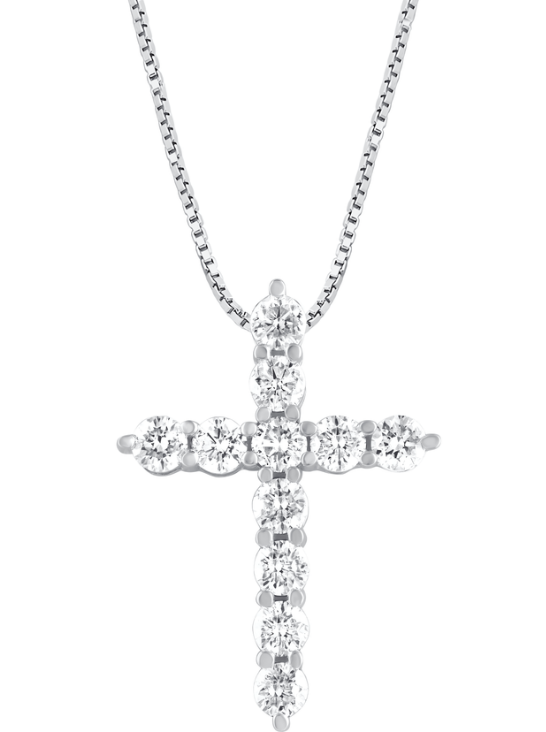
The Grown Brilliance cross also has 11 diamonds, but three carats total weight. That is three times the diamond weight of the Ritani example, spread across the same number of stones. It is the bolder option if Mom enjoys larger jewelry.
Compare pendant dimensions as well as carats. The length of the cross, the chain and the space around each diamond affect how prominent it looks when worn.
5. Multi-stone lab-grown diamond rings
Jewelers often call these anniversary rings, but you do not have to wait for an anniversary to give one. A five- or seven-stone ring can mark a birthday, Mother's Day or a family milestone.
The stones can represent children, grandchildren or another number with personal meaning. A partner or an adult child can choose the piece; there is no fixed rule about the occasion.
The Ritani design below uses five emerald-cut diamonds. Their long step facets give broad flashes of light rather than the smaller sparkle of round brilliants. The geometric outline is a good fit for someone who likes Art Deco-inspired jewelry.
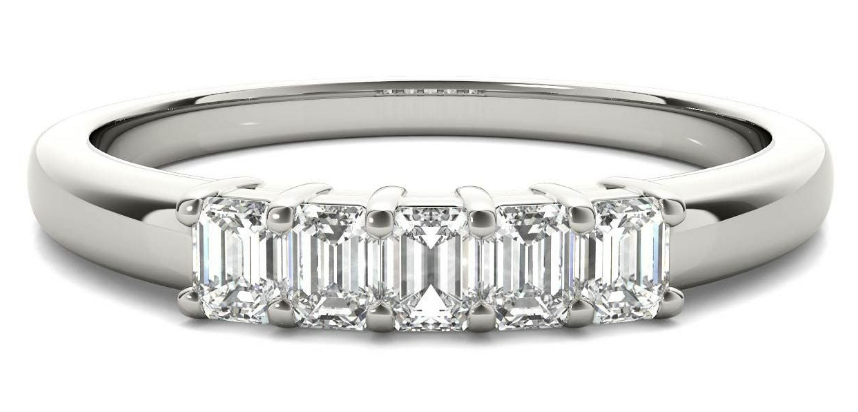
Get the ring size before ordering. If Mom will wear it beside another ring, compare the band width and setting height so the two feel comfortable together.
6. Lab-grown diamond hoop earrings
Hoops come in many sizes and shapes, from small everyday earrings to larger evening pieces. Look at the diameter Mom already wears rather than assuming that a larger pair makes a better gift.
The double-row James Allen design gives a small hoop more sparkle. Diamonds run along the front and the visible inside edge, so the pattern continues as the earring turns. The yellow gold adds a warm frame around the stones.
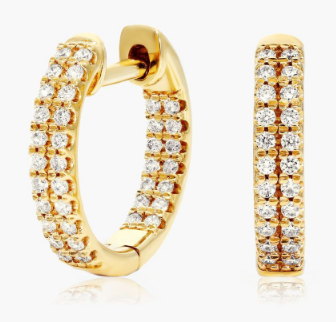
The recorded pair price was $830 in 2025. For a new purchase, compare the diameter, weight and clasp as well as the price. A compact pair should still feel easy to open, close and wear.
7. Lab-grown diamond eternity circle necklaces
A circle can represent a lasting bond between partners or between a parent and child. It offers a similar message to an infinity design, but with a simple open outline.
The Grown Brilliance example has 14 diamonds totaling one carat around the circle. It was offered in white, yellow and rose gold. The open center gives the pendant a wider outline than one compact solitaire of the same total weight.
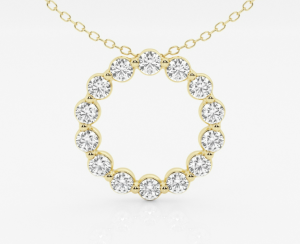
This is an easy design to personalize through the metal and chain length. Consider whether Mom likes a pendant close to the collarbone or lower on the neckline, and whether she layers necklaces.
Choosing Mom's diamond gift
Lab-grown diamonds make it easier to choose a meaningful piece within your budget. Studs and simple necklaces are often easier surprises than rings, which require a size, or bracelets, which need a comfortable fit.
Before ordering, compare the metal, dimensions, total diamond weight and return terms. Ask about engraving if you want a personal message, and check whether personalization changes the return options. The best gift is not the one with the most diamonds: it is the one Mom will reach for and enjoy wearing.
Questions and experiences
Join the discussion
Ask a question or share your experience. We review comments before publishing them.