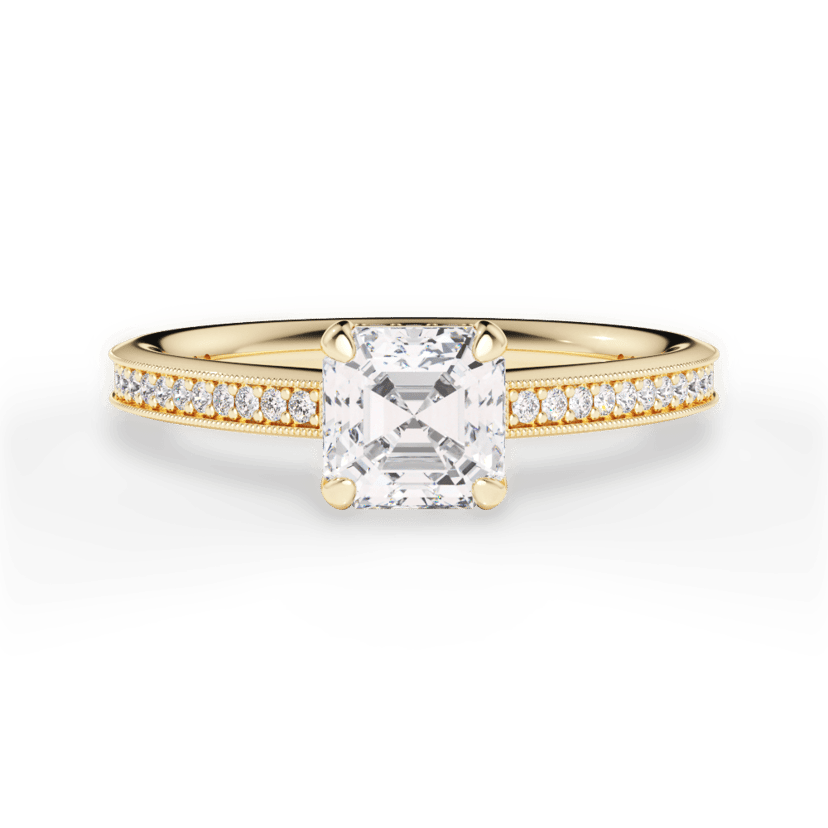





Asscher-cut lab-grown diamonds: the short answer
An Asscher cut is a square step cut with clipped corners and a striking pattern of broad reflections. It has a quieter, more architectural look than a round or cushion brilliant. The shape is an especially good fit for Art Deco-inspired rings and buyers who enjoy symmetry more than maximum sparkle.
Our buying advice is to inspect the actual diamond closely. Asscher cuts make inclusions, tint and see-through areas easier to notice, and they often look smaller face-up than brilliant cuts of the same weight. Start around F–H color and VS1 clarity, but compare nearby grades because an attractive VS2 or a well-priced VVS2 may be the better purchase.
We compare Asscher cuts using the grading report, face-up measurements, videos and current prices together. Our experience buying, returning and inspecting lab-grown diamond jewelry has repeatedly shown why the report is a starting point: two stones with similar grades can have noticeably different patterns and presence.
An Asscher-cut diamond to compare
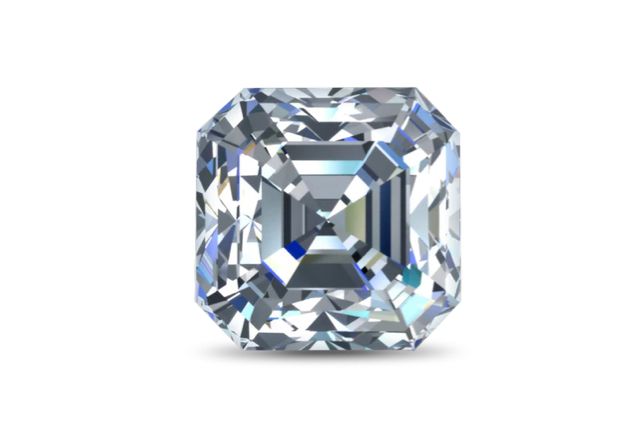
This 1.03-carat E-color, VVS2 Asscher cut was listed at $294 when we checked Ritani on September 11, 2026. It had an IGI report and Ritani's Very Good cut label. Use it as a starting point, then compare the step pattern, transparency, dimensions and price of nearby stones.
See Asscher-cut diamonds at Ritani
What is an Asscher cut?
The Asscher cut was developed in the early twentieth century. Its square outline, cropped corners and concentric steps create the familiar “hall of mirrors” effect. The corners also make the stone appear octagonal once it is set.
Joseph Asscher introduced the cut in 1902, and its strong geometry later became closely associated with Art Deco jewelry. The modern Royal Asscher is a proprietary variation, but most listings simply use “Asscher” for a square step cut with clipped corners. That history helps explain the vintage look; it does not make one modern Asscher automatically better than another.
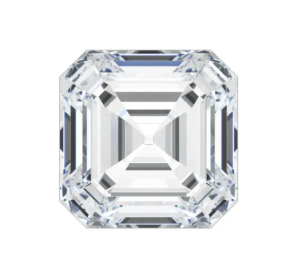
Unlike a brilliant cut, an Asscher does not break light into countless small flashes. Its long facets produce broader flashes and alternating light and dark steps. That contrast is part of the design; the goal is an orderly, lively pattern rather than making it behave like a round diamond.
Asscher versus emerald cut
Both are step cuts with clipped corners. An Asscher is usually square or close to square and has a deeper pavilion, while an emerald cut is rectangular and often looks longer on the finger. The Asscher pattern draws the eye inward; an emerald cut tends to emphasize long parallel reflections.
Choose between them by outline first. If you want a square, vintage look, start with Asscher. If you prefer an elongated silhouette, see our emerald-cut lab-grown diamond guide.
Asscher-cut pros and cons
What we like
- Distinctive Art Deco appearance
- Broad, elegant flashes rather than busy sparkle
- Clipped corners are less vulnerable than sharp square corners
- Symmetrical outline suits solitaires, halos and three-stone rings
What to consider
- Open facets reveal inclusions and tint more readily
- The cut can look small for its carat weight
- Poorly proportioned stones may look dark or overly see-through
- Asscher inventory is usually thinner than round, oval or cushion inventory
How to choose the best Asscher cut
Start with the facet pattern
Look straight through the table and watch the diamond move. The steps should feel balanced, with contrast that changes as the stone turns. Avoid a lifeless center, distracting dark blocks or a large transparent area that lets you see straight through the diamond.
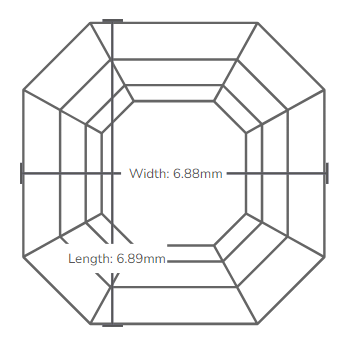
Proportion ranges are useful for narrowing a search, but they cannot prove that an Asscher is beautiful. We would generally begin with a table and depth in the broad 60–70% area, then judge the video, dimensions and pattern. Do not reject a good-looking stone because one number falls just outside a preferred range.
Choose clarity carefully
The large, open facets make some inclusions easier to see than in brilliant cuts. VS1 is a sensible starting filter, especially for a larger center stone. Still, clarity grades cover many inclusion types and positions. An eye-clean VS2 can be excellent value, while a dark inclusion under the table may remain visible at a higher grade than expected.
Compare color in the intended metal
Asscher cuts can retain color more visibly than round brilliants. F–H is a practical starting range for a white-looking stone, with D–E worth comparing when the premium is small. Yellow or rose gold can make a warmer grade feel intentional, while a white-metal setting may make tint easier to notice from the side.
Check dimensions as well as carat weight
Asscher cuts often carry weight below the face. Compare length and width, not only carats, and do not pay for a deep stone that looks noticeably smaller without delivering a better pattern. A nearly square ratio is traditional, but slight variation is fine if you like the outline.
A ratio around 1.00–1.05 will look square to most people. Check that the four sides and clipped corners appear balanced. Carat thresholds can add cost without much visible difference, so compare a well-spread 0.90–0.99-carat stone with a deeper one-carat option before paying for the round number.
Read the grading report alongside the video
Confirm the laboratory-grown origin, measurements, polish, symmetry, fluorescence and clarity characteristics. Pay particular attention to the clarity plot and the location of inclusions beneath the table because the open steps can make them easier to see. Then return to the video: the report cannot grade the beauty or balance of the hall-of-mirrors pattern.
Asscher-cut engagement-ring settings
Solitaire settings put the geometric pattern first. A halo makes the center look larger and strengthens the vintage feel, while tapered baguettes or step-cut side stones continue the clean lines. A bezel can look striking but may make a compact stone feel smaller, so compare the finished proportions.
Four-prong settings show more of the octagonal outline; double-claw prongs reinforce the vintage character. A three-stone ring with trapezoids or tapered baguettes extends the step pattern across the finger. Ask about setting height and wedding-band fit, especially when a halo or low basket is involved.
Asscher-cut jewelry to compare
These studs show how Asscher cuts create a crisp, geometric look in finished jewelry. Compare the total diamond weight, dimensions and backing style.
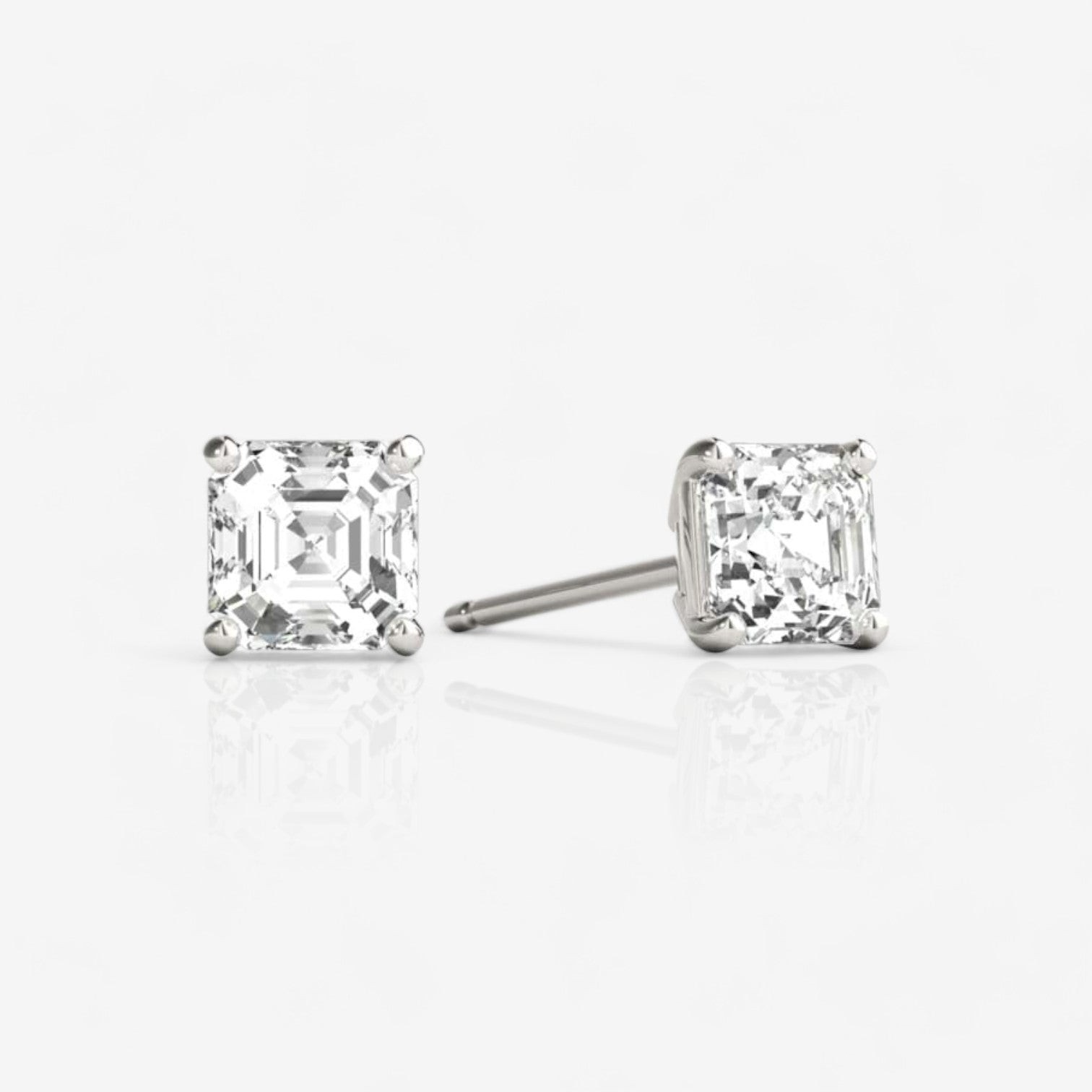
Ritani · Earrings
Asscher-cut lab-grown diamond stud earrings
- Asscher-cut lab-grown diamonds
- Four-prong stud settings
- Several earring-back options offered
The square step-cut outline gives these studs a quieter, geometric look than round brilliants. Compare total diamond weight and backing style before ordering.
Price checked September 10, 2026.
See at RitaniHow much does an Asscher-cut lab diamond cost?
In our September 2026 Ritani comparison, a typical price among the five lowest qualifying one-carat Asscher cuts was $279, versus $240 for round diamonds. Each was 0.95–1.05 carats, E color, VVS2 clarity and IGI graded. Asscher inventory is thinner than round inventory, so the comparison can change as individual diamonds enter and leave the catalog.
Price also changes with proportions, visible size and the quality of the facet pattern. Compare several stones at the same seller and then compare across sellers using similar specifications.
Lab-grown Asschers generally cost far less than mined Asschers with comparable report grades. The saving can make a larger step cut accessible, but size should not come at the expense of transparency or a balanced pattern. An attractive smaller Asscher is better value than a larger stone with a dead center.
Our one-carat lab-grown diamond price guide shows how fancy shapes compare under matched search rules. Check the live listing before deciding; the visual pattern matters more than finding the lowest number in the results.
Where to buy Asscher-cut lab-grown diamonds
Look for a seller that shows the actual diamond in motion and provides its grading report. Then compare the complete ring price, setting choice, service and return terms.
| Jeweler | Best for | Rating | Shop Asscher cuts |
|---|---|---|---|
| Ritani | Loose-diamond prices, selection and value | 4.7/5 | See Asscher-cut diamonds at Ritani |
| Brilliant Earth | Ring settings and showroom support | 4.5/5 | See Asscher-cut diamonds at Brilliant Earth |
| Grown Brilliance | Complete, design-led engagement rings | 4.5/5 | See Asscher-cut diamonds at Grown Brilliance |
Asscher inventories are smaller than round or oval inventories. Favor sellers that show a video of the exact diamond, provide the grading report, and let you compare dimensions without opening every listing. If the same report number appears at more than one retailer, compare the complete ring price, delivery estimate and return terms.
Asscher-cut FAQ
Does an Asscher cut sparkle?
Yes, but it produces broad flashes rather than the smaller, more frequent sparkle of a brilliant cut.
What clarity is best?
VS1 is a useful starting point. Buy the lowest grade that looks clean through the open facets rather than paying automatically for VVS or flawless clarity.
Does an Asscher look smaller than a round?
Often, yes. Asscher cuts tend to be deeper and more compact. Compare the millimeter dimensions and finished setting, not carat weight alone.
What ratio should an Asscher cut have?
Approximately 1.00–1.05 gives the traditional square appearance. A slightly higher ratio is not a defect if you prefer it, but it should be a deliberate choice.
Is an Asscher cut suitable for everyday wear?
Yes. Its clipped corners are easier to protect than sharp princess-cut corners. Choose a secure setting, remove the ring for impact-prone work, and have loose or catching prongs inspected.
Questions and experiences
Join the discussion
Ask a question or share your experience. We review comments before publishing them.