




Our verdict on Kay Jewelers
Kay is a familiar place to try on jewelry, with a broad choice of designs and stores where you can get help in person. Our experience shopping for lab-grown diamonds was much less convincing on value and product information.
Our rating remains 1.8 out of 5. We would compare other jewelers first, especially for a simple solitaire or diamond studs. Kay can make sense if you love a particular design and value having a local store, but we would not buy on the strength of a discount alone.
Is Kay worth considering?
There are improvements to acknowledge. Kay now advertises custom lab-grown engagement rings, and several collections explicitly include independently certified lab-grown diamonds. That gives shoppers more choice than we found when we first reviewed it.
That does not remove the questions raised by our store visits and support conversations. We still want clear information about the specific diamond, a good view of its appearance and a competitive complete price.
Kay's lab-grown diamond selection
Our review found plenty of finished jewelry but little control over which individual diamond you received. Choosing a metal or carat-weight option is different from comparing actual stones and selecting one by its report and video.
That distinction remains useful. A finished ring can be a good choice when the design is right, but an engagement-ring buyer should know whether the center diamond is individually selected or supplied to minimum grades.
Custom lab-grown jewelry
Kay's current range includes a “Create your own Lab-Grown Engagement Ring” and a lab-grown diamond band builder. That broadens the options beyond the mined-diamond customization we encountered in our review.
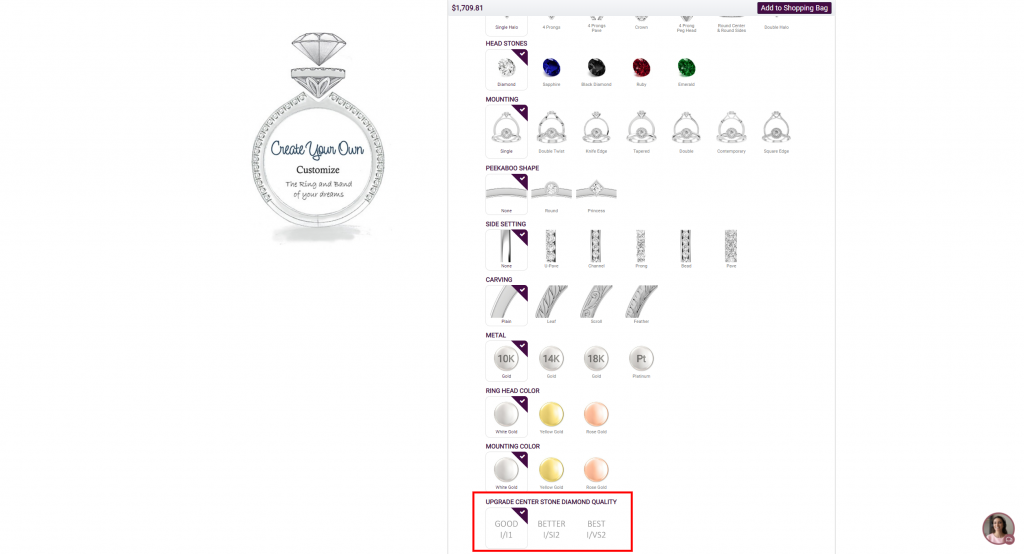
Ask what you can choose: the setting, metal and general grades, or a particular diamond with its own report. For a custom order, get the return conditions before paying. Kay excludes custom designs from its ordinary return policy.
Finished rings, earrings and necklaces
The strongest part of Kay's selection is the variety of ready-made designs. If you prefer choosing a complete piece rather than building it stone by stone, there is plenty to browse.
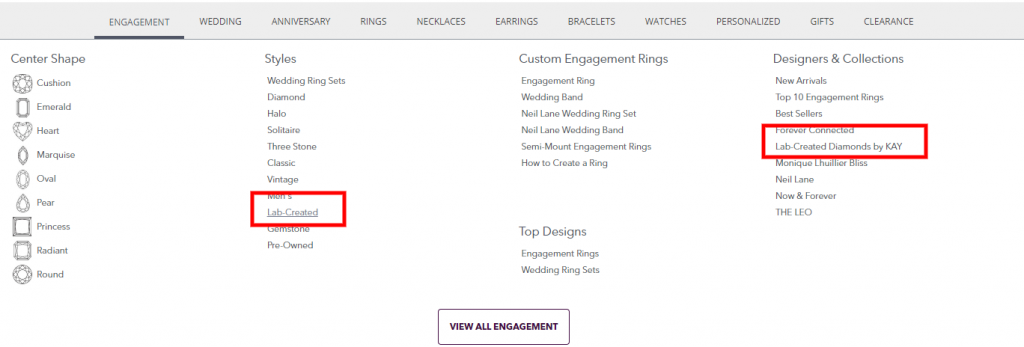
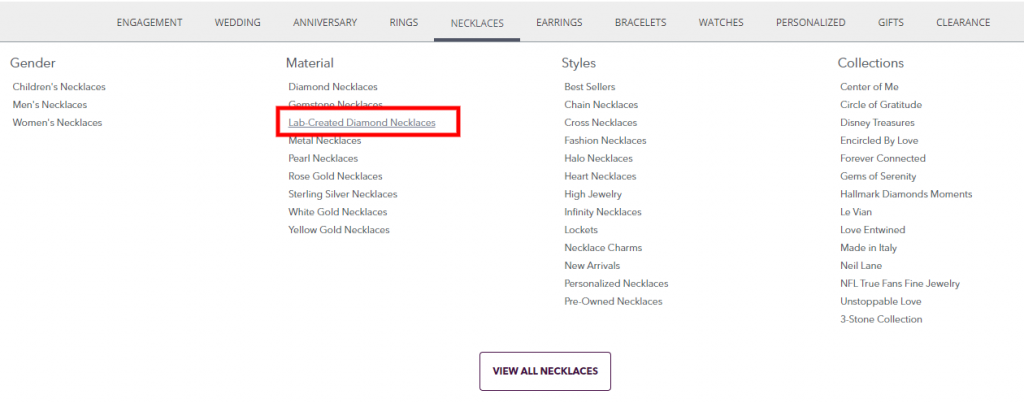
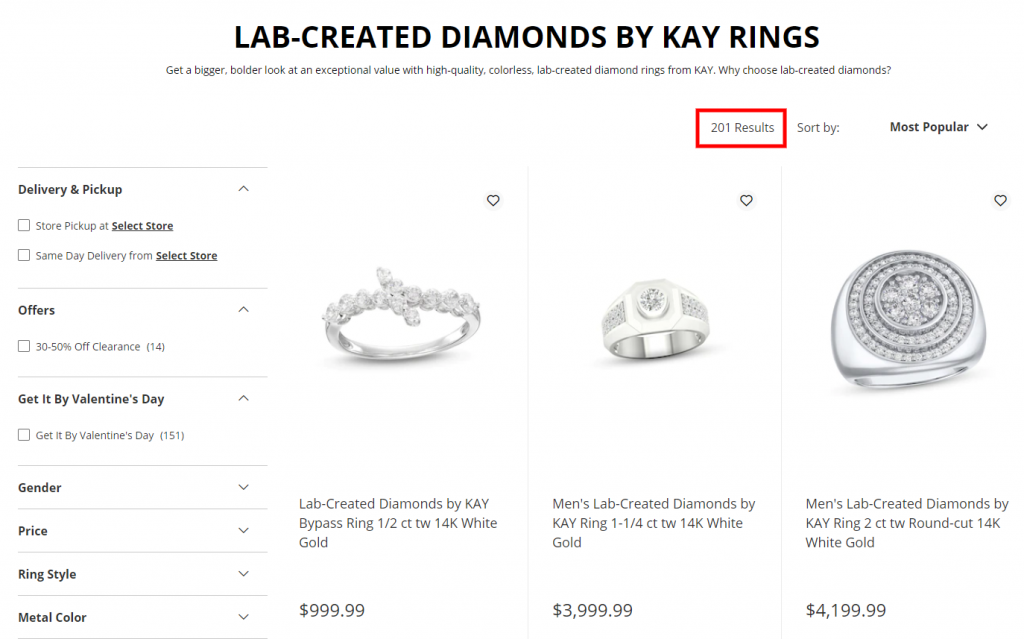
In our 2023 menu comparison, “Lab-Created” returned 210 engagement rings, while “Lab-Created Diamonds by KAY” returned 124. We had to follow both routes to understand the choice. The filters also left out color, clarity and cut grades, making it harder to narrow the range by diamond quality.
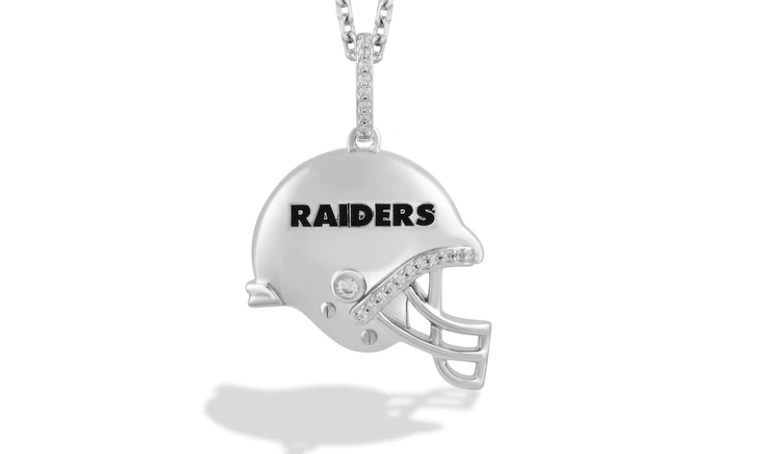
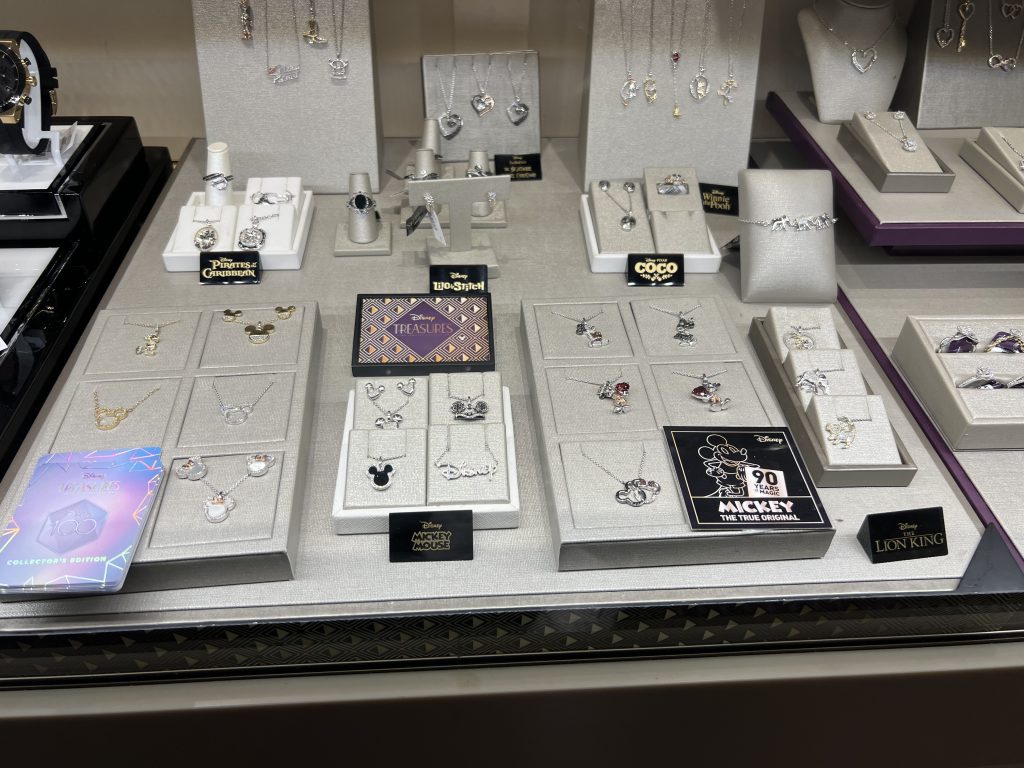
We also explored its themed collections. The sports and Disney examples we examined used mined diamonds, so a design you like in one collection is not necessarily available with lab-grown stones.
The important question is not simply how many designs Kay sells. It is whether the piece you like has the diamond information you need.
Designer collections
Kay's lab-grown range now includes pieces from Neil Lane Artistry, Monique Lhuillier Bliss and THE LEO Legacy, alongside its other collections. Those designs can be a reason to consider Kay even if a plain solitaire would be better value elsewhere.
For example, the current Neil Lane Artistry four-carat-total-weight oval ring lists a three-carat center, F color, VS2 clarity and independent certification. Those details make the ring easier to assess. They also show why total carat weight should not be confused with center-stone weight.
In our 2023 Monique Lhuillier research, a ring was advertised at about $19,000, yet support initially struggled to answer our cut-grade question. The eventual reply described a minimum grade of Good.
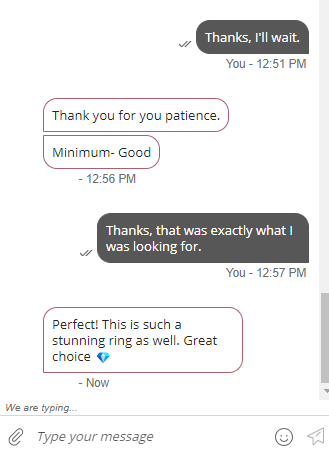
For an expensive designer ring, we want to understand the diamond as well as appreciate the setting. A designer name does not settle that question.
Our view of the range
Kay offers designs that will appeal to some buyers. We are less enthusiastic about shopping by a general grade range when a specialist seller lets you examine the exact center stone. For a larger diamond, that extra control matters.
Kay lab-grown diamond prices
Price was a major weakness in our comparison. We looked at familiar pieces—stud earrings and simple solitaire rings—so elaborate design work would not dominate the comparison.
The prices below are from our published comparison. The color, clarity and available cut information sit beside each price so you can compare quality as well as cost.
Our one-carat stud-earring comparison
| Jeweler | Historical price | Color / clarity | Cut information recorded |
|---|---|---|---|
| Kay | $2,129 | F / SI2 | Not provided |
| Ritani | $1,356 | G–H / VS2 | Ideal |
| Grown Brilliance | $900 | E–F / VS2 or better | Very Good to Excellent |
The one-carat total is shared between the two earrings. Grown Brilliance's pair was $1,229 less—about 58% lower than Kay's price, with a higher stated clarity grade and more cut information. Ritani's specified clarity was also higher than Kay's.
Our one-carat solitaire comparison
| Jeweler | Historical price | Color / clarity | Cut information recorded |
|---|---|---|---|
| Kay | $3,499–$3,999 | F / SI2 | Not provided |
| Ritani | $742 | F / SI2 | Ideal |
| James Allen | $1,370 | G / SI2 | Ideal |
Kay's solitaire cost roughly five times Ritani's price and up to about three times James Allen's in this comparison. Ritani listed the same F color and SI2 clarity as Kay, plus an Ideal cut label; Kay did not provide the cut grade. The James Allen example had a slightly larger 1.03-carat center. James Allen now continues as a collection at Blue Nile.
Use our one-carat price guide for recent examples, then compare the exact setting, diamond grades and final price.
Shopping for diamond quality at Kay
Start with the cut
A diamond's cut affects how it handles light. Color and clarity grades alone cannot tell you how bright it will look. That was a recurring frustration in our Kay research: the site explained the importance of cut but some product pages did not give us the information needed to assess it.
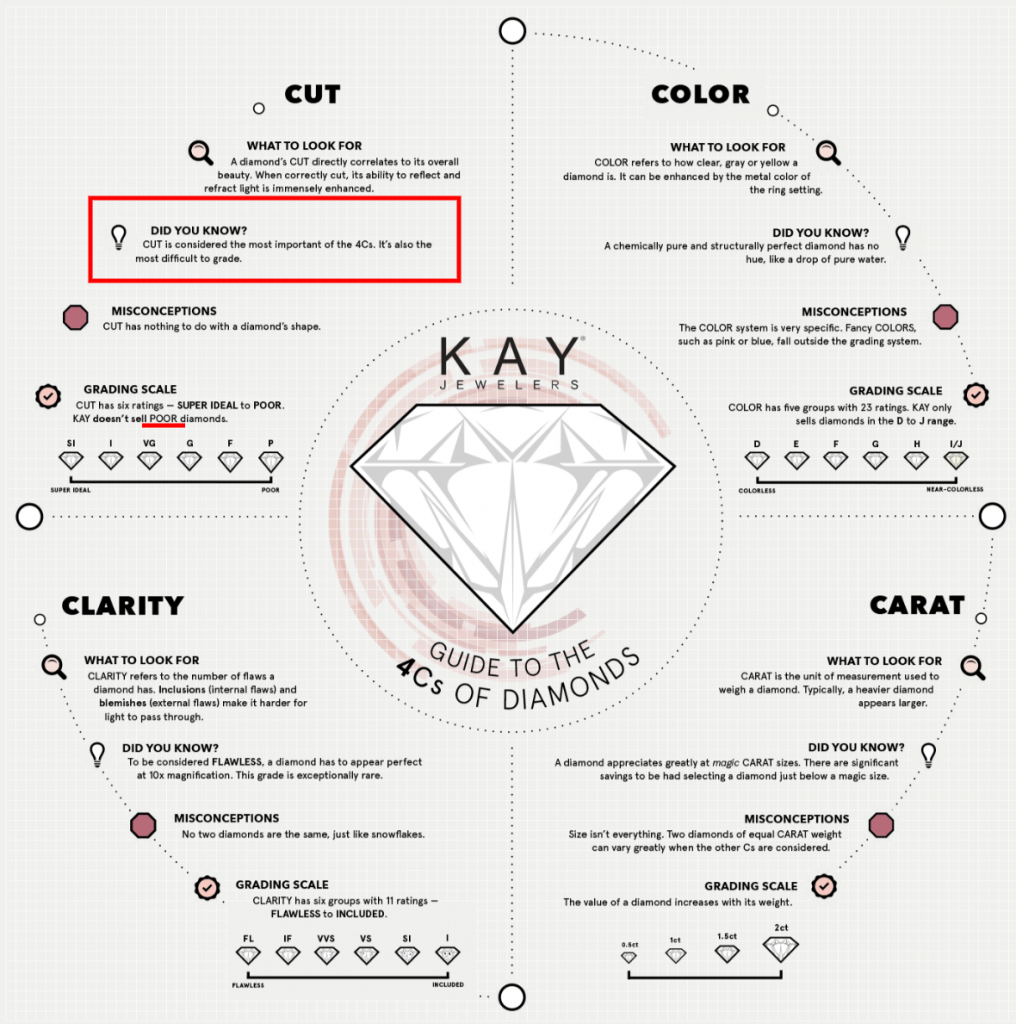
Very Good is a grading category, not another word for Poor. For round diamonds, we generally start with strong cut grades and then inspect the actual proportions and appearance. A cut label helps narrow the search, but it does not replace looking at the stone.
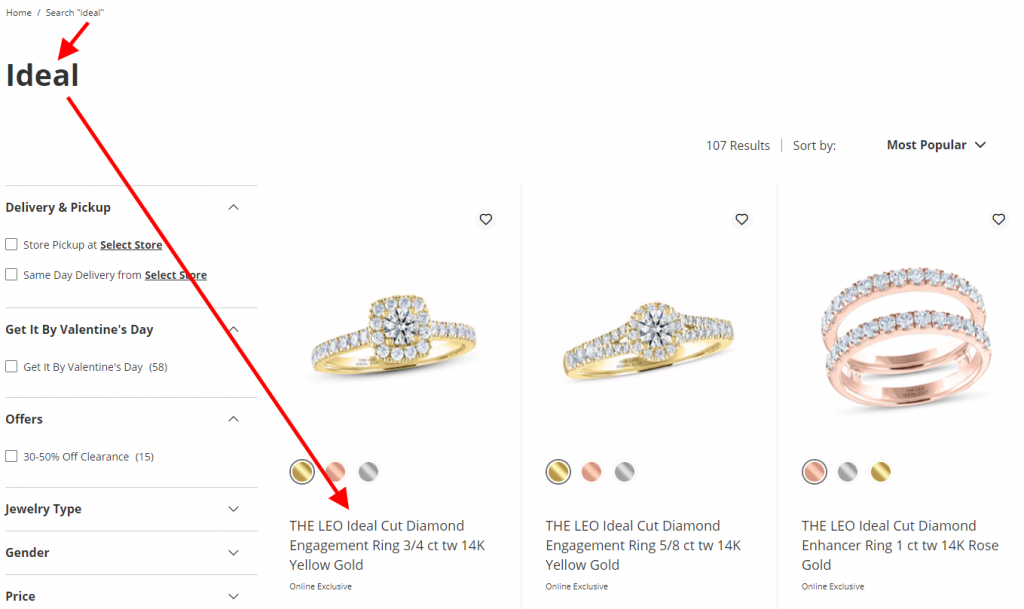
Fancy shapes require a different approach. Do not treat the lack of a round-style overall cut grade on an oval or pear as proof of low quality. Examine symmetry, shape, light performance and any distracting dark areas.
Look beyond the display lighting
Store lighting and bright product photographs can make jewelry look especially lively. We prefer seeing a shortlisted stone under more ordinary light as well.
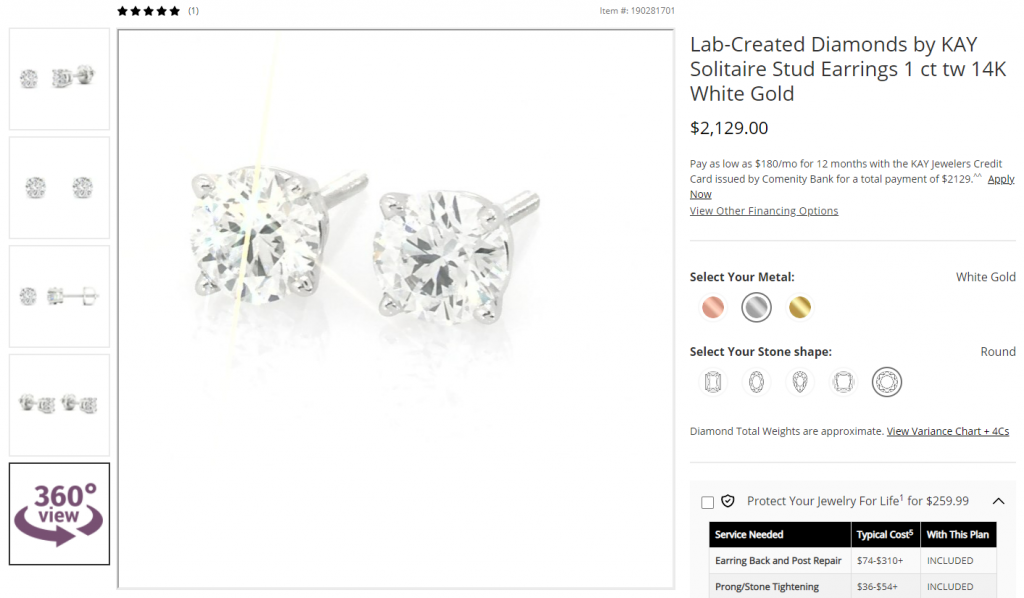
Check whether a video shows the actual diamond or represents the design. A generic jewelry photograph is useful for the setting, but it cannot show the inclusions or light performance of the stone you will receive.
Read the specifications carefully
In our research, the product specifications were spread across fields that could be confusing. Broad “carat range” filters sat alongside the stated total weight, and cut information was often absent.
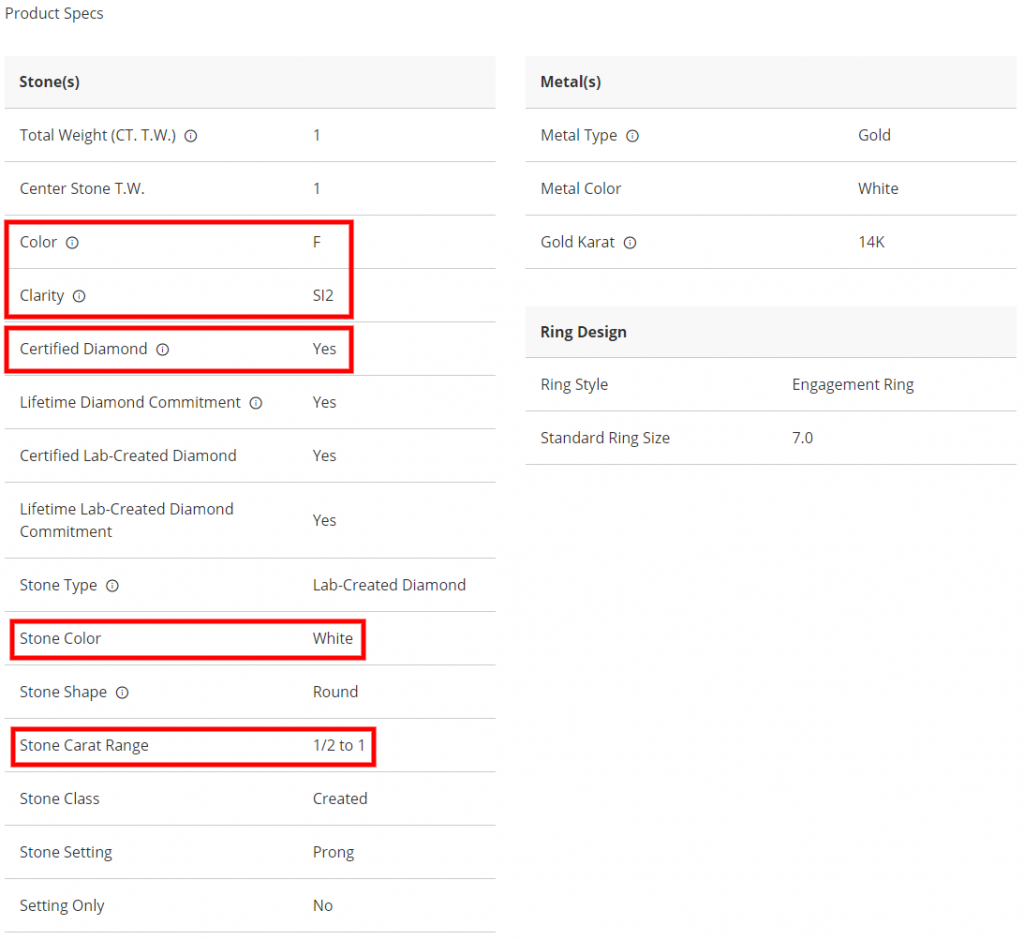
Use the stated center-stone weight for an engagement ring, not the catalog's general weight band. Ask for the minimum color and clarity, metal purity and any grading report. A missing detail should prompt a question rather than an assumption about quality.
Independent certification is available
Several current Kay listings explicitly describe their lab-grown diamonds as independently certified. That includes examples in the Neil Lane Artistry and THE LEO Legacy collections.
Ask which laboratory issued the report and whether you can see it before ordering. “Certified” on a listing is less useful than a report that identifies the diamond and describes its grades.
Comparing the information with other jewelers
We liked being able to see the important details more readily at specialist sellers. This Grown Brilliance example formed part of our comparison.
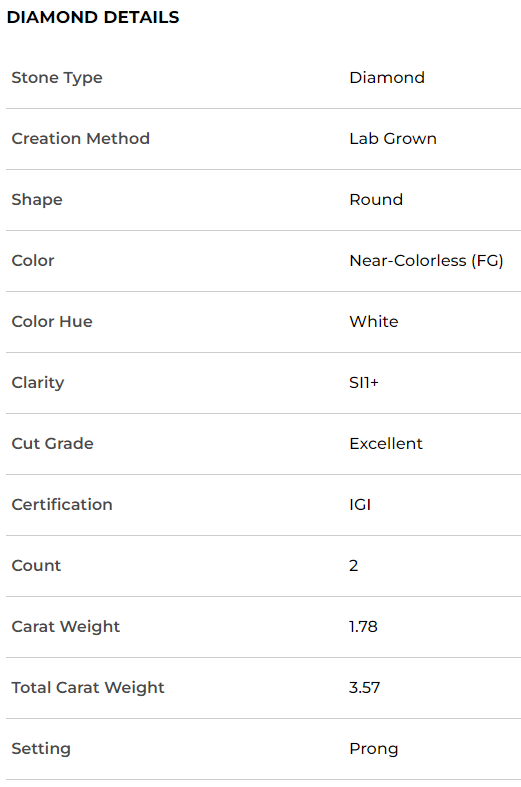
For an individually selected center stone, we want the report, a useful video and a clear price together. For small diamonds in a band or pair of hoops, individual reports may be less practical; minimum grades, matching and the finished appearance become more important.
Our in-store experience
We visited Kay stores and inspected lab-grown jewelry as part of this review. We appreciated that the pieces were visibly displayed and easy to ask about.
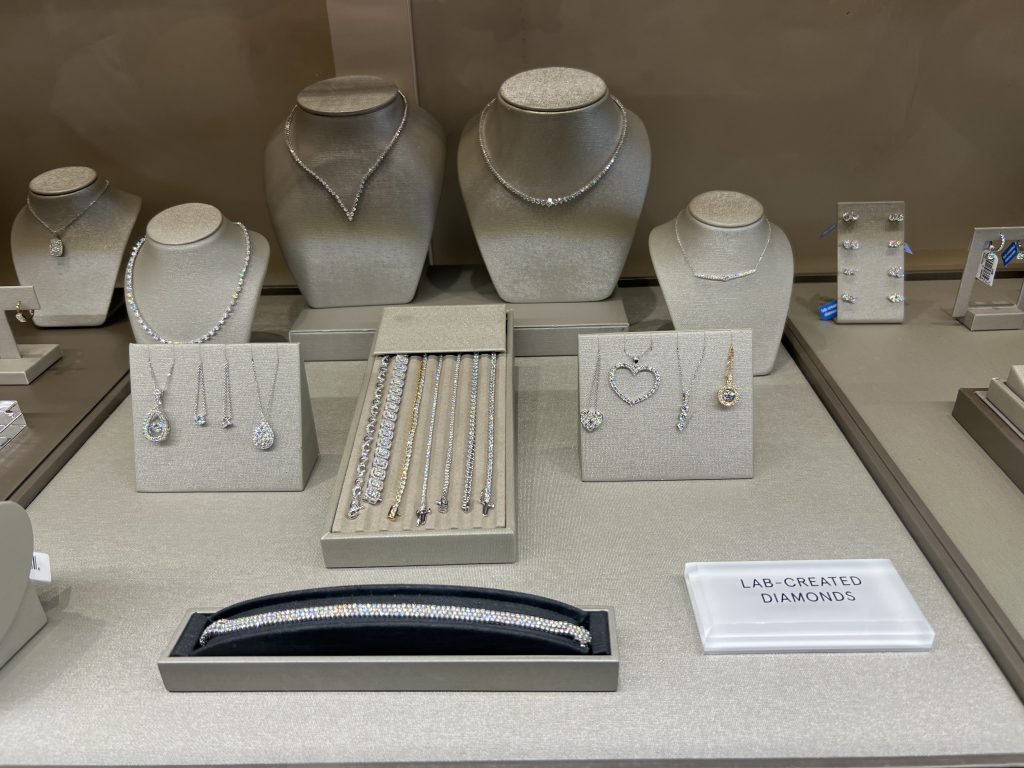
The earrings below were less lively than we hoped when we inspected them, even under the store lighting. That observation contributed to our reservations about the pieces we were shown.
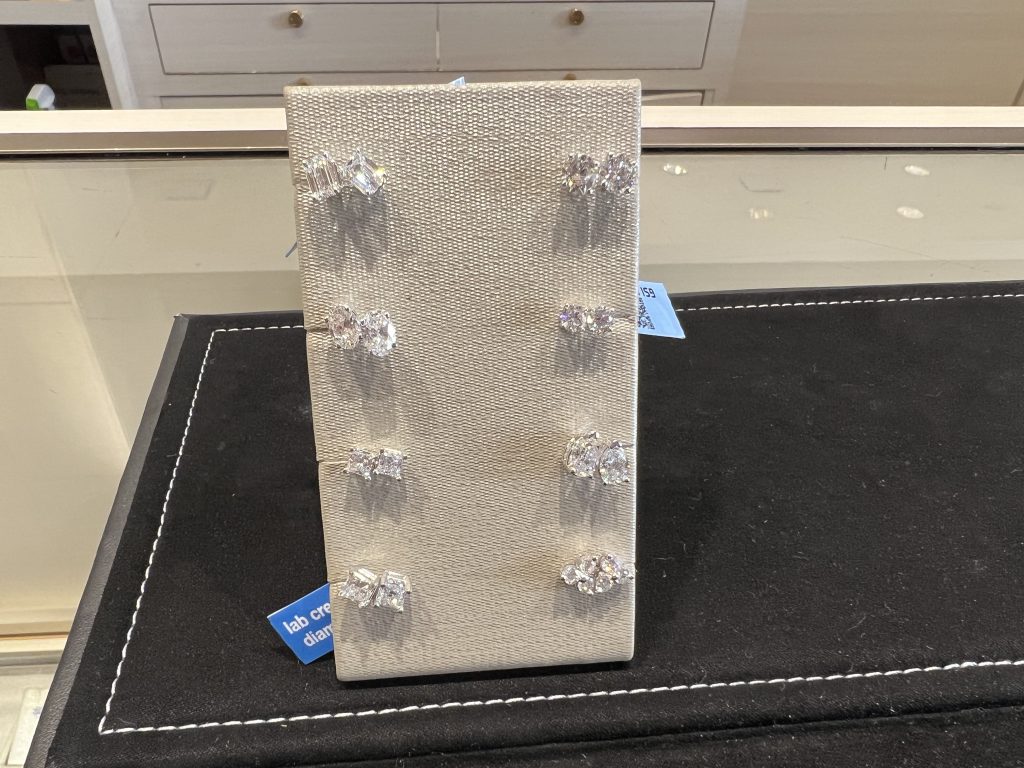
We would still judge any new shortlist on its own merits. Try the pieces on, compare them in different lighting and ask for the quality details. A label or brand name should not replace that inspection.
Customer service and diamond expertise
What happened when we asked about cut
Our support questions were practical: what was the cut grade of the diamond in the product we were considering? We had difficulty getting a clear answer and were passed between representatives.
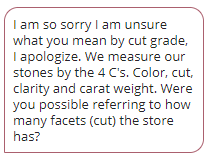
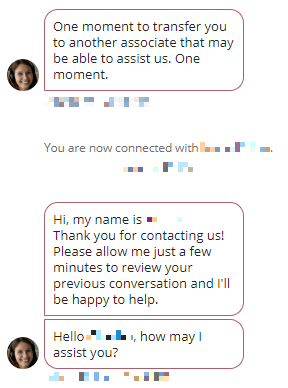
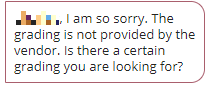
For one piece sold under “Lab-Created Diamonds by KAY,” support referred the cut-grade question to a vendor. We still could not obtain even the minimum cut grade. That left an important buying question unanswered rather than helping us compare the piece with alternatives.
That experience matters because most shoppers need help translating the specifications into a confident choice. We would expect a representative to find the answer or explain clearly how to obtain it.
Store service was mixed
Some staff were more knowledgeable than others. We also found parts of the sales approach pushy, and basic diamond-quality questions could be difficult to resolve.
On the positive side, the employees we spoke with did not try to steer us toward more expensive mined diamonds. The main problem was getting useful answers about the lab-grown pieces we wanted to assess.
If you like a Kay piece, ask the store to identify the diamond's report and explain its appearance before discussing financing or upgrades. Good service should make the decision clearer, not make you feel hurried.
Shipping and returns
Delivery options
Kay's default expedited shipping is free on orders over $199. It also offers store pickup and other delivery options. Check the promised arrival date for your item: sizing, custom work and preparation come before transit.
Returns and exchanges
The standard jewelry policy allows 30-day returns and 60-day exchanges from purchase or shipment. Exchanges take place in stores. Online returns have a free prepaid-label option.
Custom designs, engraved pieces and certain other items are excluded. Keep the packaging and paperwork, and confirm eligibility before personalizing a ring. Local returns are a genuine convenience when you have a Kay nearby.
The bottom line
Why we would compare alternatives first
Kay is a legitimate, established jeweler. Our low rating reflects the value, information and service in our research—not doubt that it is a real business.
We like the accessible stores and range of designs. We are less convinced by the buying experience for someone who wants to compare diamonds closely and keep the total cost down. The improvements in its current lab-grown collections deserve credit, but our preferred specialists remain the first places we would compare.
Using customer reviews
Trustpilot displayed a 2.1/5 score from 417 reviews when we checked in September 2026. Positive accounts often praised individual store employees who listened, explained options and helped with custom designs. Recurring concerns involved product quality, lost stones, repairs, orders, fees and inconsistent customer service.
Because Kay operates many stores, also examine recent feedback for the location you plan to use, especially its handling of repairs and returns. A capable local employee can materially improve the experience, while a national score can hide meaningful differences between stores.
Read Kay customer reviews on Trustpilot
Alternatives to Kay
These jewelers make it easier to compare lab-grown diamonds or finished jewelry before buying. Ritani is our first stop for price and loose-diamond choice; Grown Brilliance is especially strong for finished designs; Brilliant Earth combines broad design choice with showrooms; and Blue Nile includes the James Allen collection.
| Jeweler | Best for | Our rating | Shop |
|---|---|---|---|
| Ritani | Low prices, loose-diamond choice and transparent cost details | 4.7/5 | See at Ritani |
| Grown Brilliance | Distinctive finished jewelry and premium presentation | 4.5/5 | See at Grown Brilliance |
| Brilliant Earth | Design choice, shopping tools and showroom access | 4.5/5 | See at Brilliant Earth |
| Blue Nile | A large diamond selection and the James Allen collection | 4.6/5 | See at Blue Nile |
Read our detailed Ritani review, Grown Brilliance review, Brilliant Earth review and Blue Nile review for the evidence behind those ratings.
Frequently asked questions
Is Kay Jewelers trustworthy?
Kay is a legitimate jeweler founded in 1916 and part of Signet. Our reservations concern value, product information and our shopping experience. We recommend comparing the exact piece with alternatives before buying.
Are Kay's lab-grown diamonds good?
Kay sells real lab-grown diamonds, including independently certified pieces. Quality varies by diamond and collection. Look at the particular stone and its report rather than assuming everything Kay sells is either good or poor.
Should I buy a lab-grown diamond at Kay?
Consider it if you love a specific design and want local service. For a straightforward solitaire or studs, we would compare specialist sellers first. Our research found better value and clearer diamond-shopping options elsewhere.
How we reviewed Kay
The experience behind the review
The review combined online product research, store visits, jewelry inspection and direct questions to Kay's support team. The photographs and conversations show what we examined and why we asked for better diamond information.
What we compared
We assessed price, useful diamond choice, design, quality information, shopping tools, service and return options. Our price research focused on one-carat-total-weight studs and near-one-carat solitaire rings, with the specifications recorded beside each price.
Review led by Rolf Hartmann
Rolf led the review, including the store inspections, support conversations and stud-earring and solitaire comparisons behind our assessment. In September 2026, we checked Kay's current collections, custom lab-grown options, certification statements, shipping, returns and customer feedback while retaining the photographs and firsthand findings.
Questions and experiences
Join the discussion
Ask a question or share your experience. We review comments before publishing them.