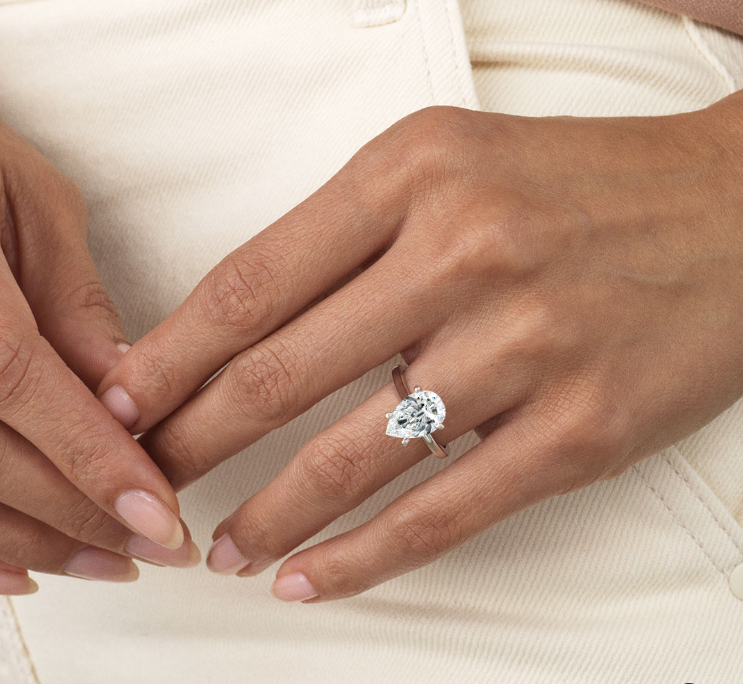





Pear-shaped lab-grown diamonds combine the sparkle of a brilliant cut with an elongated teardrop outline. They work especially well in engagement rings, pendants and drop earrings, where the pointed end gives the design a clear sense of direction.
Our top buying tip is to judge the outline and bow tie before chasing a higher color or clarity grade. A balanced pear should have smooth, symmetrical shoulders, an attractive length-to-width ratio and no distracting dark band through its center.
Pear-shaped lab-grown diamonds are grown using HPHT or CVD technology rather than mined. They have the same carbon crystal structure and fundamental optical and physical properties as mined diamonds. After growth, they are cut and polished using the same techniques as mined diamonds.
Lab-grown diamonds avoid diamond mining and its associated land, water, labor and community risks. Growing diamonds still requires substantial energy, so renewable or low-carbon electricity strengthens the environmental case. They also commonly cost 60–80% less than mined diamonds with comparable grades.
Our recommendations draw on product research, grading-report and price comparisons, store visits, and the diamond jewelry Klaus and Juli have bought and returned. For pear shapes, we give extra weight to outline, bow tie and point protection because those qualities are not captured by color and clarity grades alone.
Our quick verdict: choose a pear-shaped solitaire if you want the diamond itself to be the focus. Choose a halo or side stones if you prefer a larger, brighter outline. For earrings, compare total carat weight rather than assuming the stated weight applies to each ear.
Pear-shaped lab-grown diamond jewelry to compare
The examples below show how the pear shape changes across different types of jewelry. We selected them to illustrate useful design choices—not simply the largest carat weights. Check the listed specifications and price before buying, as jewelry inventory can change.
1. Pear-shaped lab-grown diamond engagement rings
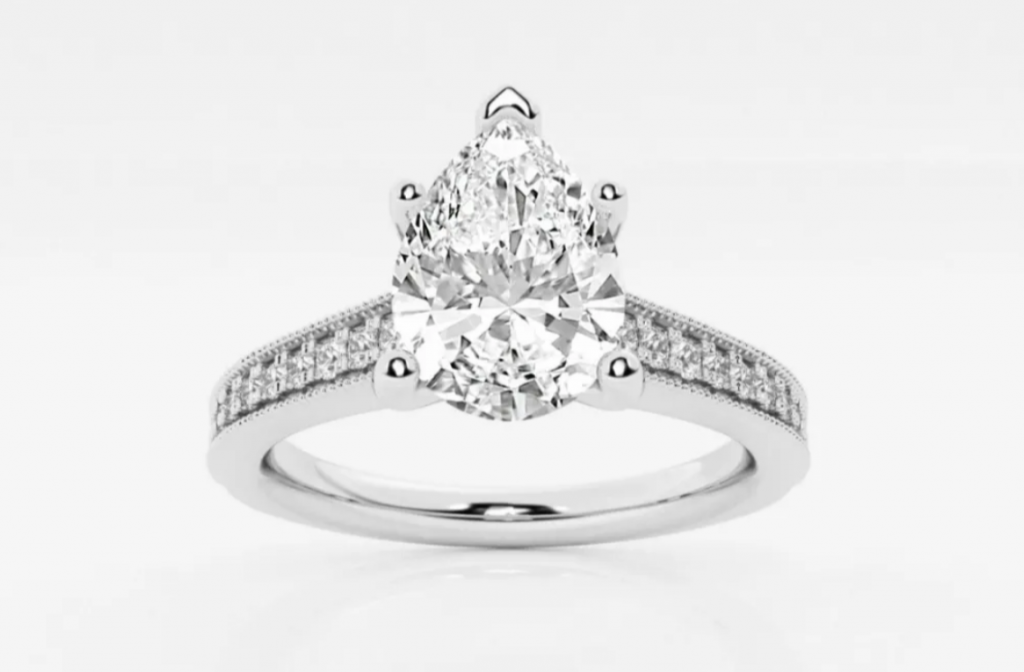
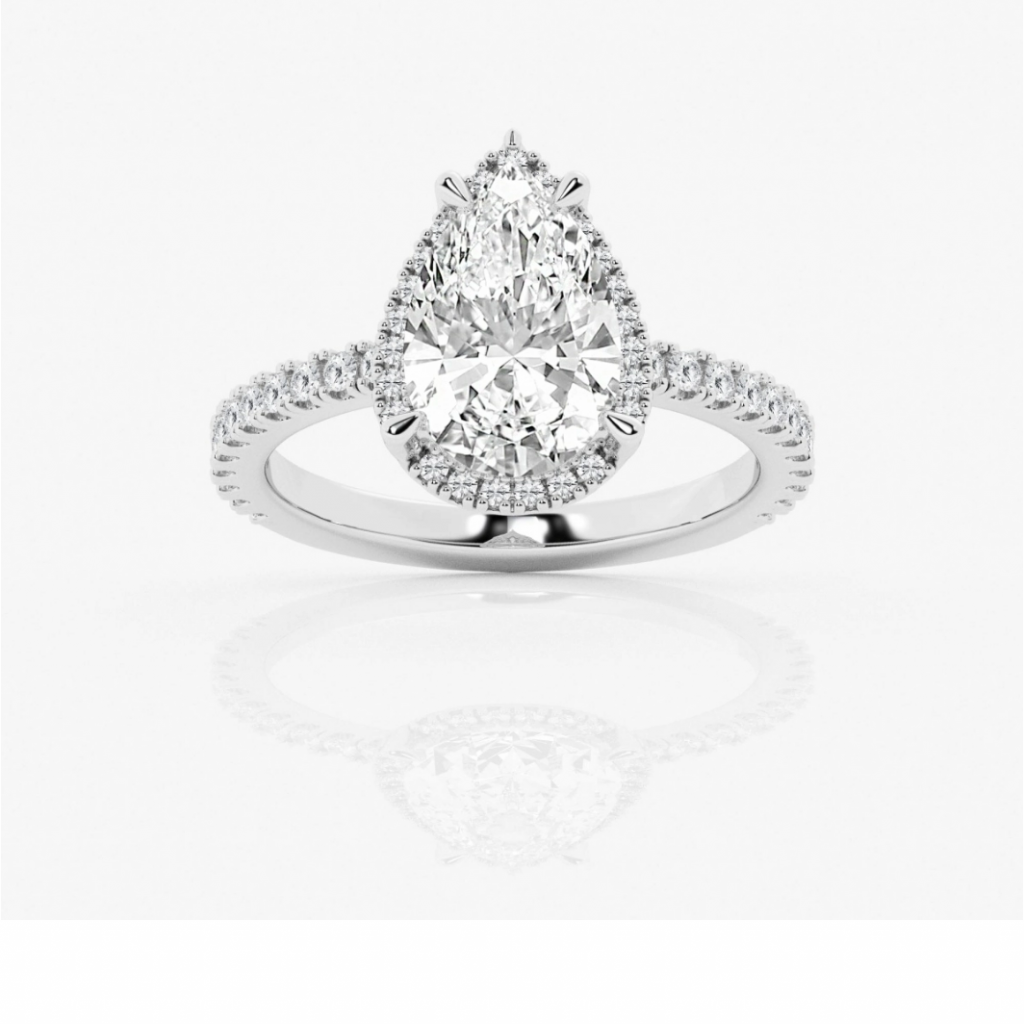
Designs and prices from January 2023.
These two rings show how much the setting changes the pear's outline. Side accents keep attention on the center stone; a halo adds a wider border of sparkle. Compare the center weight as well as the total weight, which includes the smaller stones.
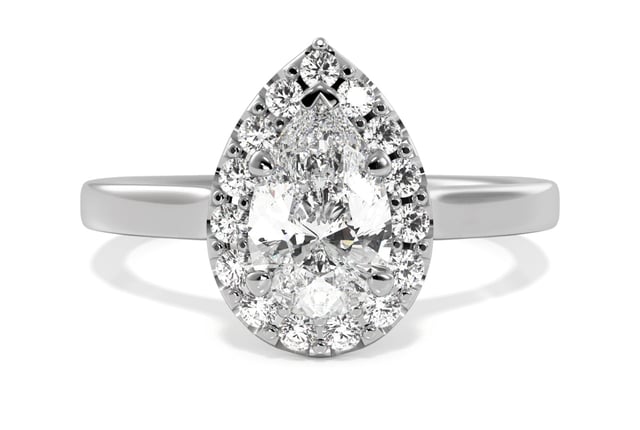
Pear-shaped halo engagement ring from Ritani
Ritani · Engagement-ring inspiration
Pear-shaped halo engagement-ring design
- Pear-shaped center style
- Halo setting
- Plain band
A halo expands the bright outline around a pear-shaped center. Check the current setting and loose-diamond combinations at Ritani.
Design shown September 13, 2026.
See at RitaniA halo makes the pear look larger from above and adds sparkle around the outline. Check that the point is protected by a V-prong and inspect the center diamond’s video for a strong bow tie.
2. Pear-shaped lab-grown diamond pendants
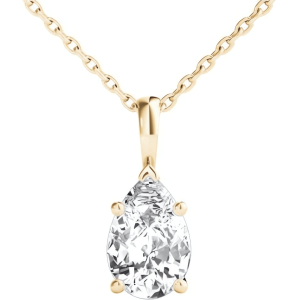
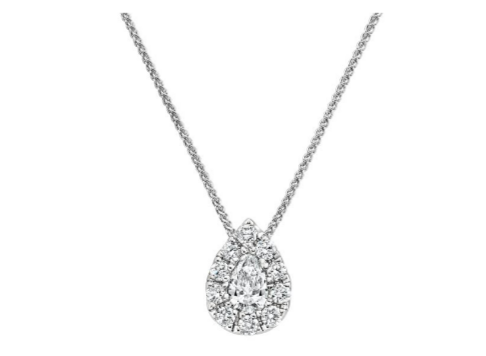
Designs and prices from January 2023.
The Ritani example separates the setting cost from the diamond, while the Brilliant Earth example is a finished halo pendant. Include the center stone and chain when comparing the complete price.
Pear-shaped solitaire pendant from VRAI
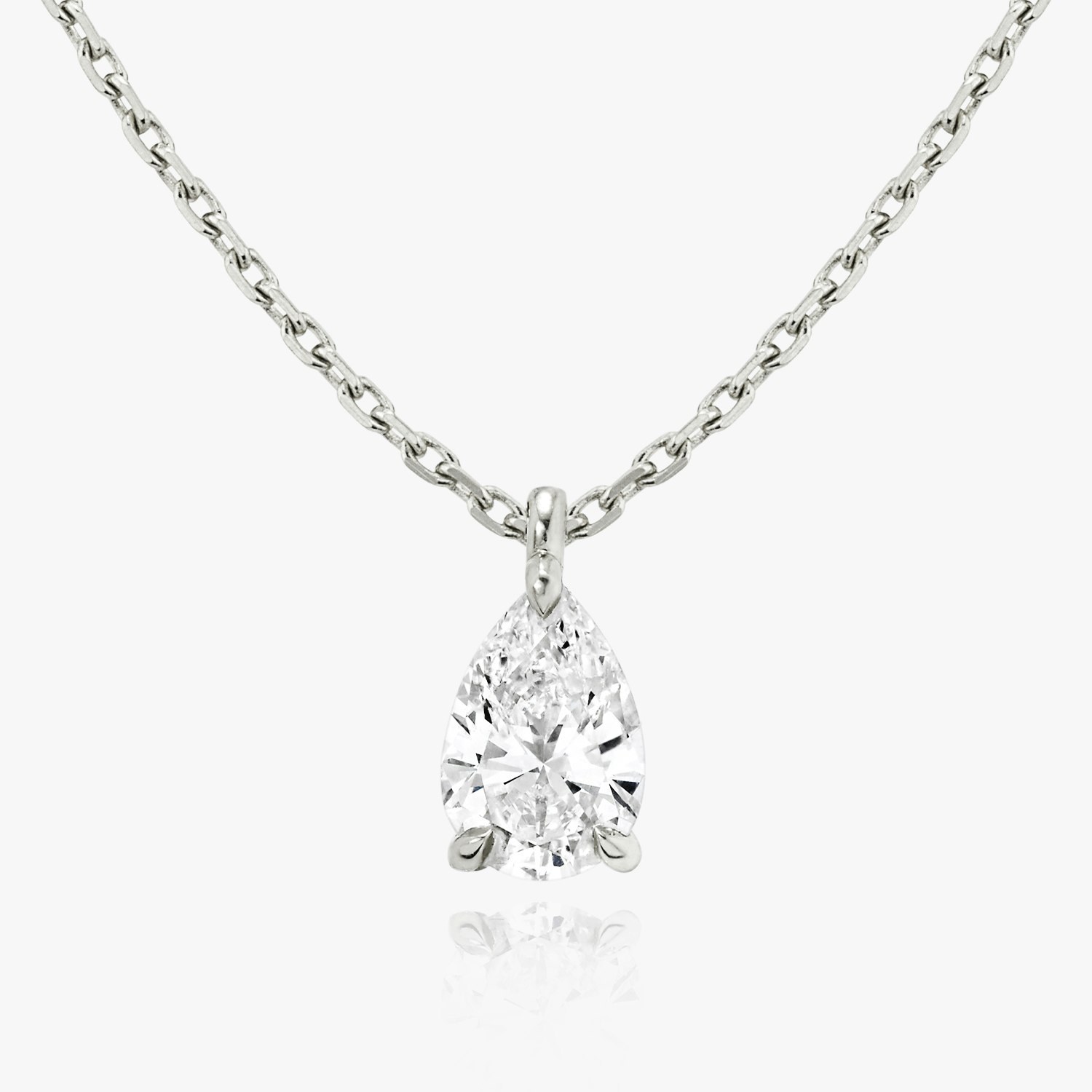
VRAI · Necklace
Pear-shaped lab-grown diamond solitaire pendant
- Pear-shaped VRAI-created diamond
- 14K white gold
- Open-back setting
The pear shape feels more distinctive than a round while keeping the simplicity of a solitaire. Check which point orientation you prefer.
Price checked September 10, 2026.
See at VRAIA solitaire pendant is the most versatile pear-shaped jewelry choice. Check the face-up measurements, chain length and whether the point faces up or down; that small orientation choice noticeably changes the look.
3. Pear-shaped lab-grown diamond earrings
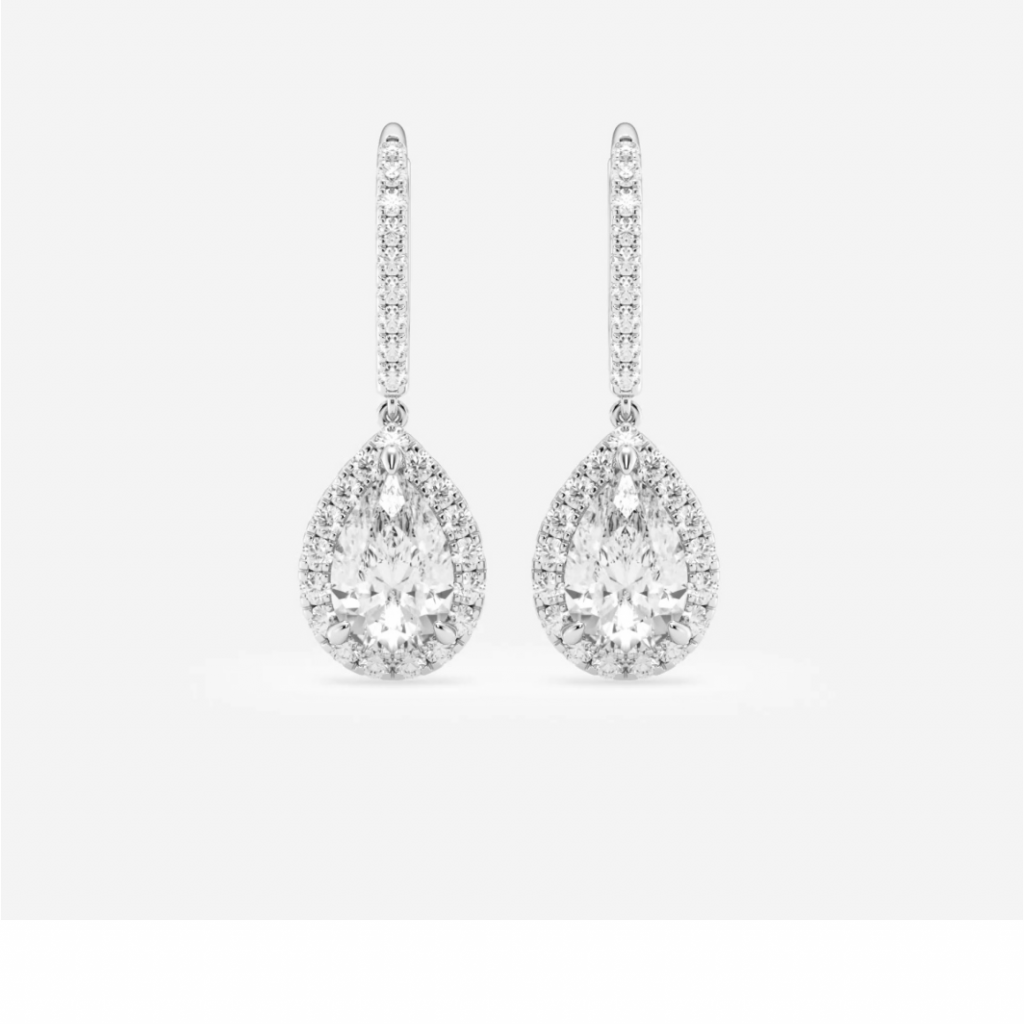
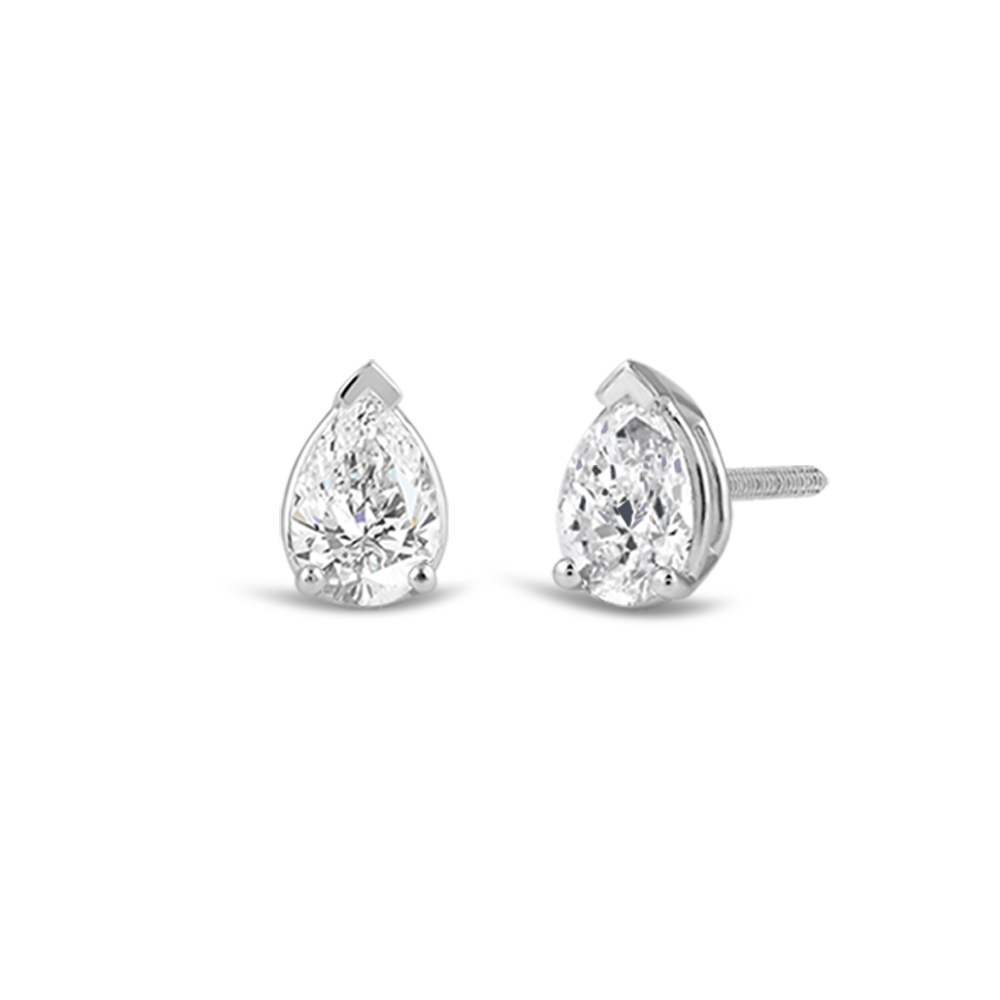
Designs and prices from January 2023.
Studs sit close to the ear for everyday wear. Drops add movement and a longer outline. A halo can make either style look larger, but compare the center diamonds separately from the surrounding accents.
Pear-shaped halo drop earrings from With Clarity
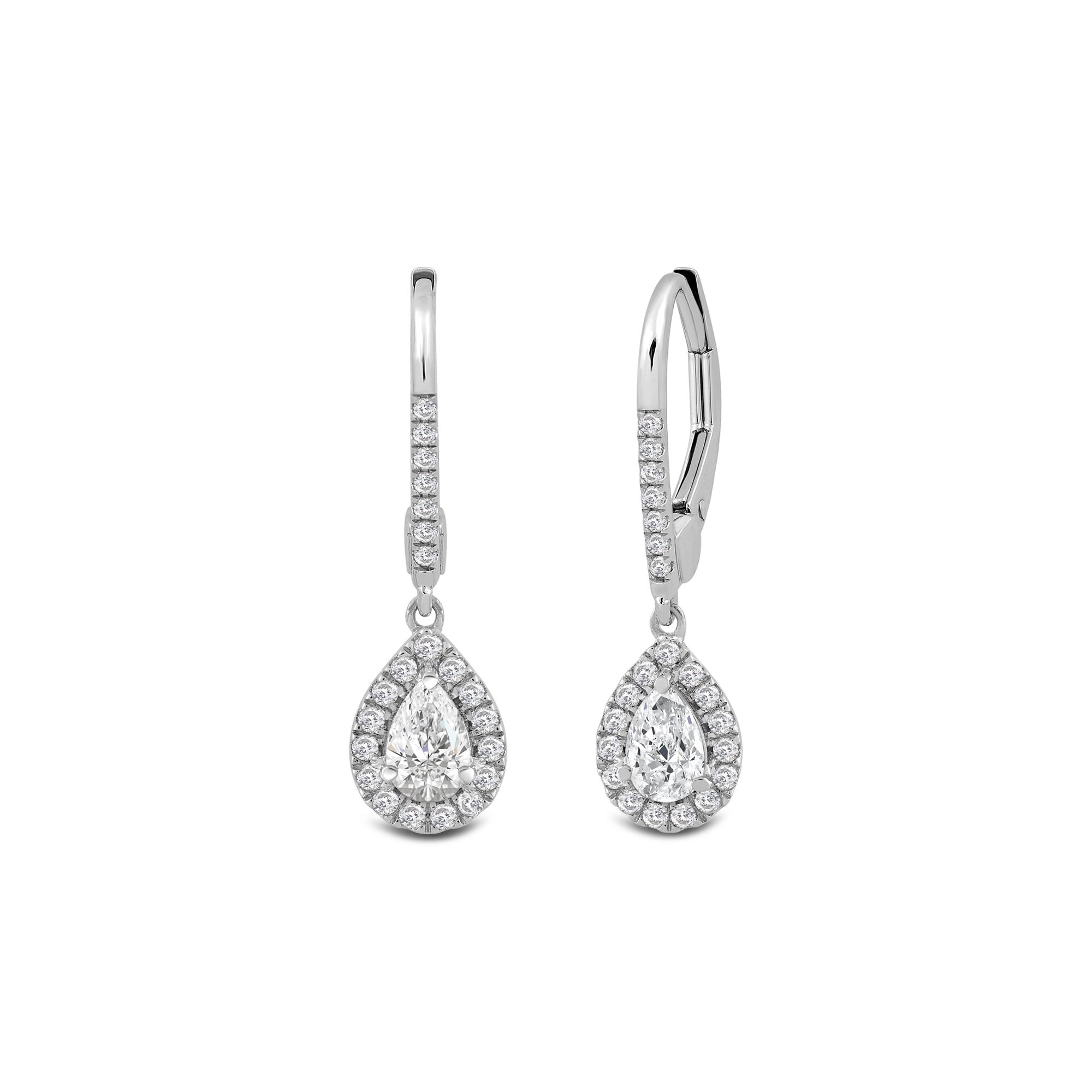
With Clarity · Earrings
Pear-shaped halo drop earrings
- 0.75 ct total weight
- 14K white gold
- Pear-shaped centers with round halos
- Lever-back closures
A dressier option with more movement than studs. Check the full drop length and make sure the lever backs close smoothly.
Price checked September 2, 2026.
See at With ClarityDrop earrings let the pear’s elongated shape move and catch the light. Confirm whether the listed weight is for the pair, and compare the overall drop length as well as the diamond weight.
4. Pear-shaped bracelets and fashion rings
Pear-shaped stations create a distinctive bracelet or non-engagement ring, but they need secure settings because every diamond has a vulnerable point. Look for protected tips, smooth prongs and a bracelet clasp with a safety mechanism. For rings, try the design alongside any band you expect to wear with it.
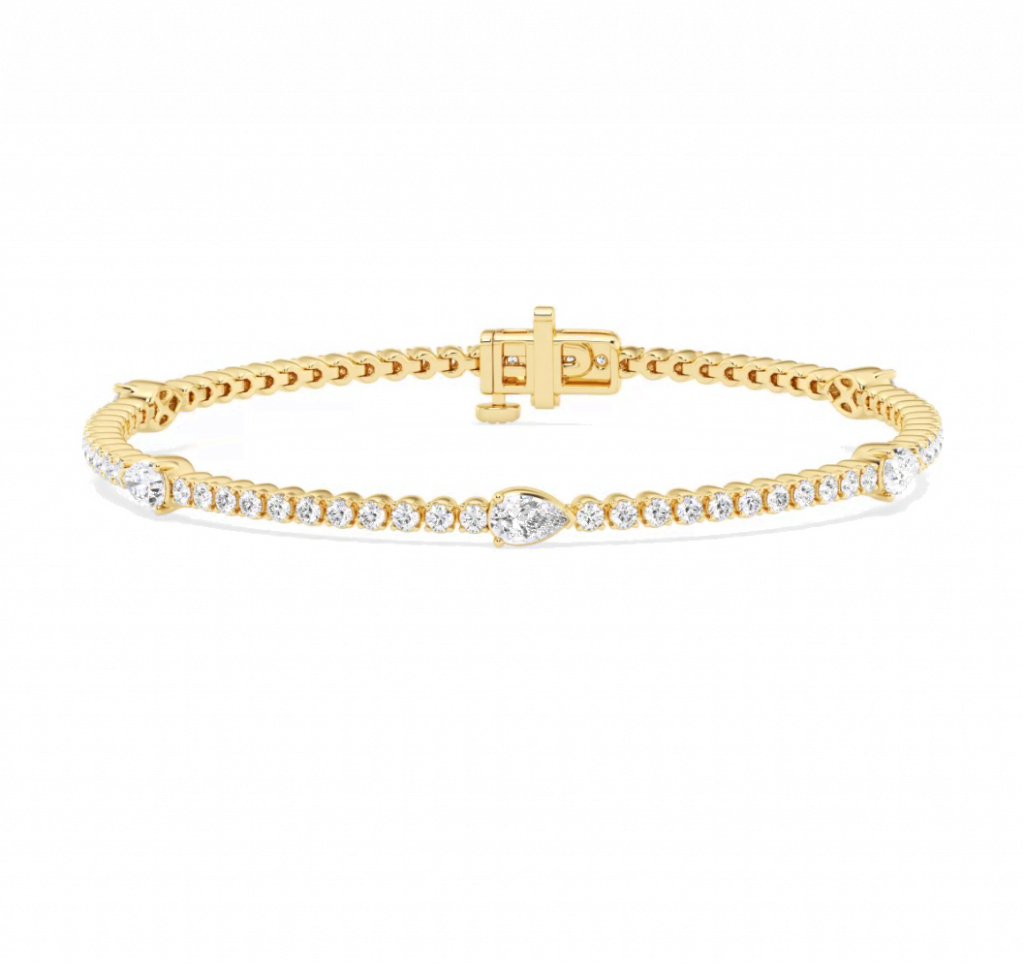
Design and price from January 2023.
Five pear-shaped stations break up the repeating line of a tennis bracelet. Check that the larger settings sit comfortably against your wrist and do not catch when you bend your hand.
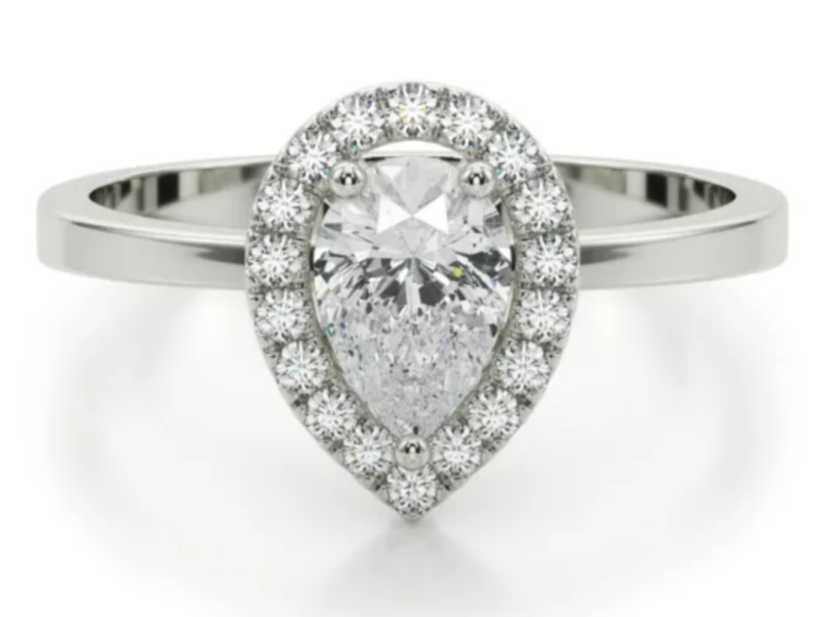
Design and price from January 2023.
A pear-shaped halo can work as an engagement ring or a right-hand ring. This Libby design keeps the band plain so the outline stands out. Our Clean Origin review explains why we now recommend comparing other sellers for value and service.
How to choose pear-shaped diamond jewelry
- Outline: avoid uneven shoulders or a shape that looks too triangular unless that is the style you want.
- Bow tie: some contrast is normal, but a dark band that remains prominent as the diamond moves can reduce its beauty.
- Proportions: many buyers prefer a length-to-width ratio around 1.45–1.60, although personal preference matters more than a narrow target.
- Setting security: the pointed tip should be protected, ideally by a V-prong or bezel.
- Grades: prioritize cut quality and appearance. An eye-clean clarity grade and a near-colorless diamond often offer better value than paying for grades you cannot see.
- Complete price: compare the finished piece, metal, total diamond weight and return terms—not the headline carat figure alone.
Pear-shaped diamond jewelry FAQs
Do pear-shaped diamonds look larger?
They often look larger than round diamonds of the same weight because their elongated outline covers more length on the finger or ear. Compare actual millimeter measurements because carat weight measures mass, not visible size.
Which way should a pear-shaped diamond point?
On a ring, many people wear the point toward the fingertip because it visually lengthens the finger, but either direction is valid. Pendants and earrings may point up or down depending on the design. Choose the orientation you find most balanced.
Are pear-shaped diamonds fragile?
Diamond is extremely hard, but the pear’s pointed tip is more vulnerable to impact than a rounded edge. A V-prong or bezel should protect that point, especially in rings and bracelets worn on the hands.
What setting is best for a pear-shaped diamond?
A solitaire shows the full outline, a halo creates a larger sparkling border, and a bezel gives the edge more protection. Whatever style you choose, make sure the tip is covered and the pear sits straight in the setting.
Where to buy pear-shaped lab-grown diamond jewelry
Start with the jewelry style you want, then compare the pear’s outline, bow tie, dimensions, grading report and complete price. These sellers have different strengths:
| Jeweler | Best for | Rating | Shop |
|---|---|---|---|
| Ritani | Low loose-diamond prices and detailed filters | 4.7/5 | See at Ritani |
| Blue Nile | A polished buying experience and James Allen collection | 4.6/5 | See at Blue Nile |
| Grown Brilliance | Finished jewelry and engagement-ring designs | 4.5/5 | See at Grown Brilliance |
| Brilliant Earth | Premium settings and showroom support | 4.5/5 | See at Brilliant Earth |
| With Clarity | Ring design and Home Preview | 4.5/5 | See at With Clarity |
Questions and experiences
Join the discussion
Ask a question or share your experience. We review comments before publishing them.