


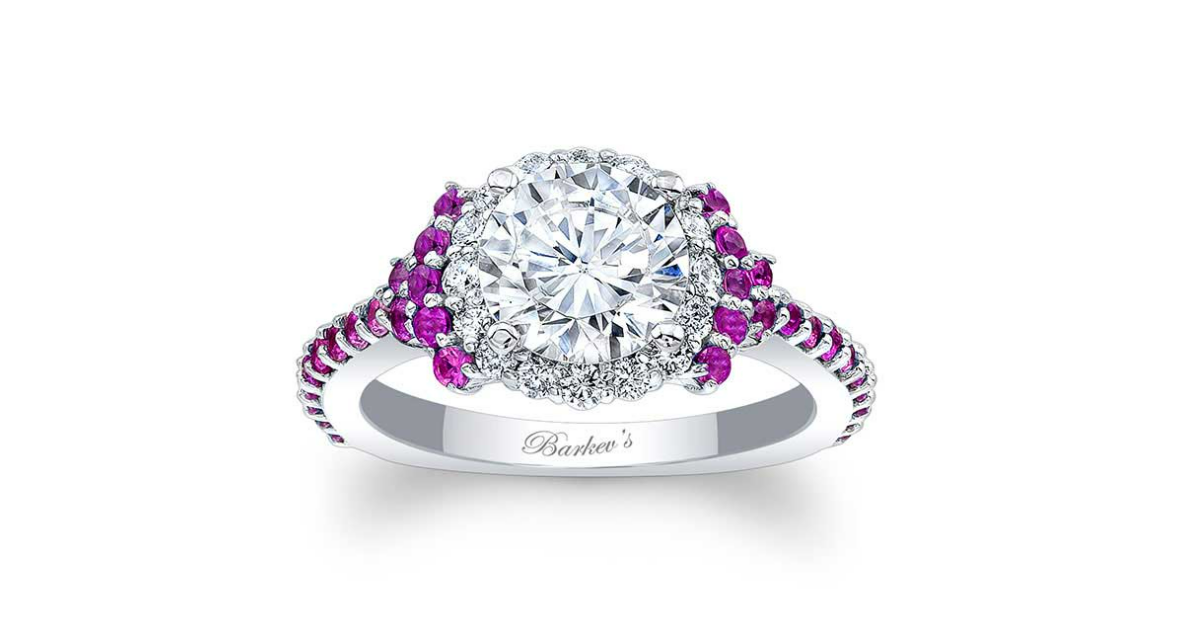


Our Barkev's Jewelry review verdict
Barkev's is worth considering if you want an engagement ring with a distinctive design. That was the strongest impression in our review, and it remains the main reason we would choose it over a seller focused on the widest loose-diamond inventory.
We particularly like the expressive shapes and colorful combinations. Barkev's offers something different from a long list of similar solitaires, while still allowing you to think carefully about the diamond at the center.
Our rating remains 4.0/5. Choose Barkev's because you love the design. If you mainly want the lowest price for a conventional loose diamond, compare lab-grown diamonds at Ritani first. For another design-led option, see our Grown Brilliance review.
Barkev's history and designs
Barkev Meserlian founded the business in Los Angeles in 1981. It spent decades making designs sold through independent jewelry stores before opening its ecommerce store in 2018, according to its current company history.
Its Los Angeles design and ring-making experience remain part of the appeal, but the range is now broader. The company describes an expansion into everyday gold, vermeil and silver jewelry, including work with overseas workshops. Not every item should therefore be described as made entirely in Los Angeles.
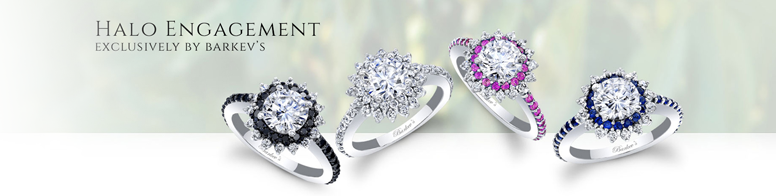
The rings were what first drew us to the brand. Some use flowing shoulders, unexpected profiles or colored stones to create a more individual look. You do not have to want the most elaborate piece to appreciate a setting that feels different on the hand.
Is Barkev's legitimate?
Yes. Barkev's is an established jeweler with decades of design experience. Our review found a professional buying process and enough diamond information to make a considered choice. We would happily consider it for a design we loved, while comparing the diamond and complete price before ordering.
Barkev's lab-grown diamonds
Barkev's offers both mined and lab-grown diamonds and includes lab-grown stones throughout its ring designs rather than treating them as an afterthought.
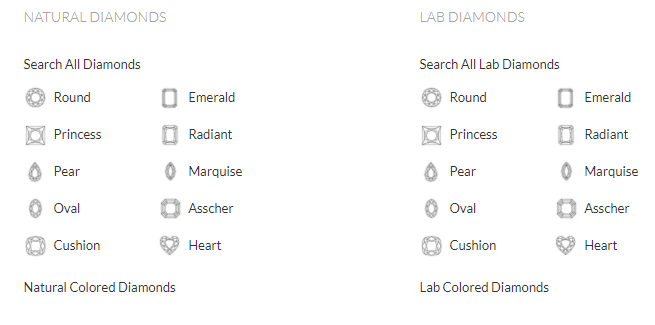
A lab-grown diamond is a real diamond. Choosing it can leave more of your budget for the setting, a larger stone or simply a lower total cost. It does not remove the need to compare the diamond's cut and appearance.
We would be careful with broad environmental claims, whether they come from Barkev's or another seller. The more useful buying question is what is known about the particular stone and whether the finished ring suits your priorities.
Diamond selection and search
Our inventory search found 4,707 lab-grown diamonds. Narrowing the criteria left 17 candidates for our comparison. That was enough to put together a useful shortlist, though far fewer choices than at some larger online sellers.
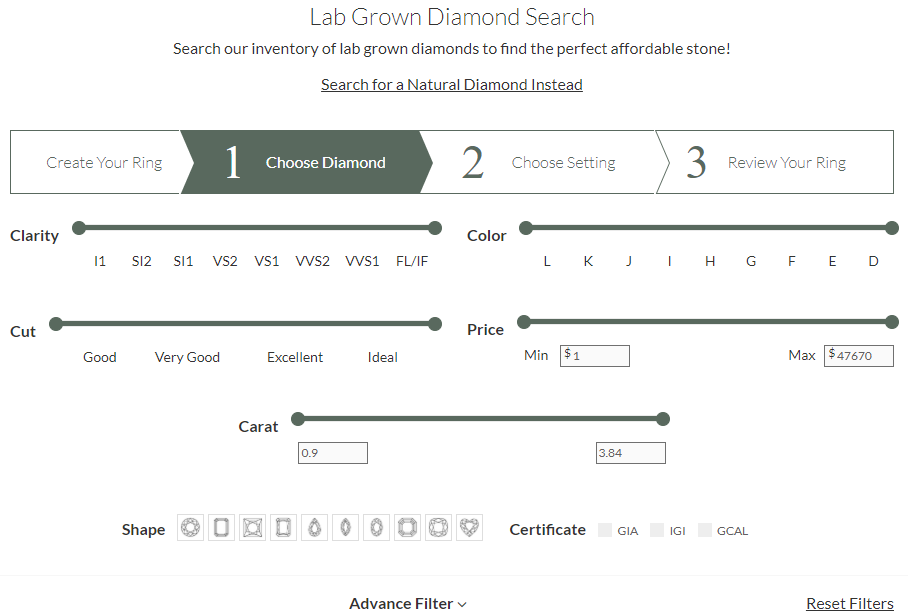
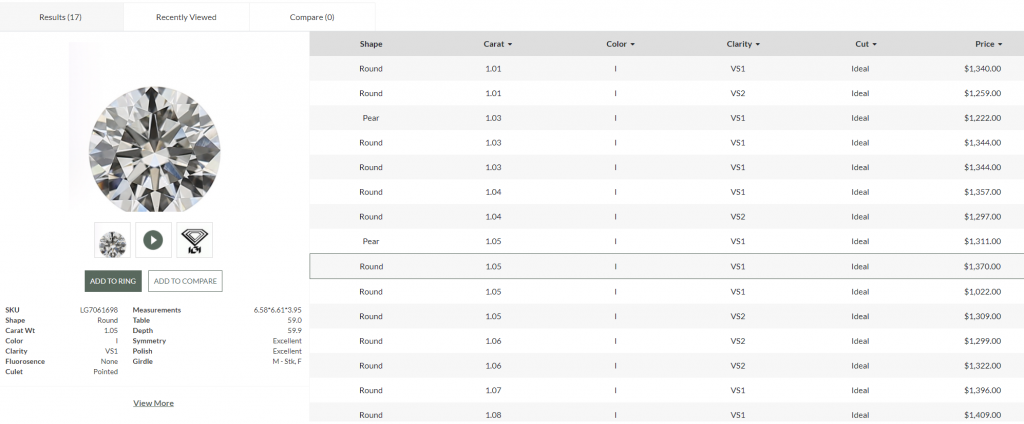
For the reference search, we looked around one carat, with I color, VS2 clarity and an Ideal round cut label. We also considered slightly smaller stones around 0.90–0.92 carats, where the price could be more appealing without a large visible size difference.
This was a practical way to compare value rather than chase the highest possible grades. A good cut matters a great deal to sparkle. The color and clarity you prefer depend on the individual stone, setting and what you can actually see.
Those inventory counts describe our research. For today's purchase, ask for several suitable options in your budget and compare their measurements, reports and appearance. A smaller selection is not a problem if it contains the right diamond; it becomes a problem when you cannot find a suitable alternative.
Buying and inspecting your diamond
We liked the clear route from a diamond search to its details. Moving between the overview, images and grading information was straightforward.
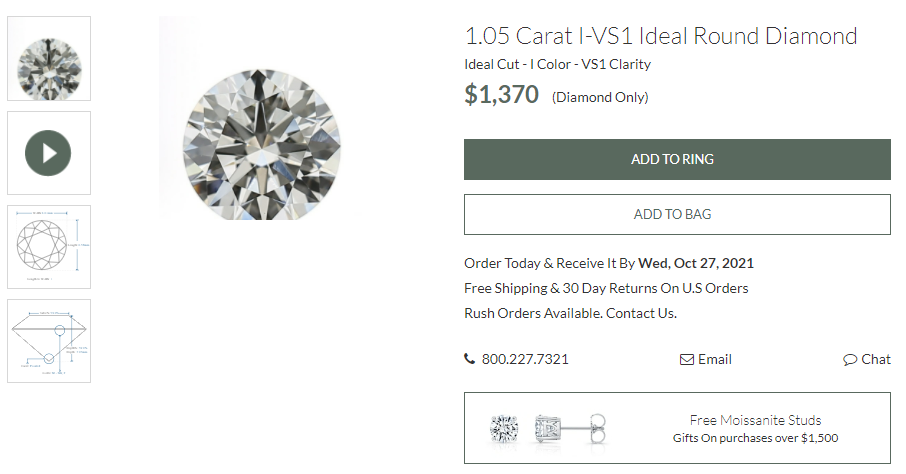
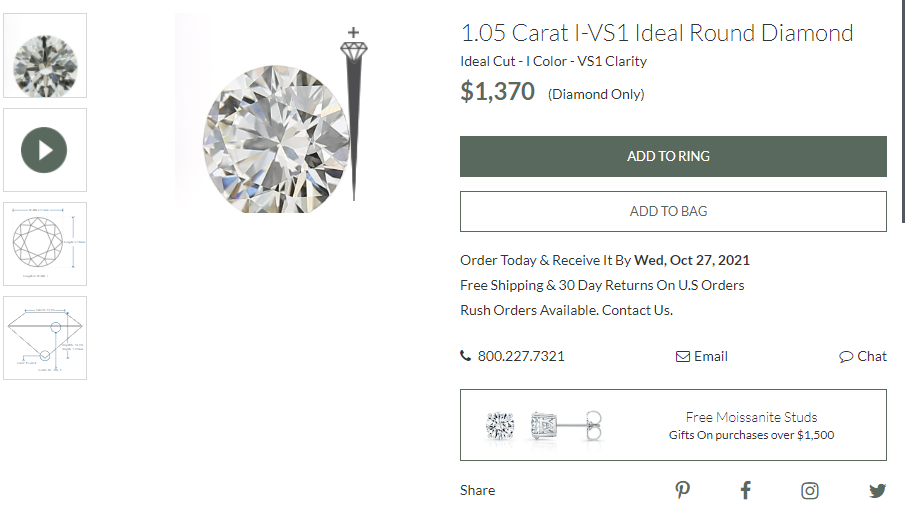
The diamond videos were useful, but smaller and less detailed than the best inspection tools we had used elsewhere. We wanted to see enough to judge the stone, not just a pleasing image of a diamond.
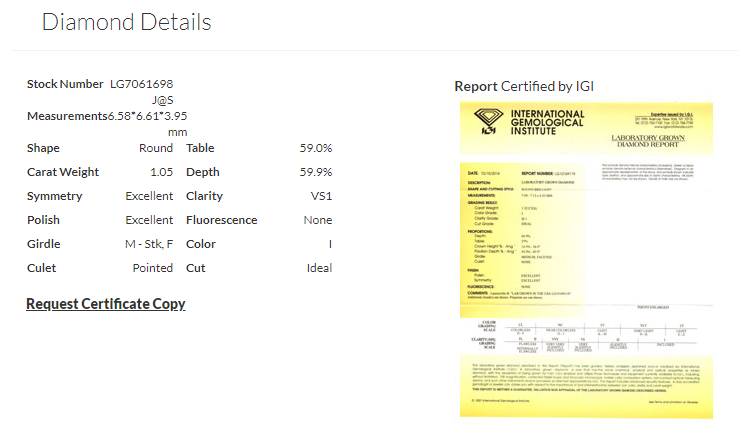
The grading report was an important part of that process. It let us check the listed information and learn more about the diamond before deciding whether to shortlist it.
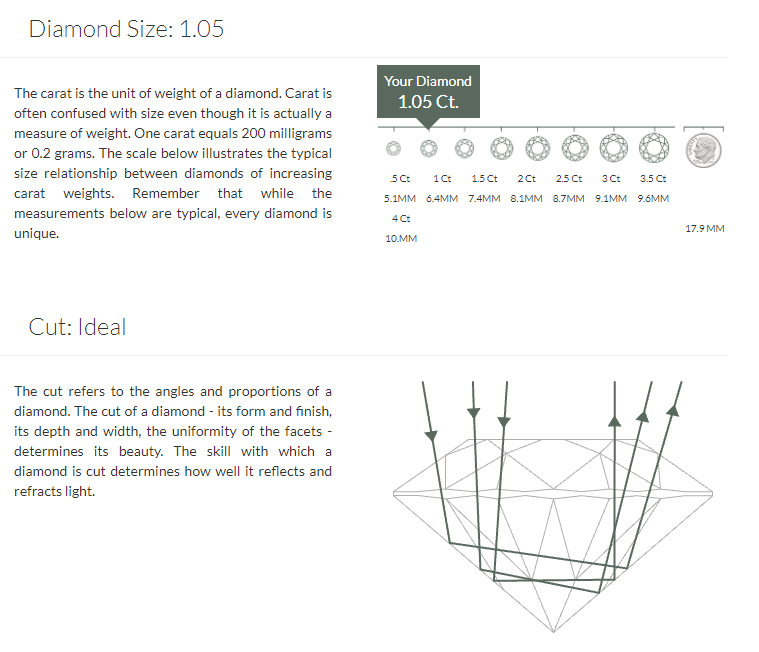
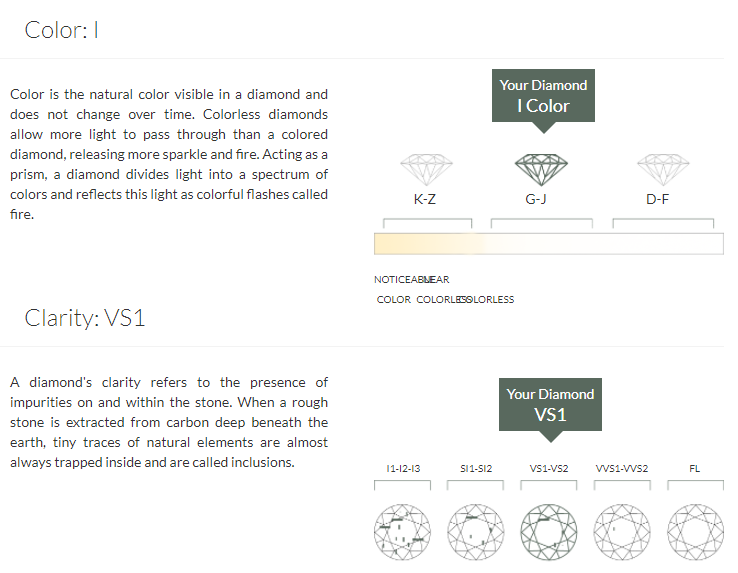
For a purchase now, request images of the actual stone and read its report. If a design partly covers the diamond or uses a colored center, ask to see how the proposed combination will look. A setting can be beautiful in a close-up photograph and still feel different when worn.
Seeing a sample at home
Barkev's currently promotes a sample-at-home option, and its FAQ explains how to arrange the return of a sample. Ask which design is available, what the sample is made from and how long you can keep it.
A sample can help you judge the ring's height, width and style on your hand. It does not establish the sparkle or quality of the actual diamond you will buy. For a brand whose main appeal is design, that chance to assess the shape is particularly useful.
Diamond quality
Our review found suitable diamonds and useful reports, including many from IGI. We liked that buyers could make a choice based on the stone's information rather than only selecting a carat weight.
We would not assume that every diamond in an inventory has the best possible cut. A seller's search label is a starting point. Look at the report, proportions and video, then ask the jeweler to explain why it recommends that stone for your ring.
For a round diamond, strong light return should be a priority. For fancy shapes such as ovals and pears, the outline and appearance as the stone moves also matter. Two diamonds with similar listed grades can look quite different.
Our advice is to avoid spending the whole budget on a headline grade. A well-chosen diamond in a design you enjoy is a better result than the highest color or clarity grade paired with a setting you merely tolerate.
Barkev's diamond prices
Our one-carat reference search found prices around $1,260–$1,325. At the time of that comparison, a similar search at Clean Origin was around $1,050, while Ritani offered options below $1,000. This supported our conclusion that Barkev's strongest reason to buy is the design rather than the lowest loose-diamond price.
The result put Barkev's above the cheapest options we found, but not so far away that we would dismiss a ring we particularly liked. The design was an important part of the value.
For an up-to-date starting point, use our one-carat lab-grown diamond price guide. Then compare the finished ring price, including the setting and any design changes.
A straightforward solitaire is relatively easy to compare between stores. An unusual Barkev's setting may not have a close equivalent elsewhere. In that case, decide what the design is worth to you rather than pretending two different rings are the same product.
Shipping and returns
Barkev's shipping policy, checked in September 2026, offers free insured US delivery. It generally quotes two to three weeks from ordering for made-to-order designs. Delivery requires an adult aged 21 or over to sign. Confirm the timing before planning a proposal around a particular date.
Its return policy allows eligible returns within 30 days of receipt, with two free insured US returns per customer each year. Request authorization and return the piece within that window, unworn and with its packaging and documents.
Altered, engraved, damaged or otherwise ineligible pieces cannot be returned. A missing diamond certificate incurs a $250 replacement charge. Confirm how any personalization affects your order before it is made.
What we like and what we would improve
What we like
- Ring designs with a recognizable style rather than only familiar settings.
- The ability to combine an interesting setting with a lab-grown diamond.
- Useful diamond information in our shopping research.
- A sample option that can help you judge how a design looks on your hand.
What we would improve
- A broader diamond shortlist would make narrow searches easier.
- More detailed inspection images would help buyers compare individual stones.
- Buyers focused purely on loose-diamond price may find stronger options elsewhere.
Our final Barkev's recommendation
We recommend considering Barkev's when one of its designs really appeals to you. It combines an experienced jewelry business with a more individual approach to rings, and that is worth paying attention to.
We would not make it our first stop for the cheapest conventional loose diamond. Our recommended jewelers include better starting points for that. But if the setting is the reason you love the ring, Barkev's deserves a place on your shortlist.
Our 4.0/5 score reflects the design strength, useful buying process and reasonable value in our comparisons, balanced against a narrower diamond selection and room for improvement in inspection tools.
Customer feedback
The customer reviews we collected alongside our research added another perspective on the finished jewelry and service.
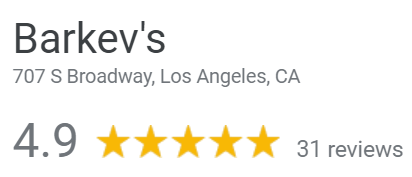
Look for detailed accounts of the type of ring you want, especially comments on comfort, communication and the final result. If you are ordering a custom design, how the jeweler handles questions and changes can matter as much as the initial ordering experience.
Barkev's publishes verified-buyer reviews that frequently praise distinctive designs, finished-ring quality and helpful service. Because those testimonials appear on the seller's own website, we would read them together with independent feedback and ask detailed questions about the exact design, production time and return eligibility. Read Barkev's verified-buyer reviews.
How we reviewed Barkev's
We examined Barkev's ring designs, searched its lab-grown diamond inventory, compared a roughly one-carat reference selection and worked through the available images, videos and grading information. We also compared prices and buying terms with other jewelers and read customer feedback.
Rolf Hartmann conducted much of the diamond and jewelry assessment, and Klaus Thorup is the current author and editor. In September 2026, we checked the company history, jewelry range, sample information, shipping and returns against Barkev's published information.
Questions and experiences
Join the discussion
Ask a question or share your experience. We review comments before publishing them.