


How much does a 5-carat lab-grown diamond cost?
In our September 2026 comparison, a loose five-carat lab-grown diamond cost $1,338 to $8,210. Ritani had the lowest benchmark and Brilliant Earth the highest. The seller-balanced typical price was $4,290.
Our benchmark is a round diamond from 4.95 to 5.05 carats, with E color, VVS2 clarity, and a high cut grade. The setting is not included. At five carats, the setting needs to be substantial and secure, so the finished-ring total can be meaningfully higher.
Ritani's five lowest qualifying round diamonds cost $1,337 to $1,340. The middle price of those five was $1,338. Its unusually inexpensive, deep inventory is why we give each seller equal weight in the comparison.
Read our Ritani review See five-carat diamonds at Ritani
Five-carat lab-grown diamond prices in 2026
“Typical” is the middle of the seller benchmark prices above. Each seller counts once, so a jeweler with a much larger inventory cannot pull the figure down simply by listing more diamonds.
| Seller and sample | Price | Difference |
|---|---|---|
| RitaniMiddle price of five lower-priced diamonds | $1,338 | Lowest in our test |
| With Clarity5.00 ct current public sale price | $3,338 | 149.5% more |
| Grown Brilliance5.05 ct current E/VVS2 Excellent-cut result | $4,290 | 220.6% more |
| Blue Nile5.00 ct current IGI Ideal-cut result | $6,655 | 397.4% more |
| Brilliant EarthMiddle price of five lower-priced comparable diamonds; grading lab not provided | $8,210 | 513.6% more |
With Clarity and Grown Brilliance occupied the middle of this comparison. Blue Nile and Brilliant Earth cost more, but may appeal to buyers who value their shopping tools, showrooms, service, or setting selection.
How large is a five-carat diamond?
A well-proportioned five-carat round diamond is roughly 11 millimeters across. It is unmistakably large and will cover a substantial part of the finger. Elongated fancy shapes may look even bigger from the top.
This size changes the practical buying decision. A low, secure setting can make the ring more comfortable and less prone to catching. Wider bands often balance the center better than ultra-thin ones. Consider how the ring will sit beside a wedding band and whether it turns on the finger.
What matters most at five carats?
Cut is unforgiving at this scale. Avoid stones that carry excess weight in the depth or show dead areas in the video. A lighter diamond with better proportions can look larger and brighter than one that reaches exactly five carats.
E/VVS2 is a comparison standard, not a requirement. G–H color and an eye-clean VS grade can save money, but inspect tint and inclusions carefully because both are easier to see in a large stone. Step cuts often need higher clarity than brilliant cuts because their broad facets reveal the interior.
Search from about 4.80 carats and compare millimeter size. Also confirm whether the chosen setting accepts the stone's exact dimensions before ordering; very large diamonds may require a custom head or a special-order setting.
Five-carat round versus fancy-shaped diamonds
Fancy shapes can offer excellent value. Elongated ovals, pears, marquises, and emerald cuts often look larger than a five-carat round diamond. Some shapes cost less, but the price changes with demand, proportions, and how efficiently each stone was cut.
To compare shapes without mixing in different seller markups, we used the five lowest qualifying Ritani API results for each of ten shapes. Every diamond was 4.95 to 5.05 carats, E color, VVS2 clarity, and IGI graded. Round diamonds had Ritani's Ideal label; the fancy shapes had Very Good or better cut labels. In total, 876 Ritani diamonds met those rules.
| Shape | Middle price | Sample range | Cut used |
|---|---|---|---|
| Round | $1,338 | $1,337–$1,340 | Ideal |
| Oval | $1,725 | $1,642–$1,786 | Very Good |
| Emerald | $1,748 | $1,649–$1,771 | Very Good |
| Pear | $1,393 | $1,390–$1,393 | Very Good |
| Marquise | $2,085 | $1,830–$2,089 | Very Good |
| Radiant | $1,340 | $1,338–$1,340 | Very Good |
| Cushion | $1,726 | $1,516–$1,750 | Very Good |
| Princess | $1,429 | $1,359–$1,429 | Very Good |
| Asscher | $1,713 | $1,637–$1,724 | Very Good |
| Heart | $1,822 | $1,645–$1,829 | Very Good |
Round had the lowest typical price at $1,338, with radiant close behind at $1,340. We used the middle price among the five lowest qualifying listings for each shape. Marquise was highest at $2,085. The result reflects inventory on one date, but it also shows why buyers should search more than one shape if their design preference is flexible.
Current five-carat examples
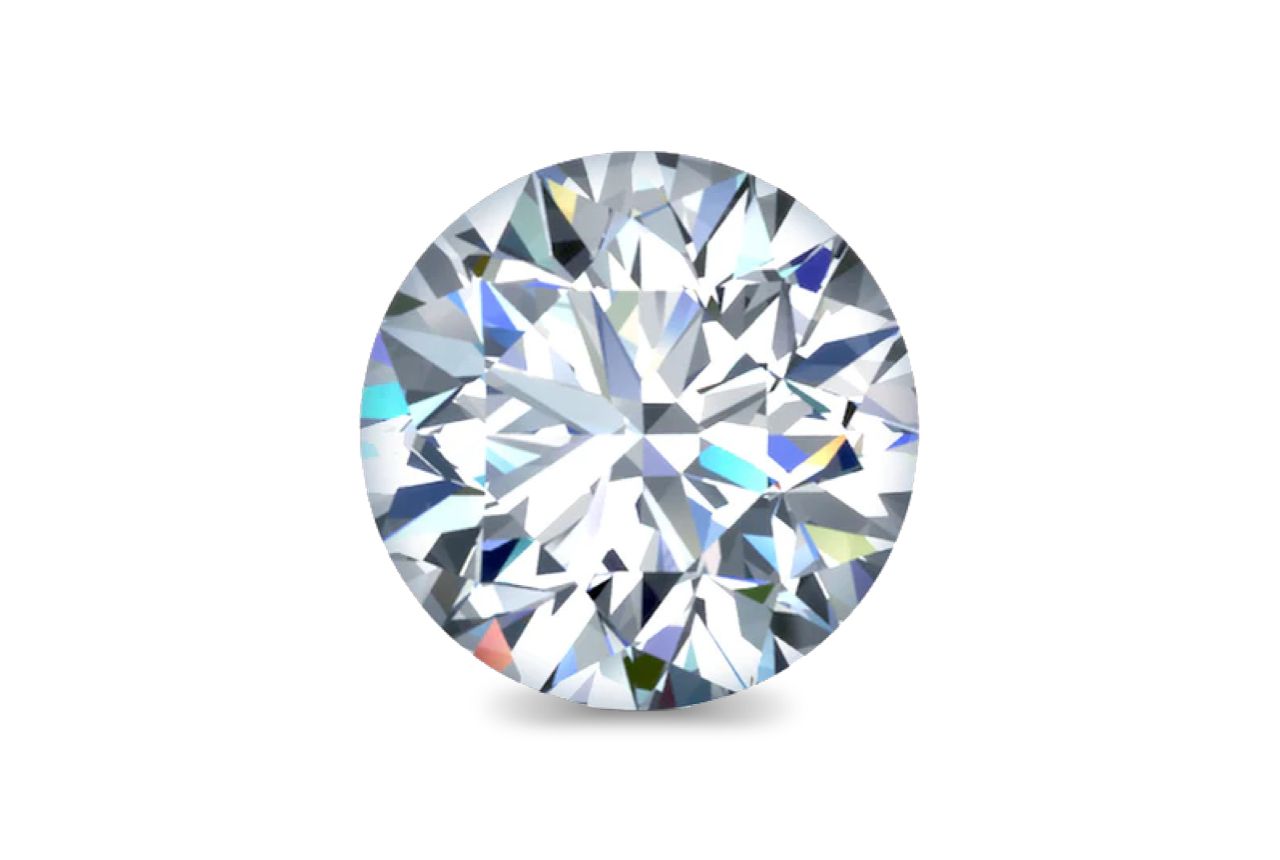
round · IGI
$1,337
4.97 ct · E · VVS2 · Ideal
Lowest qualifying round result in the API capture.
Visit Ritani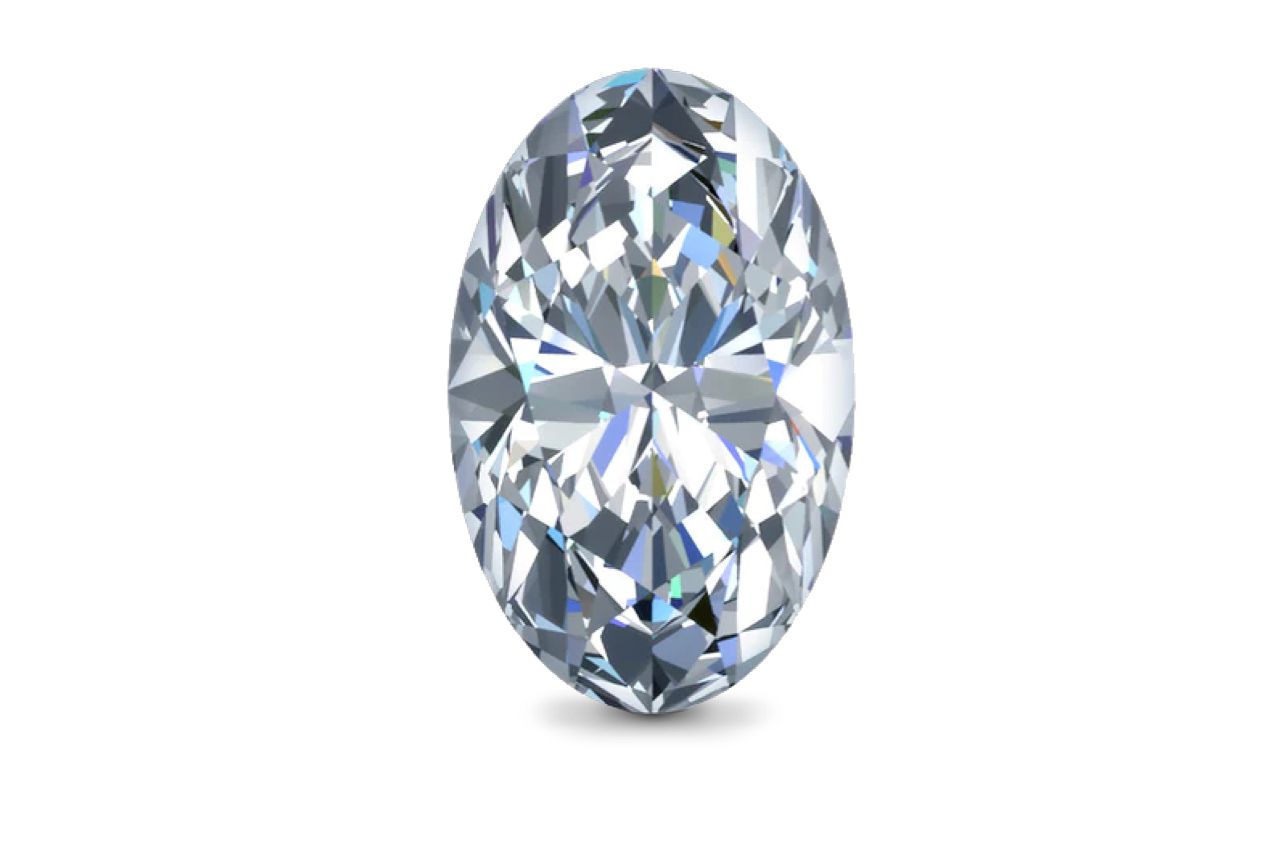
oval · IGI
$1,642
5.01 ct · E · VVS2 · Very Good
Lowest qualifying oval result in the API capture.
Visit Ritani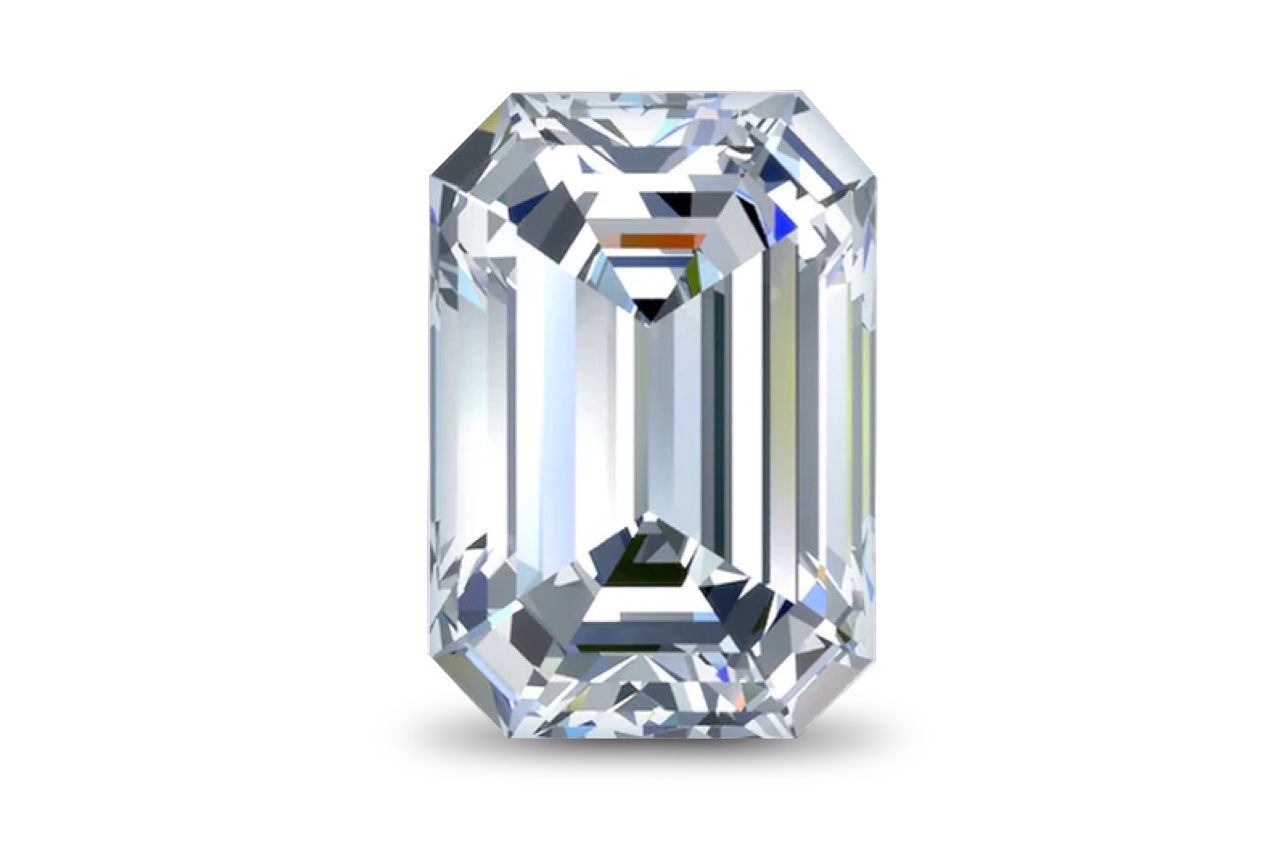
emerald · IGI
$1,649
5.01 ct · E · VVS2 · Very Good
Lowest qualifying emerald result in the API capture.
Visit Ritani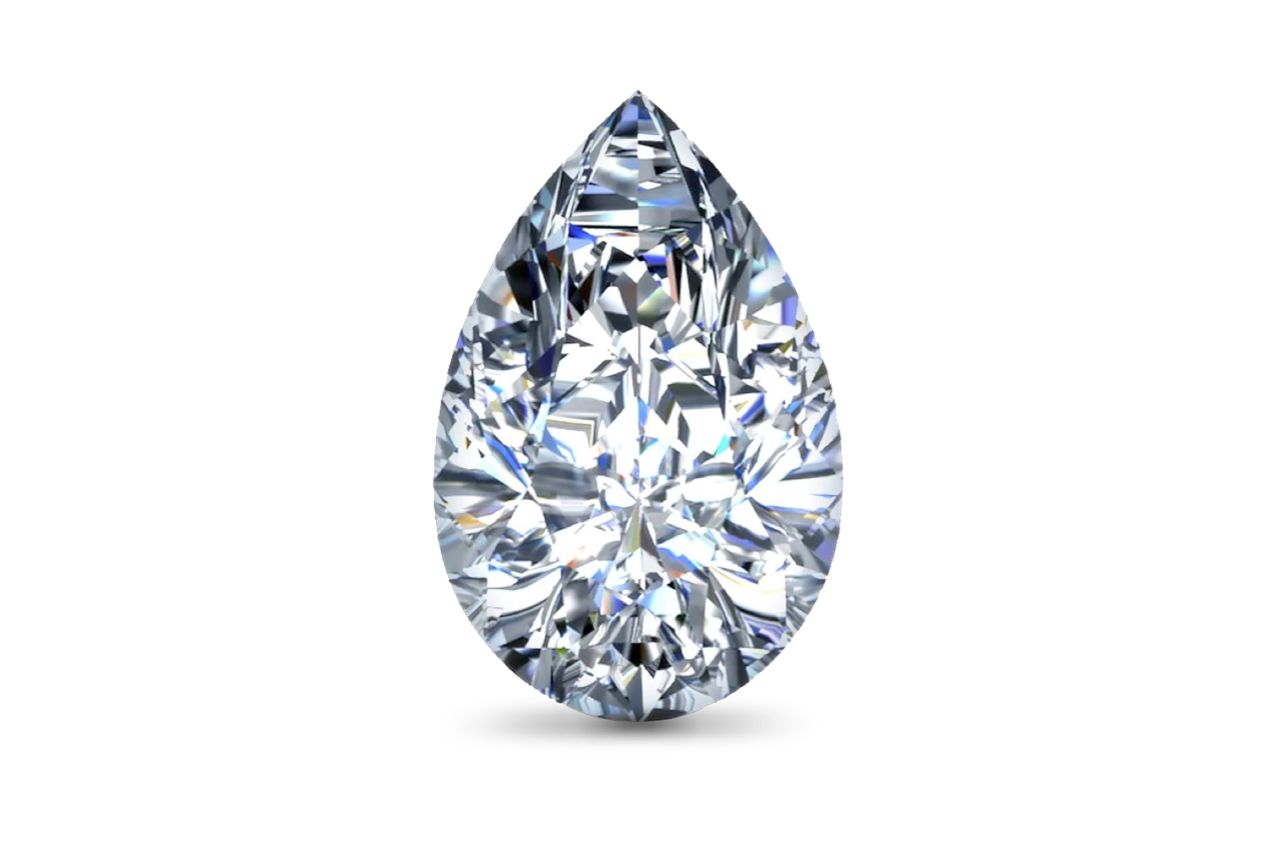
pear · IGI
$1,390
4.95 ct · E · VVS2 · Very Good
Lowest qualifying pear result in the API capture.
Visit RitaniRitani's catalog images show each diamond shape, not the exact stones in our sample. Listings and prices can change after our check, so confirm the current diamond on the seller's site.
At this size, use the full-screen video. Look for a balanced outline, even light return, and no distracting bow tie, dark center, or visible growth marks.
Five-carat ring ideas
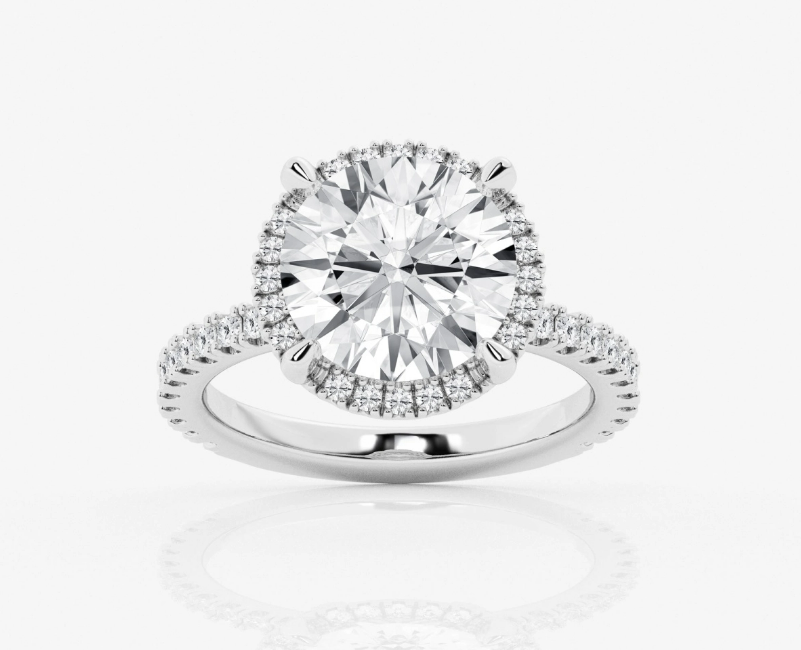
A five-carat diamond can work in a hidden-accent ring, a halo, or a pavé cathedral. We prefer relatively restrained settings. The diamond already provides enough presence, and a simple design is easier to wear and inspect.
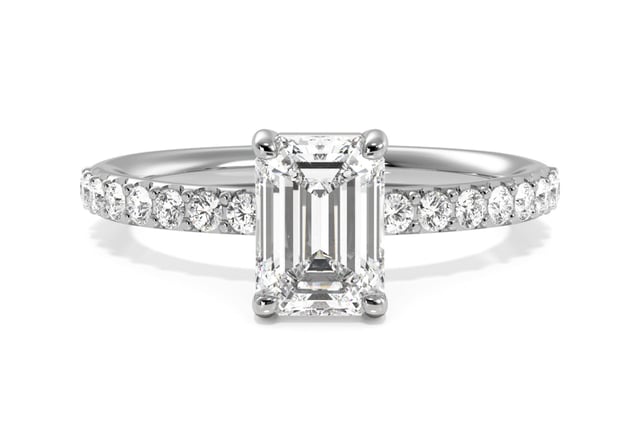
Step-cut ring from Ritani
Halo ring from Grown Brilliance
The Badgley Mischka halo design pictured at the top surrounds a round center with smaller diamonds. It gives a broader sparkling outline than a plain solitaire.
See halo rings at Grown Brilliance
Pavé cathedral ring from James Allen
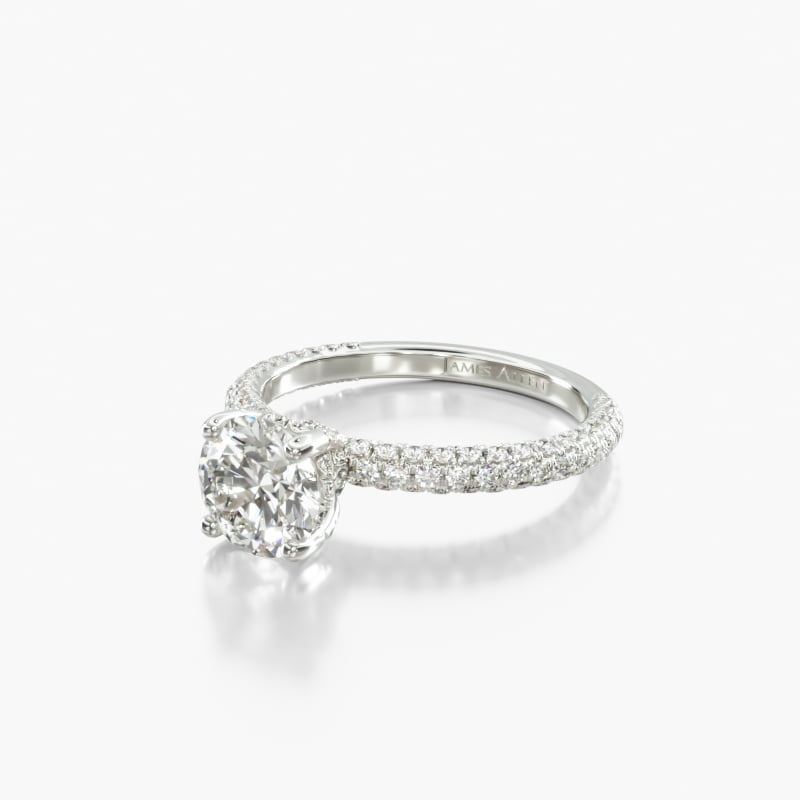
A hidden halo or small accent row can add detail without making the top of the ring much wider. For a solitaire, sturdy prongs and a supportive gallery are more important than minimizing every gram of metal.
Where should you buy a five-carat diamond?
Prices can vary widely within the same carat range. Compare the actual diamond, grading report and complete ring price—not only the headline price—before choosing a seller.
| Jeweler | Best for | Our rating | Shop |
|---|---|---|---|
| Ritani | Prices, loose-diamond selection and value | 4.7/5 | See at Ritani |
| With Clarity | Ring design, service and a guided buying process | 4.5/5 | See at With Clarity |
| Blue Nile | A polished all-round shopping experience | 4.6/5 | See at Blue Nile |
| Grown Brilliance | Finished jewelry and distinctive ring designs | 4.5/5 | See at Grown Brilliance |
Ritani: best starting point for value
Ritani was dramatically cheaper and still had a substantial qualifying inventory. It is our first stop for a loose five-carat stone.
With Clarity: good middle-ground option
With Clarity's current benchmark was $3,338. It can suit a buyer who wants more guidance and an engagement-ring-focused shopping experience without moving directly to the highest-priced sellers.
Blue Nile: best all-round experience
Blue Nile combines strong inspection tools, support, showrooms, and a polished ring builder. It also sells the James Allen collection now that James Allen is no longer a standalone store.
Grown Brilliance and Brilliant Earth
Grown Brilliance is particularly good for design-led finished rings. Brilliant Earth was the most expensive current benchmark, but offers extensive showrooms and specifically labeled sustainability collections.
Is a five-carat lab-grown diamond worth it?
For someone who genuinely wants a very large stone, lab-grown makes the size accessible at a fraction of many mined-diamond prices. It is less compelling if the ring will be uncomfortable, rarely worn, or bought for resale.
Lab-grown diamonds should not be treated as investments. Production costs and retail prices have fallen sharply, and resale demand is weak. Environmental performance also differs, so investigate specific energy, carbon, metal, and manufacturing claims if sustainability is part of the decision.
How five-carat prices have changed
Our earlier research found five-carat round prices from $4,831 to $26,840 across six sellers. That comparison used I–J color and VS1–VS2 clarity and reported seller ranges; the 2026 comparison uses E color and VVS2 clarity.
Earlier round-diamond comparison
$4,831–$26,840
6 sellers · Round diamonds near five carats, I–J color, VS1–VS2 clarity, and Excellent or Ideal cut; seller ranges rather than one shared aggregation.
September 2026 test
$1,338–$8,210
5 sellers · Round diamonds from 4.95 to 5.05 carats, E color, VVS2 clarity, and a high cut grade; IGI grading where the source exposed it.
Earlier studies used I–J color and VS1–VS2 clarity. The 2026 comparisons use E color and VVS2 clarity; each table lists its own cut and grading rules.
See our earlier round-diamond price comparison
Round brilliant lab-grown diamonds close to the target weight; Excellent (GIA) or Ideal (IGI) cut, I–J color and VS1–VS2 clarity.
Brilliant Earth and James Allen used higher minimum grades in this comparison.
| Jeweler | Recorded price range |
|---|---|
| Ritani | $5,257–$8,168 |
| Clean Origin | $4,831–$7,436 |
| With Clarity | $5,723–$11,430 |
| Grown Brilliance | $5,855–$11,850 |
| Brilliant Earth | $11,900–$16,360 |
| James Allen | $19,660–$26,840 |
These are prices from our earlier seller comparison, not current offers. The Brilliant Earth range included its seller-labeled sustainable collection. James Allen is now a collection at Blue Nile.
See our earlier fancy-shape comparison
Starting prices near five carats, I–J color, VS1–VS2 clarity, and Very Good or better seller-reported cut.
| Seller | oval | emerald | pear | princess | radiant | cushion | heart |
|---|---|---|---|---|---|---|---|
| Ritani | $4,704 | $2,599 | $4,161 | $4,424 | $3,289 | $3,848 | $9,629 |
| Clean Origin | $4,640 | $3,707 | $4,939 | $5,301 | $4,299 | $4,024 | $7,671 |
| With Clarity | $5,121 | $3,380 | — | $5,293 | $4,295 | $4,231 | — |
| Grown Brilliance | $6,125 | $7,450 | $5,685 | $8,750 | $6,405 | $5,255 | $9,960 |
| Brilliant Earth | $11,650 | $9,740 | $9,730 | $9,590 | $9,880 | $9,510 | $16,960 |
| James Allen (historical) | $14,310 | $13,720 | $20,680 | $17,630 | $16,270 | $17,910 | — |
Our verdict
Close five-carat lab-grown diamonds cost $1,338 to $8,210 in our current comparison. The seller-balanced typical price was $4,290. Start with Ritani for value, compare With Clarity and Grown Brilliance for middle-ground options, and consider Blue Nile or Brilliant Earth if the setting and service are more important than the lowest loose-diamond price.
How we researched five-carat prices
We checked US listings on September 3, 2026. The target was 4.95–5.05 carats, E color, VVS2 clarity, and a high cut grade. Ritani's complete filtered API capture produced 876 qualifying offers across ten shapes. Brilliant Earth's feed supplied 65 close high-cut round results but does not expose the grading lab. With Clarity, Grown Brilliance, and Blue Nile contributed current E/VVS2 public matches.
The current shape table compares shapes within Ritani, so different seller markups do not distort the result. Each seller contributes one benchmark to the seller-balanced typical price.
To work out a typical price across sellers, we sort their benchmark prices from lowest to highest and take the middle value, or the average of the middle two. Each seller contributes one benchmark, regardless of inventory size.
Ritani's complete filtered API capture produced 876 qualifying diamonds across ten shapes. Brilliant Earth's feed supplied 65 close high-cut round results but no grading-lab field. With Clarity, Grown Brilliance, and Blue Nile use close current E/VVS2 public listings. Each seller contributes one benchmark so the largest inventory cannot dominate the typical price.
The earlier seller and fancy-shape tables include the grade criteria used for those prices.
Compare other carat weights
- 0.5-carat lab-grown diamond prices
- 0.75-carat lab-grown diamond prices
- 1-carat lab-grown diamond prices
- 1.5-carat lab-grown diamond prices
- 2-carat lab-grown diamond prices
- 3-carat lab-grown diamond prices
- 4-carat lab-grown diamond prices
- 6-carat lab-grown diamond prices
Update history
First published in March 2024. The September 2026 update adds new seller and like-for-like shape comparisons, ring examples and advice on choosing a larger stone, alongside updated shopping recommendations.
Questions and experiences
Join the discussion
Ask a question or share your experience. We review comments before publishing them.