




How much does a 1.5-carat lab-grown diamond cost?
In our September 2026 comparison, a loose 1.5-carat lab-grown diamond cost $365 to $1,206. Ritani had the lowest benchmark and Blue Nile the highest. The seller-balanced typical price was $970.
We compared round diamonds from 1.45 to 1.55 carats, with E color, VVS2 clarity, and a high cut grade. Those grades make the seller comparison consistent, but most buyers can lower the color and clarity without seeing a difference. The prices do not include a ring setting.
Ritani was exceptionally inexpensive: the five lowest qualifying round stones all cost $365. That is why we use one result per seller rather than an inventory-wide average.
Read our Ritani review See 1.5-carat diamonds at Ritani
1.5-carat lab-grown diamond prices in 2026
“Typical” is the middle of the seller benchmark prices above. Each seller counts once, so a jeweler with a much larger inventory cannot pull the figure down simply by listing more diamonds.
| Seller and sample | Price | Difference |
|---|---|---|
| RitaniMiddle price of five lower-priced diamonds | $365 | Lowest in our test |
| With Clarity1.50 ct public sale price | $910 | 149.3% more |
| Brilliant EarthMiddle price of five lower-priced comparable diamonds; grading lab not provided | $970 | 165.8% more |
| Grown Brilliance1.50 ct current public price | $1,125 | 208.2% more |
| Blue Nile1.50 ct current IGI Ideal-cut result | $1,206 | 230.4% more |
The difference between sellers is large even though the target grades are close. A higher price may buy a better ring builder, showrooms, designs, service, or inspection experience, but it does not automatically mean the loose diamond is better.
Is 1.5 carats a good engagement-ring size?
A well-proportioned 1.5-carat round diamond is usually about 7.3 to 7.4 millimeters across. It looks substantially larger than one carat while remaining easy to wear in many settings. For many buyers, it is the sweet spot between visible size and a ring that does not dominate the hand.
Elongated shapes can appear larger still. An oval, pear, marquise, or radiant often gives more finger coverage than a round diamond of the same weight. Compare the actual length and width, because two 1.5-carat stones can face up very differently.
What changes the price?
Cut has the greatest effect on beauty. A weakly cut diamond can look dark, glassy, or smaller than its carat weight. Start with the grading report, but make the final decision from the actual video and measurements.
E/VVS2 is a high-grade benchmark, not our default recommendation. A well-cut G or H diamond with eye-clean VS1 or VS2 clarity often offers better value. At 1.5 carats, inclusions and tint are easier to see than in a half-carat stone, so inspect each candidate rather than relying only on the grade.
Search just below 1.50 too. A well-cut 1.45- to 1.49-carat diamond can be almost indistinguishable in size and may avoid the premium attached to the milestone.
1.5-carat round versus fancy-shaped diamonds
Fancy shapes can offer excellent value. Elongated ovals, pears, marquises, and emerald cuts often look larger than a 1.5-carat round diamond. Some shapes cost less, but the price changes with demand, proportions, and how efficiently each stone was cut.
To compare shapes without mixing in different seller markups, we used the five lowest qualifying Ritani API results for each of ten shapes. Every diamond was 1.45 to 1.55 carats, E color, VVS2 clarity, and IGI graded. Round diamonds had Ritani's Ideal label; the fancy shapes had Very Good or better cut labels. In total, 7,900 Ritani diamonds met those rules.
| Shape | Middle price | Sample range | Cut used |
|---|---|---|---|
| Round | $365 | $365–$365 | Ideal |
| Oval | $384 | $382–$384 | Very Good |
| Emerald | $360 | $360–$362 | Very Good |
| Pear | $392 | $364–$394 | Very Good |
| Marquise | $391 | $391–$391 | Very Good |
| Radiant | $370 | $349–$381 | Very Good |
| Cushion | $383 | $382–$385 | Very Good |
| Princess | $387 | $379–$395 | Very Good |
| Asscher | $385 | $381–$385 | Very Good |
| Heart | $428 | $423–$428 | Very Good |
Emerald was the least expensive shape, with a middle price of $360 among its five lowest qualifying listings. Heart was highest at $428. The spread was narrow: most shapes clustered within about $70. Inventory changes quickly, so choose a shape for its look rather than assuming one will always be cheapest.
Current 1.5-carat examples
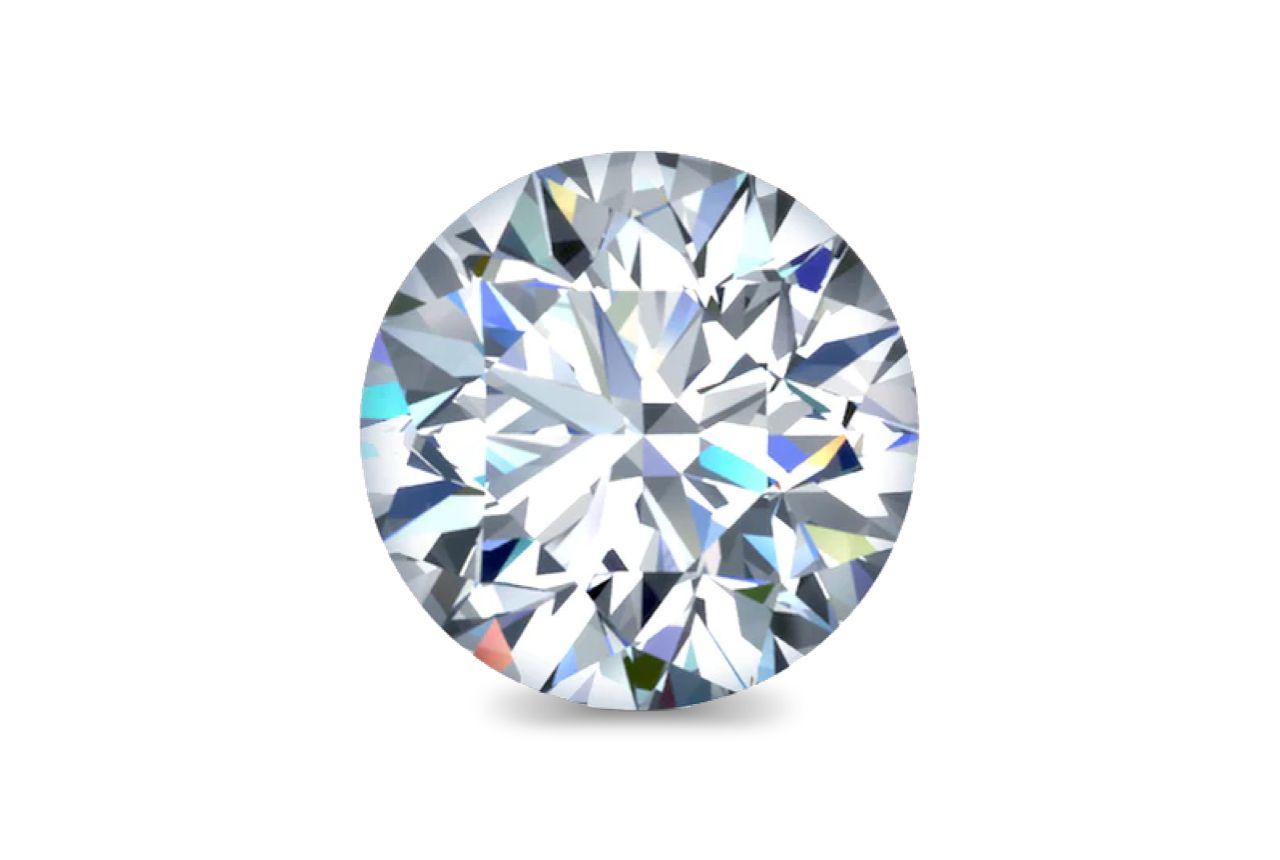
round · IGI
$365
1.45 ct · E · VVS2 · Ideal
Lowest qualifying round result in the API capture.
Visit Ritani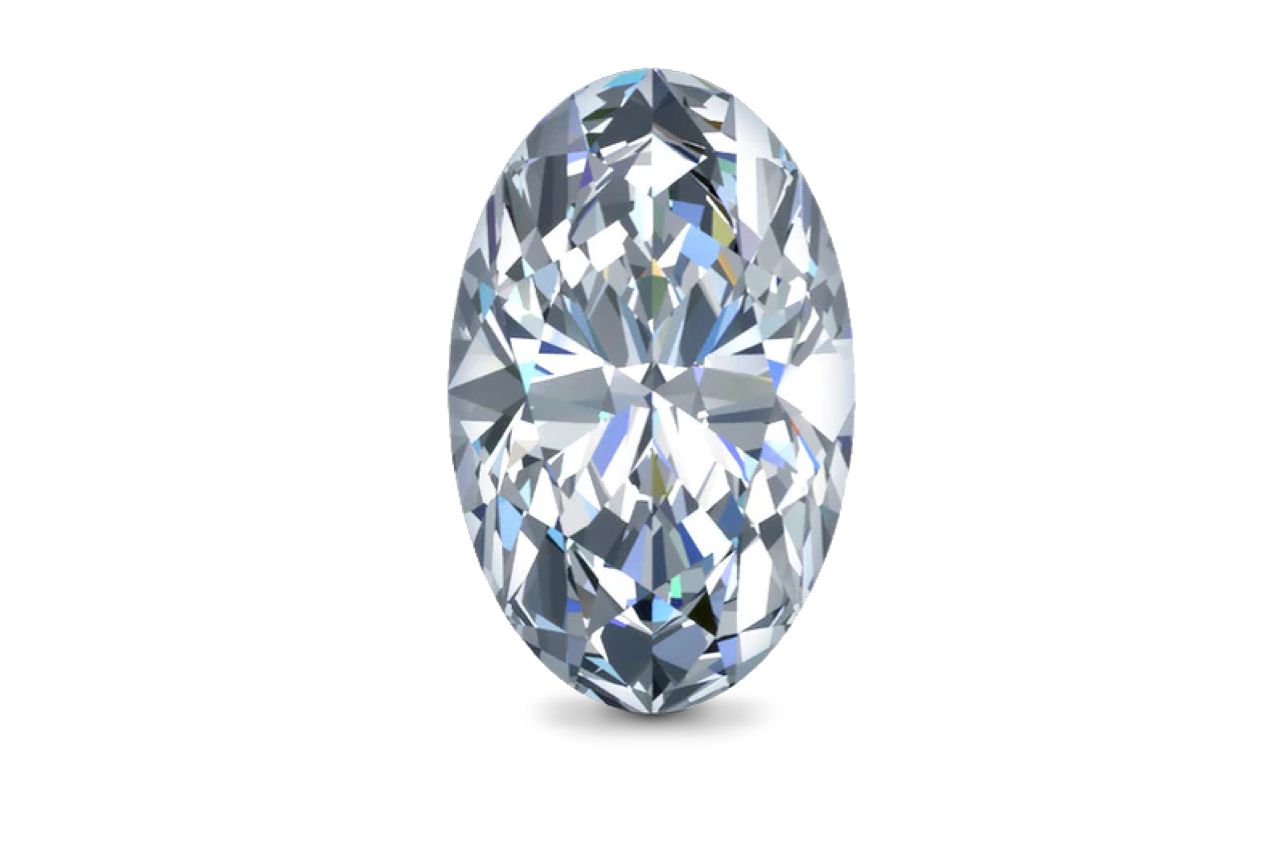
oval · IGI
$382
1.48 ct · E · VVS2 · Very Good
Lowest qualifying oval result in the API capture.
Visit Ritani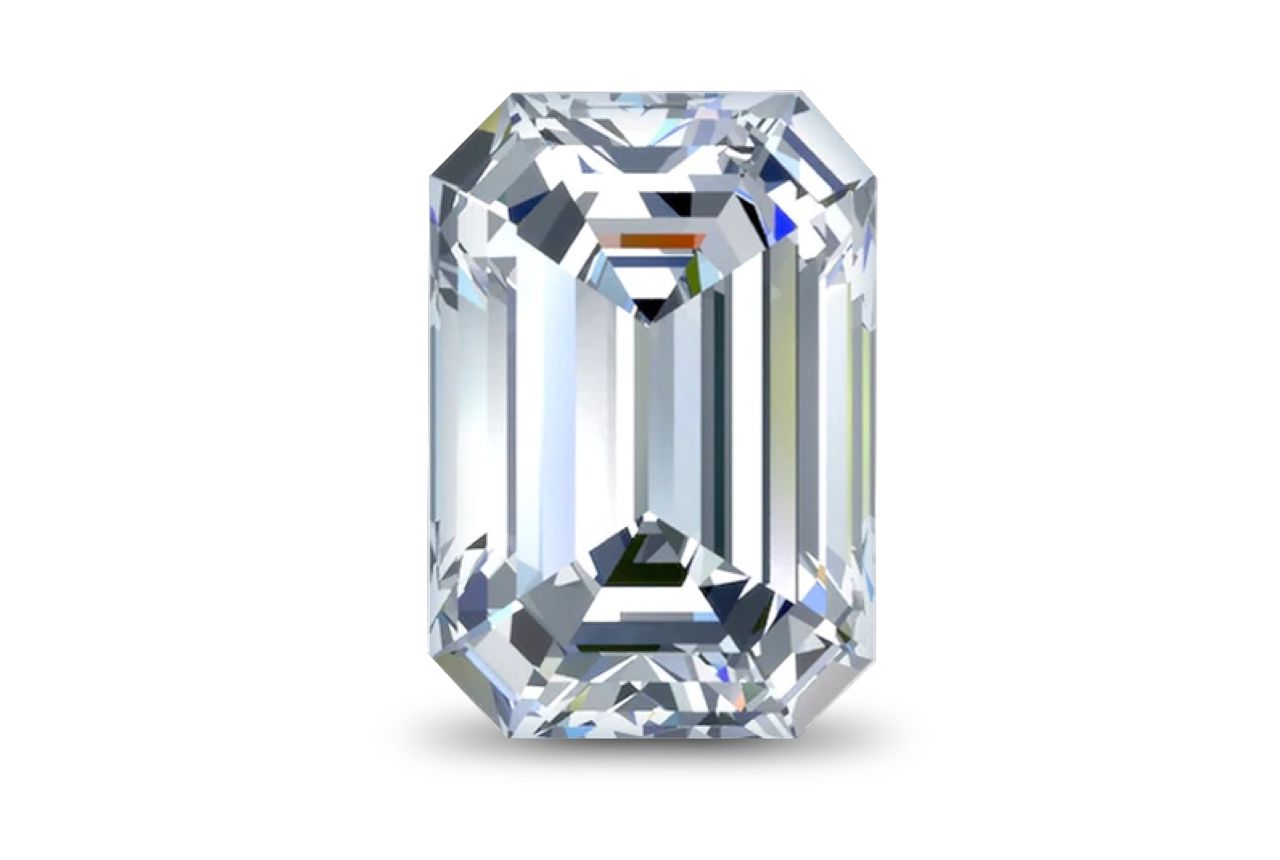
emerald · IGI
$360
1.50 ct · E · VVS2 · Very Good
Lowest qualifying emerald result in the API capture.
Visit Ritani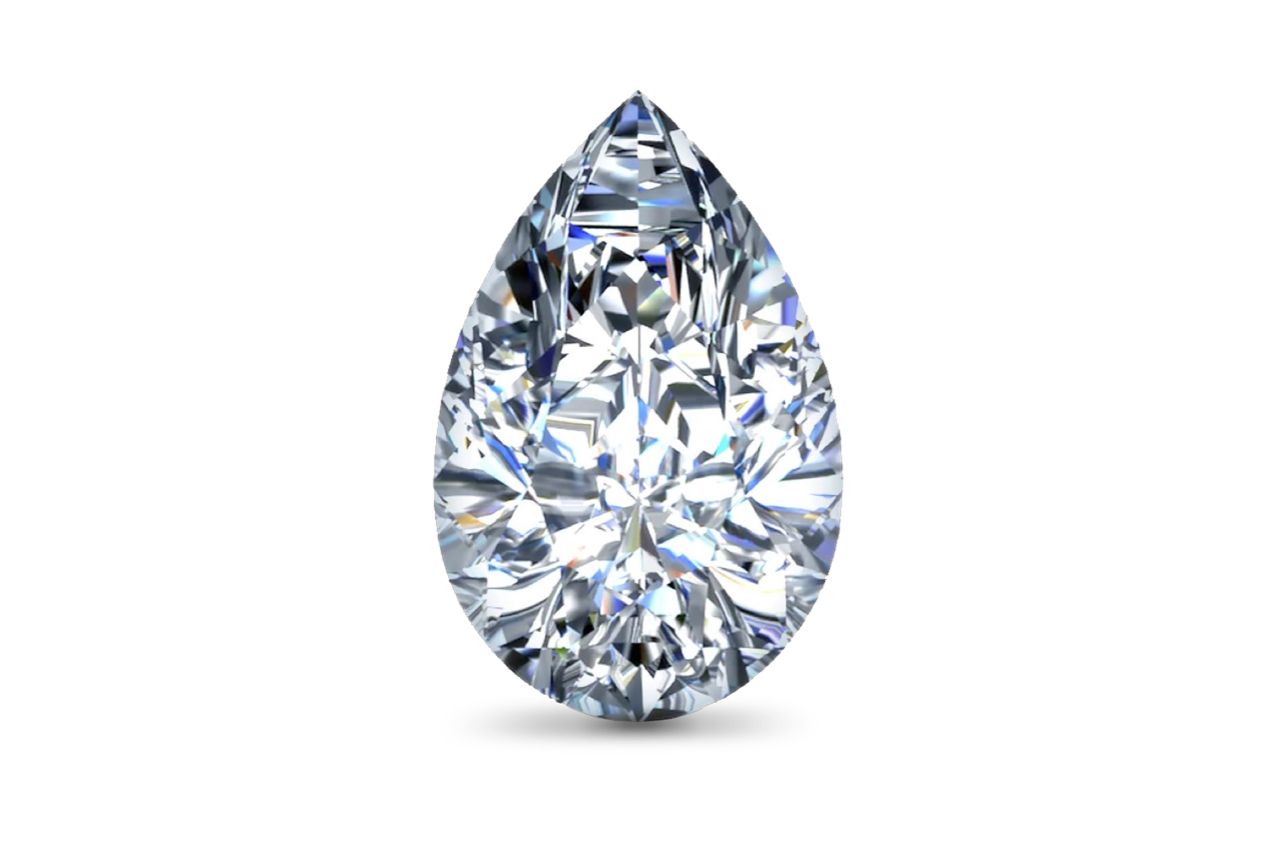
pear · IGI
$364
1.47 ct · E · VVS2 · Very Good
Lowest qualifying pear result in the API capture.
Visit RitaniRitani's catalog images show each diamond shape, not the exact stones in our sample. Listings and prices can change after our check, so confirm the current diamond on the seller's site.
For fancy shapes, judge outline and symmetry carefully. Check ovals, pears, and marquises for a distracting bow tie; emerald and Asscher cuts for dead or see-through areas; and cushions and radiants for the pattern of sparkle you prefer.
Two 1.5-carat ring ideas
The setting changes how a center diamond looks. Compare a plain band with pavé shoulders before deciding how much detail you want.
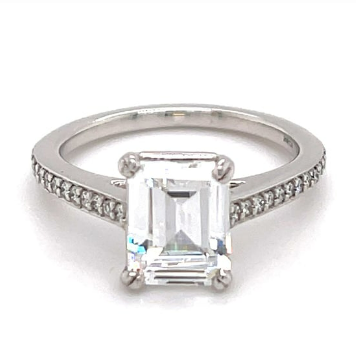
Emerald-cut pavé design from Ritani
The ring pictured at the top pairs an emerald-cut center with diamond-set shoulders. Its broad step-cut facets give a calmer pattern than a round brilliant diamond.
Round solitaire from With Clarity
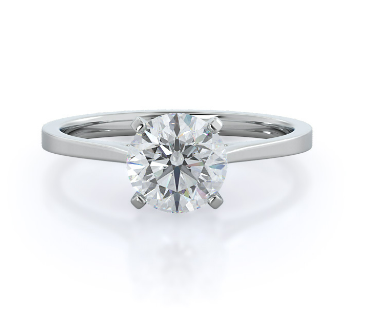
Compare the setting and diamond separately before comparing complete ring prices.
Where should you buy a 1.5-carat diamond?
Prices can vary widely within the same carat range. Compare the actual diamond, grading report and complete ring price—not only the headline price—before choosing a seller.
| Jeweler | Best for | Our rating | Shop |
|---|---|---|---|
| Ritani | Prices, loose-diamond selection and value | 4.7/5 | See at Ritani |
| With Clarity | Ring design, service and a guided buying process | 4.5/5 | See at With Clarity |
| Blue Nile | A polished all-round shopping experience | 4.6/5 | See at Blue Nile |
| Grown Brilliance | Finished jewelry and distinctive ring designs | 4.5/5 | See at Grown Brilliance |
Ritani: best for loose-diamond value
Ritani had the lowest price by a wide margin, along with a huge inventory and clear cost information. It is the first seller we would check.
With Clarity: good balance of service, settings, and price
With Clarity's current benchmark was $910, and we have worked with the company since the site's early years. Its home-preview approach and engagement-ring experience can make it a good middle-ground choice.
Blue Nile: best all-round shopping experience
Blue Nile cost more in this test, but its diamond videos, ring builder, support, showrooms, and James Allen collection make it a polished alternative.
Grown Brilliance and Brilliant Earth
Grown Brilliance is particularly strong for distinctive settings and finished jewelry. Brilliant Earth is worth considering for its showrooms, designs, and specifically labeled sustainability collections.
Is a 1.5-carat lab-grown diamond worth it?
It can be an excellent value if you want a clearly visible center stone without the cost of a comparable mined diamond. Lab-grown diamonds are real diamonds with the same crystal structure and optical properties as mined diamonds.
The trade-off is resale. Values are weak and may fall as production becomes cheaper, so buy the ring to wear rather than as an investment. Sustainability is also not automatic; look for specific evidence about energy, carbon, metal, and manufacturing when it matters to you.
How 1.5-carat prices have changed
Our earlier comparison found round 1.5-carat prices from $588 to $2,350 across six sellers. Those figures used I–J color and VS1–VS2 clarity and were seller ranges. The 2026 comparison uses E color and VVS2 clarity. The tables show the grades used for each study.
Earlier round-diamond comparison
$588–$2,350
6 sellers · Round diamonds near 1.5 carats, I–J color, VS1–VS2 clarity, and Excellent or Ideal cut; seller ranges rather than one shared aggregation.
September 2026 test
$365–$1,206
5 sellers · Round diamonds from 1.45 to 1.55 carats, E color, VVS2 clarity, and a high cut grade; IGI grading where the source exposed it.
Earlier studies used I–J color and VS1–VS2 clarity. The 2026 comparisons use E color and VVS2 clarity; each table lists its own cut and grading rules.
See our earlier round-diamond price comparison
Round brilliant lab-grown diamonds close to the target weight; Excellent (GIA) or Ideal (IGI) cut, I–J color and VS1–VS2 clarity.
| Jeweler | Recorded price range |
|---|---|
| Ritani | $588–$1,465 |
| Grown Brilliance | $850–$1,105 |
| Clean Origin | $847–$1,421 |
| With Clarity | $1,000–$2,028 |
| James Allen | $1,650–$2,040 |
| Brilliant Earth | $1,510–$2,350 |
These are prices from our earlier seller comparison, not current offers. The Brilliant Earth range included its seller-labeled sustainable collection. James Allen is now a collection at Blue Nile.
See our earlier fancy-shape comparison
Starting prices near 1.5 carats, I–J color, VS1–VS2 clarity, and Very Good or better seller-reported cut.
| Seller | oval | emerald | pear | princess | radiant | cushion | heart |
|---|---|---|---|---|---|---|---|
| Ritani | $584 | $474 | $545 | $600 | $456 | $507 | $617 |
| Grown Brilliance | $995 | $690 | $1,015 | $685 | $675 | $995 | $2,000 |
| Clean Origin | $884 | $674 | $660 | $851 | $694 | $855 | $1,110 |
| With Clarity | $905 | $925 | — | $1,083 | $992 | $990 | — |
| Brilliant Earth | $1,560 | $1,470 | $1,540 | $1,630 | $1,540 | $1,620 | $1,850 |
| James Allen (historical) | $1,650 | $1,670 | $1,940 | $2,260 | $1,660 | $1,700 | $2,650 |
Our verdict
Close 1.5-carat lab-grown diamonds cost $365 to $1,206 in our September 2026 test, with a seller-balanced typical price of $970. Ritani is the first place we would compare. With Clarity offers a useful middle ground; Blue Nile is the strongest all-round alternative.
Prioritize cut, inspect the actual stone, and compare measurements just below 1.50 carats before paying for the exact milestone.
How we researched 1.5-carat prices
We checked US listings on September 3, 2026. The target was 1.45–1.55 carats, E color, VVS2 clarity, and a high cut grade. Ritani's complete filtered API capture produced 7,900 qualifying offers across ten shapes. Brilliant Earth's feed supplied 212 close high-cut round results but does not expose the grading lab. With Clarity, Grown Brilliance, and Blue Nile contributed current public matches.
The current shape table compares shapes within Ritani, so different seller markups do not distort the result. Each seller contributes one benchmark to the seller-balanced typical price.
To work out a typical price across sellers, we sort their benchmark prices from lowest to highest and take the middle value, or the average of the middle two. Each seller contributes one benchmark, regardless of inventory size.
Ritani's complete filtered API capture produced 7,900 qualifying diamonds across ten shapes. Brilliant Earth's feed supplied 212 close high-cut round results but does not expose the grading lab. With Clarity, Grown Brilliance, and Blue Nile use close current public listings checked on September 3, 2026.
The earlier tables show the prices and grades we recorded then. For the current results, the seller table compares places to buy; the shape table uses Ritani throughout so different seller markups do not affect that comparison.
Compare other carat weights
- 0.5-carat lab-grown diamond prices
- 0.75-carat lab-grown diamond prices
- 1-carat lab-grown diamond prices
- 2-carat lab-grown diamond prices
- 3-carat lab-grown diamond prices
- 4-carat lab-grown diamond prices
- 5-carat lab-grown diamond prices
- 6-carat lab-grown diamond prices
Update history
First published in March 2024 and updated as the market changed. The September 2026 update compares five sellers and ten shapes, with jewelry examples to help put diamond size and the complete purchase price in context.
Questions and experiences
Join the discussion
Ask a question or share your experience. We review comments before publishing them.