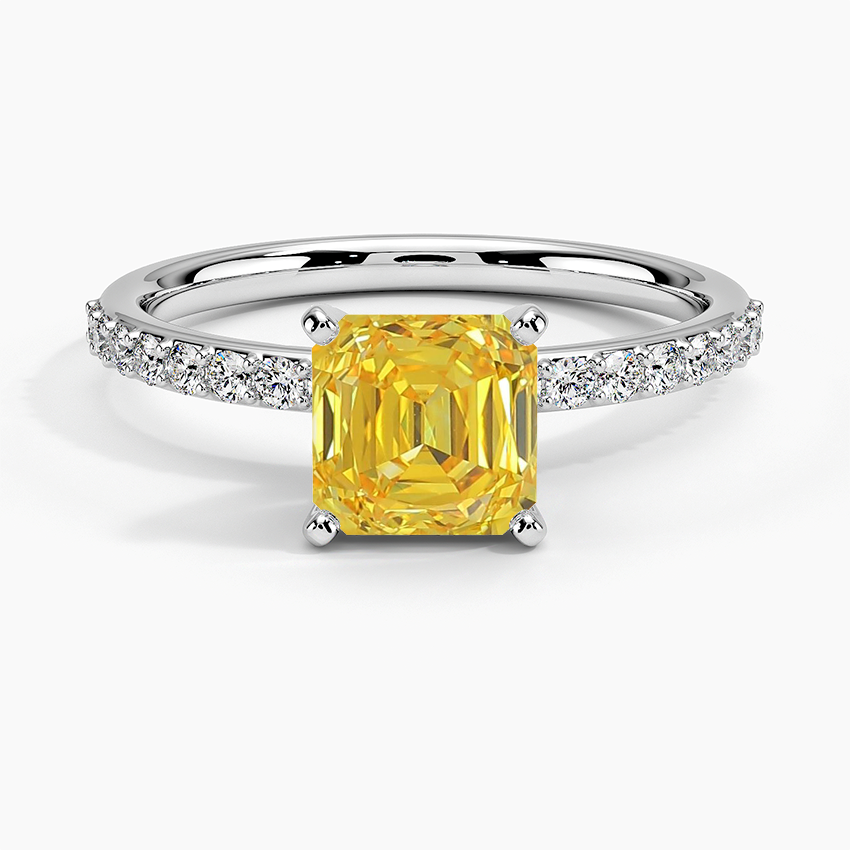





Yellow lab-grown diamonds: the short answer
Yellow lab-grown diamonds are real diamonds grown in a laboratory with enough yellow color for the color itself to be desirable. Nitrogen-related defects commonly create the yellow appearance.
Buy fancy yellow when you want visible color. Compare the exact hue, saturation, video, report and setting. Do not confuse a deliberately yellow fancy-color diamond with a low D-to-Z color grade that happens to look warm.
Our fancy-color lab-grown diamond guide explains the broader color scale, modifiers and buying priorities before you compare an individual yellow stone.
We compare yellow diamonds using their videos, complete color descriptions, grading reports, measurements and prices. Our jewelry advice also draws on Klaus and Juli's purchases, returns and store visits. This matters because surrounding metal and side stones can change the perceived color more than a product thumbnail suggests.
Compare current yellow diamonds at Ritani
Which yellow diamond is lab-grown?
Guess which yellow diamond is lab-grown, then reveal the documented answer.
Try the visual quiz
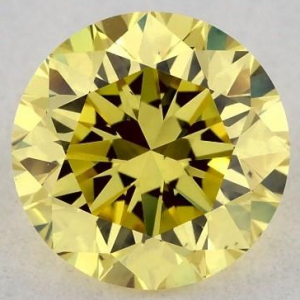
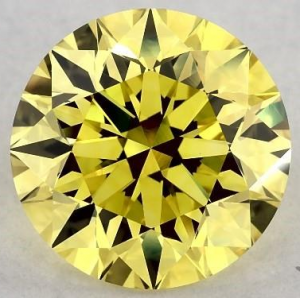
Which yellow diamond is lab-grown?
Guess the origin of each diamond before checking the answer. A stronger yellow does not prove laboratory origin.
How do yellow lab-grown diamonds get their color?
Nitrogen is central to many yellow diamonds. GIA's spectroscopy research explains that isolated nitrogen defects—called C centers—cause the color of most yellow laboratory-grown diamonds.
Both HPHT and CVD processes can produce yellow or yellow-modified material, and post-growth treatment may alter color. The report for the individual diamond is more reliable than a rule based on color or growth method.
Are yellow lab-grown diamonds real?
Yes. They are diamond, not yellow cubic zirconia, sapphire or moissanite. The laboratory-grown origin should be clearly disclosed in the listing and grading report.
Fancy yellow versus a yellow-tinted colorless diamond
The two categories reward opposite goals. On the D-to-Z scale, less visible yellow receives the higher color grade. On the fancy-color scale, stronger and more attractive color can be more desirable.
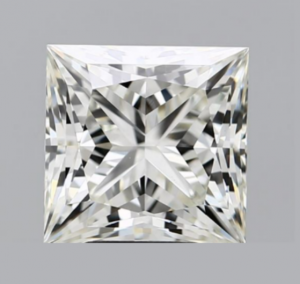
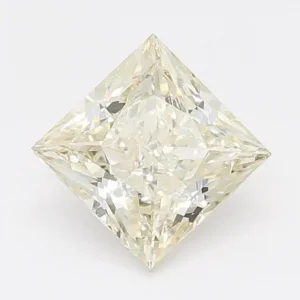
The visual goal is different: buy fancy yellow for noticeable color, or choose a warm D-to-Z diamond when you want a mostly colorless look at a lower grade.
Yellow engagement-ring examples
These two designs show how warm metal and colorless accent diamonds can support or contrast the center color.
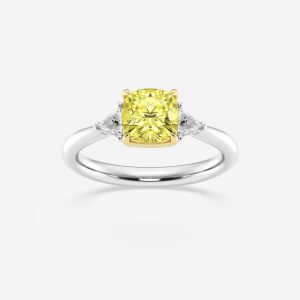
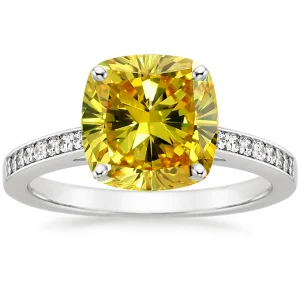
Yellow gold supports warmth, while colorless accent diamonds increase contrast.
Fancy yellow or a warm colorless diamond?
If you want a classic white diamond, compare near-colorless grades and view the stone in the intended metal. If you want yellow, choose a fancy-color report and judge whether the face-up color is even and appealing.
How are yellow lab-grown diamonds graded?
Fancy-color reports describe the dominant hue, modifiers and color strength. A diamond described as orangy yellow is mainly yellow; yellowish orange is mainly orange. Seller filters may group both under yellow.
Check that the report identifies laboratory-grown origin, gives the full color description, notes detectable post-growth treatment and matches the report number shown by the seller.
How much do yellow lab-grown diamonds cost?
Yellow is one of the more available lab-grown fancy colors, but price still changes with weight, saturation, modifier, clarity, shape and seller. Mined fancy-yellow prices are not a useful target because geological rarity drives much of that market.
In September 2026, two one-carat yellow lab-grown diamonds at Ritani were listed at $383 and $406. Both were IGI graded, but one was a fancy-yellow radiant cut and the other a fancy-light-yellow Asscher cut. Stronger intensities and unusually desirable hues can cost considerably more. Compare current yellow inventory at Ritani.
Across diamond jewelry more broadly, BriteCo's 2026 appraisal data put the typical engagement-ring diamond at $2,057 per carat for lab-grown and $8,428 for mined—about 76% less for lab-grown. Fancy-yellow pairs will not always follow that exact percentage, but laboratory growth removes much of the geological rarity premium.
To compare current prices, keep shape and carat range similar, separate yellow from orangy-yellow or brownish-yellow stones, compare face-up measurements, and include the setting in the final total.
Should you buy a yellow lab-grown diamond?
Yes, if you want warm, noticeable color and prefer diamond's hardness and sparkle to another yellow gemstone. Yellow diamonds suit yellow gold particularly well, while white metal and colorless side stones create stronger contrast.
Choose a near-colorless diamond instead if you want a traditional white appearance. Consider yellow sapphire if saturated color matters more than owning a diamond.
Yellow lab-grown engagement-ring ideas
- A radiant or cushion cut emphasizes a broad field of yellow.
- A colorless halo makes the center look more saturated by contrast.
- Yellow-gold prongs support warmth without making the full ring yellow.
- A three-stone ring with colorless side diamonds creates a clear focal point.
- Pear and oval shapes can look larger for their weight.
For a lighter yellow center, yellow-gold prongs can support the color without committing to a completely yellow-gold ring. For a vivid center, white-metal prongs and colorless side stones create contrast. Compare the diamond loose and in a setting preview whenever possible: surrounding metal and stones can change how strong the yellow appears.
Tips for saving
- Compare nearby modifiers; a slight orange or brown component may still be beautiful.
- Prioritize an eye-clean appearance over a top clarity grade.
- Compare measurements near popular carat thresholds.
- Check several shapes before choosing radiant by default.
- Compare loose diamond plus setting as one purchase.
- Use the return period to view color in daylight and warm indoor light.
Where to buy yellow lab-grown diamonds
Colored-diamond inventories change quickly, so compare the exact hue, intensity and grading report. These jewelers offer different strengths in loose-diamond value, finished jewelry and showroom support.
Three jewelers to compare
| Jeweler | Best for | Our rating | Shop yellow lab-grown diamonds |
|---|---|---|---|
| Ritani | Low prices, loose-diamond selection and comparison filters | 4.7/5 | See at Ritani |
| Brilliant Earth | Premium settings, showroom support and guided purchases | 4.5/5 | See at Brilliant Earth |
| Grown Brilliance | Ready-designed fancy-yellow jewelry and engagement rings | 4.5/5 | See at Grown Brilliance |
Yellow lab-grown diamond FAQ
Are yellow lab-grown diamonds rare?
They are less common than colorless lab-grown diamonds but among the more available fancy lab-grown colors. That does not give them the geological rarity of mined fancy-yellow diamonds.
Is a fancy yellow diamond the same as an M-color diamond?
No. An M-color diamond is graded within the D-to-Z range, where yellow tint lowers the grade. Fancy yellow is graded for desirable color beyond that scale.
Which metal is best for a yellow diamond?
Yellow gold supports warmth; platinum or white gold creates contrast. The best choice depends on whether you want the center to blend with or stand apart from the setting.
Questions and experiences
Join the discussion
Ask a question or share your experience. We review comments before publishing them.