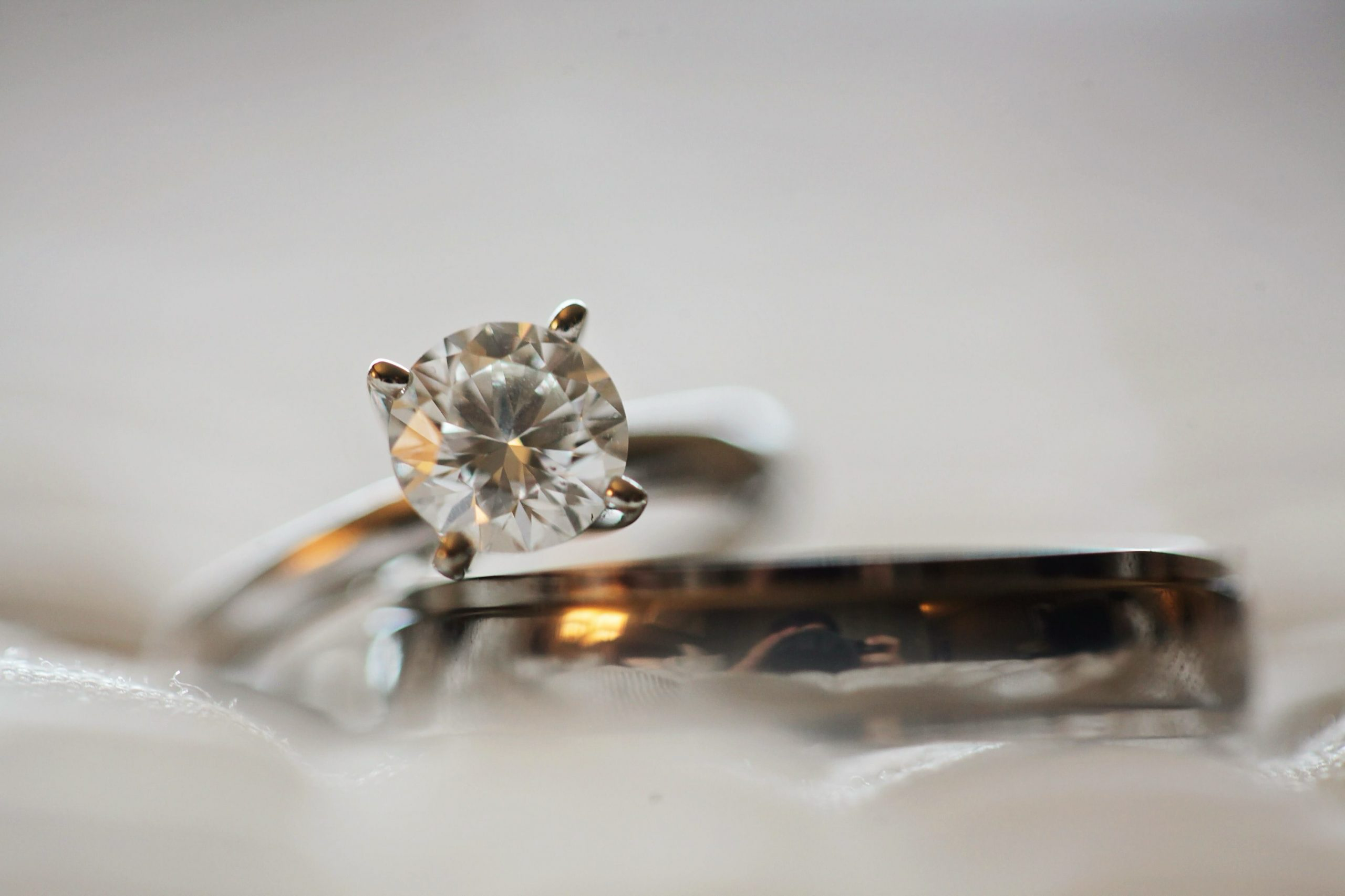





An engagement ring carries more meaning than almost any other jewelry purchase. If you are considering a lab-grown diamond, the important questions are simple: Is it a real diamond? What do you gain for your budget? What are the trade-offs? And will it feel right to both of you?
Our answer is yes for most couples. A well-chosen lab-grown diamond offers the beauty and durability expected of a diamond while leaving far more of the budget for the stone, setting, wedding, or future together. The main compromise is weak resale value—so buy it to wear and enjoy, not as an investment.
| Question | Short answer |
|---|---|
| Is it a real diamond? | Yes. It has the same carbon crystal structure as a mined diamond. |
| How much can you save? | Comparable lab-grown diamonds commonly cost 60–80% less than mined diamonds in 2026. |
| Will it look different? | Not because it was grown in a laboratory. Cut quality, color, clarity, and proportions determine appearance. |
| What is the main drawback? | Lab-grown diamonds generally have little resale value and prices may continue to fall. |
| Who should consider one? | Couples who want more diamond for their budget and do not attach special value to mined origin or resale. |
Why more couples choose lab-grown diamonds
Lab-grown diamonds have moved into the mainstream because buyers no longer have to choose between diamond appearance and an accessible budget. They are widely available in engagement-ring settings, independently graded, and sold by established jewelers.

Price is the most visible advantage, but origin also matters to many buyers. A laboratory-grown stone avoids diamond mining and can be produced with renewable electricity. Its total environmental footprint still depends on the producer and energy source, but it avoids the land disruption, waste, water pressure, and many community risks associated with mining.
Answers to Your Engagement Ring Questions
Are Lab-Grown Diamonds Fake Diamonds?
Lab-grown diamonds are real diamonds, not imitations such as cubic zirconia or moissanite. They have the same carbon crystal structure and broadly the same chemical, physical, and optical properties as mined diamonds. GIA and IGI assess them using the familiar cut, color, clarity, and carat framework, while clearly identifying laboratory-grown origin on the report.
Read more in our intro to lab-grown diamonds.
Are Lab-Grown Diamonds Cheaper than Natural Diamonds?
Yes. Comparable lab-grown diamonds commonly cost 60–80% less than mined diamonds in 2026. That can mean a larger or better-cut stone for the same budget, a more distinctive setting, or simply spending less.
Will Lab Diamonds Lose Their Value?
Retail prices for lab-grown diamonds have fallen as production has expanded, and the secondhand market remains limited. Mined diamonds also normally resell below their retail price, but they have a more established resale market.
We do not recommend either type of diamond as an investment. Choose an engagement ring for its meaning, appearance, and value to you as jewelry.
What is the Difference Between Lab-Grown Diamonds and Mined Diamonds?
The defining difference is origin. Mined diamonds formed underground and were extracted from the earth. Lab-grown diamonds form through HPHT or CVD technology in a controlled facility.
Origin does not decide whether a diamond is beautiful. Cut quality and proportions have the greatest effect on sparkle, while color, clarity, carat weight, and the setting shape the final look. A grading report confirms the stone’s characteristics and whether it is laboratory-grown.
The two origins do differ in supply chain and impact. Lab-grown production requires substantial electricity, so renewable energy and transparent sourcing strengthen its environmental case. It also avoids mining-related land disturbance and removes the diamond itself from conflict-financing concerns.
Are Lab Diamonds Better Than Mined Diamonds?
For value, traceable origin, and avoiding mining impacts, we think lab-grown diamonds are the better choice for most buyers. A mined diamond may still suit someone who values geological rarity, tradition, or a more established resale market. Neither origin makes a poorly cut diamond beautiful, so quality still matters.
Read about the reasons you should buy a lab-grown diamond.
Is a Natural Diamond Engagement Ring More Romantic?
Romance comes from the proposal, the design you choose, and what the ring represents—not where the carbon crystallized. Some couples love the ancient geological origin of a mined diamond. Others find a modern, traceable diamond more consistent with their values. Talk about that preference before making an expensive surprise purchase.
Should I Buy a Lab-Grown Diamond Engagement Ring?
For most couples, yes. A lab-grown diamond is especially compelling if you care about getting excellent cut and visible size without stretching the budget. It also makes sense if avoiding mining is important to you.
A mined diamond may be the better fit if your partner has clearly expressed that preference, places special meaning on natural origin, or expects to use a trade-in program limited to mined diamonds. The right answer is the one that matches the wearer’s values—not a rule imposed by the jewelry industry.
Why You Should Choose a Lab-Grown Diamond Engagement Ring
1. More room in the budget
The 60–80% price difference can fund a better cut, a larger stone, a setting you genuinely love, or priorities outside the ring. We normally recommend improving cut before paying for color and clarity grades that are difficult to see.
2. A shorter, more traceable route to the ring
Lab-grown diamonds avoid the mining stage and the conflict concerns tied to mined rough diamonds. Their climate impact depends heavily on the electricity used, but producers using renewable energy can make a strong environmental case. They also avoid local mining effects such as land disturbance, roads, waste, and pressure on water and nearby communities.
3. Diamond appearance and everyday durability
Lab-grown diamonds are not diamond simulants. They have the hardness, brilliance, and durability that make diamond suitable for an engagement ring worn every day.
- Composition: Both types are carbon atoms arranged in the diamond crystal structure.
- Grading: Independent laboratories such as IGI and GIA identify origin and report the stone’s quality characteristics.
- What still varies: Lab-grown diamonds can be well or poorly cut and may contain inclusions or color. Evaluate the individual stone rather than buying on origin alone.
Engagement-ring styles worth comparing
The center diamond is only half the design. Compare a classic solitaire with pavé, halo, and three-stone settings, and check how the setting changes the complete price and apparent size.
Four engagement ring settings to compare
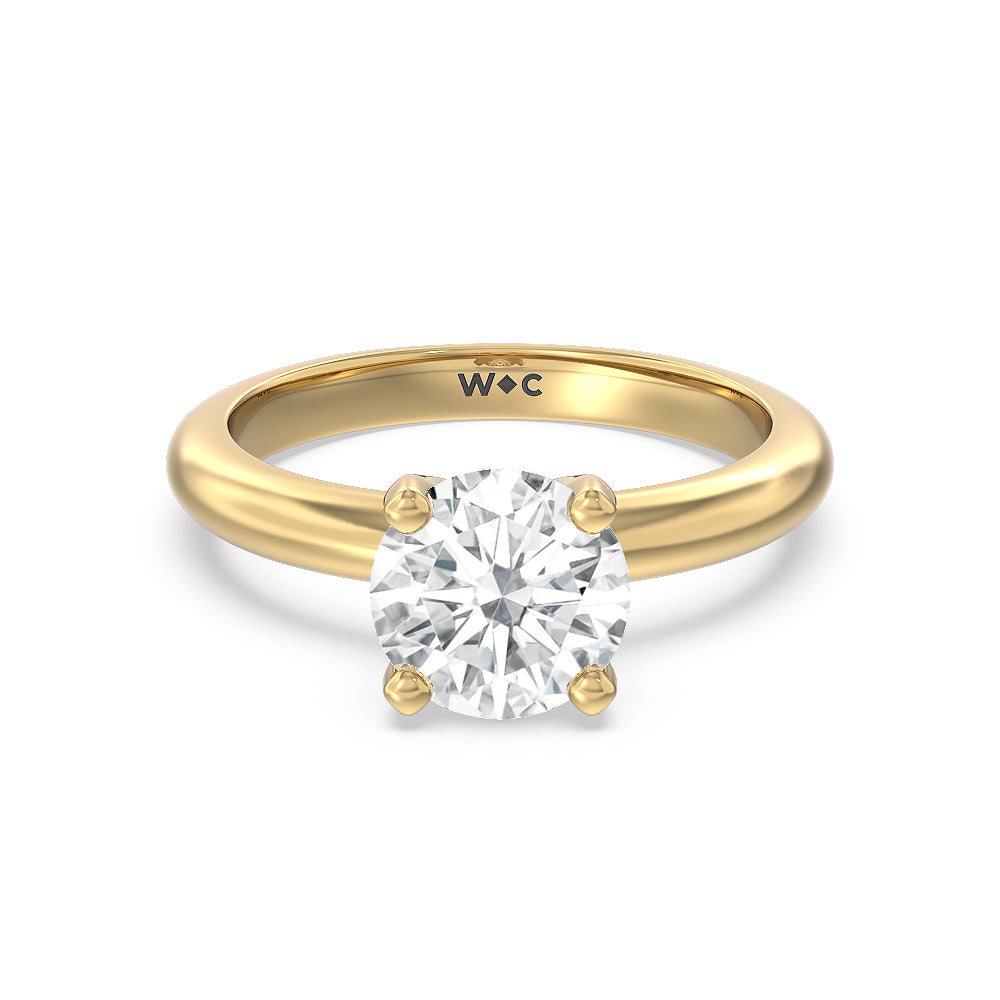
These complete lab-grown diamond rings show a prong solitaire, bezel, hidden halo with pavé, and visible halo. Compare how the setting changes the diamond's outline, profile, and protection.
With Clarity · Engagement ring
Round four-prong lab-grown diamond solitaire ring
- 2.08 ct total weight
- Round lab-grown center diamond
- 14K yellow gold
- Four-prong solitaire
- Listed in size 6.5
A simple complete ring that keeps attention on the round center diamond. Confirm the grading report, exact measurements, and ring size before ordering.
Price checked September 2, 2026.
See at With Clarity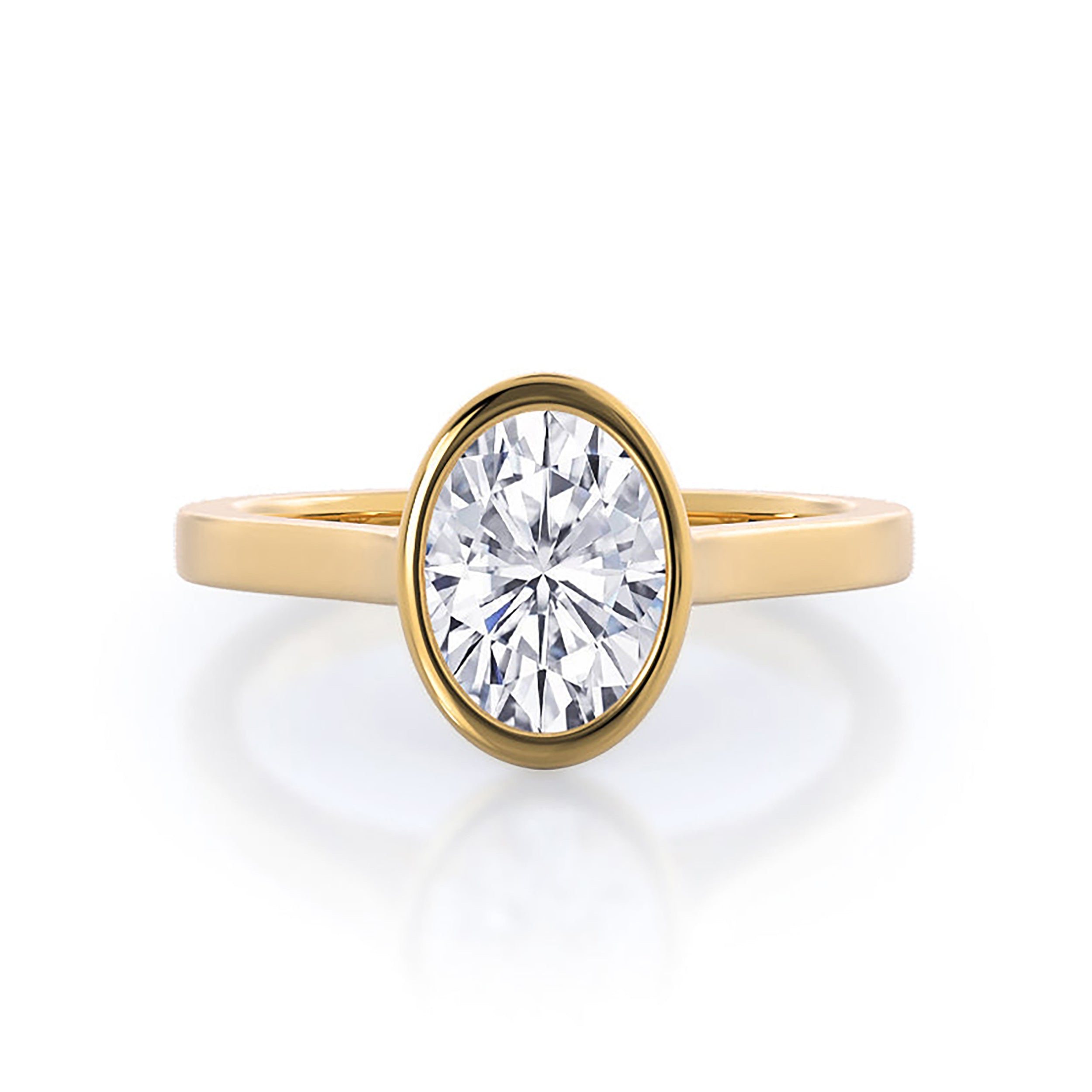
With Clarity · Engagement ring
Oval bezel-set lab-grown diamond solitaire ring
- 2 ct total weight
- Oval lab-grown center diamond
- 14K yellow gold
- Bezel setting
- Listed in size 6.5
The bezel outlines the oval diamond and gives the edge more protection than exposed prongs. Check the report, face-up measurements, and fit before buying.
Price checked September 2, 2026.
See at With Clarity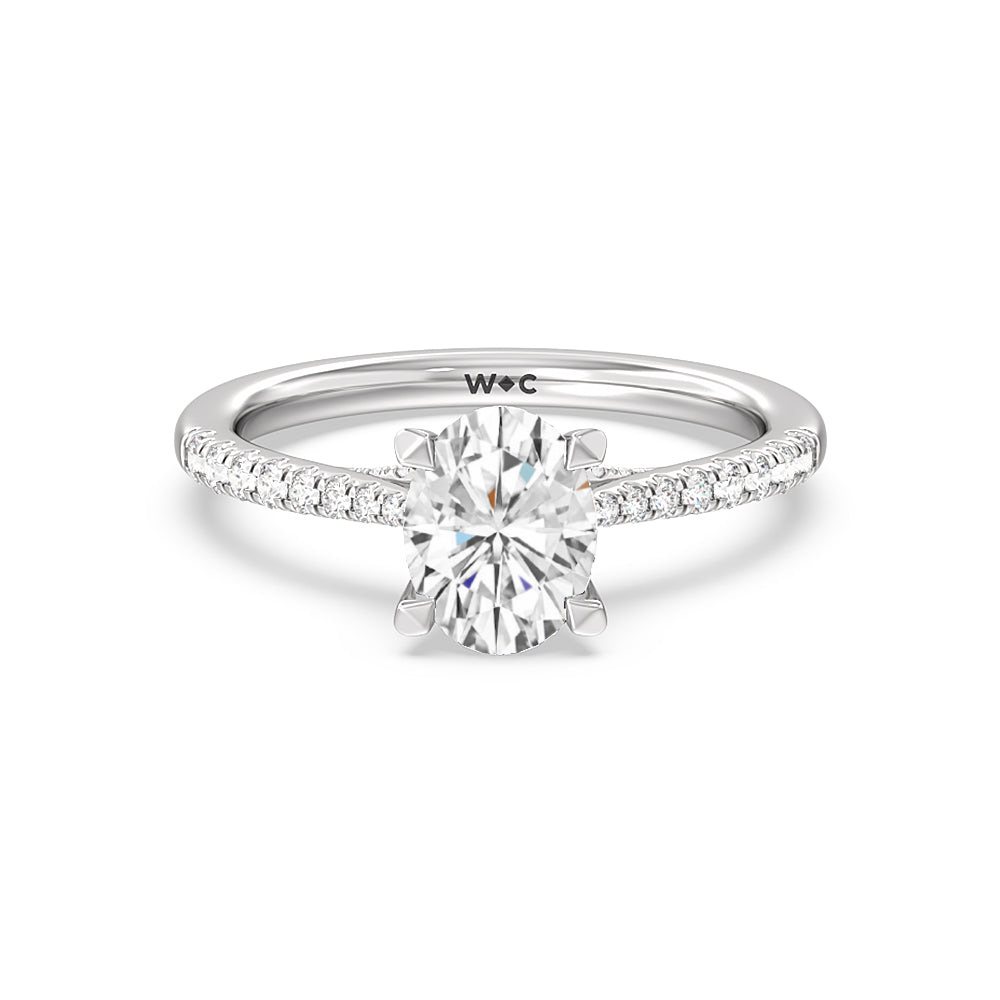
With Clarity · Engagement ring
Oval pavé lab-grown diamond ring with a hidden halo
- 2.20 ct total weight
- Oval lab-grown center diamond
- 14K white gold
- Pavé band and hidden halo
- Listed in size 6.5
This complete ring adds small diamonds along the band and below the center. Ask about resizing limits, small-stone cover, and wedding-band fit.
Price checked September 2, 2026.
See at With Clarity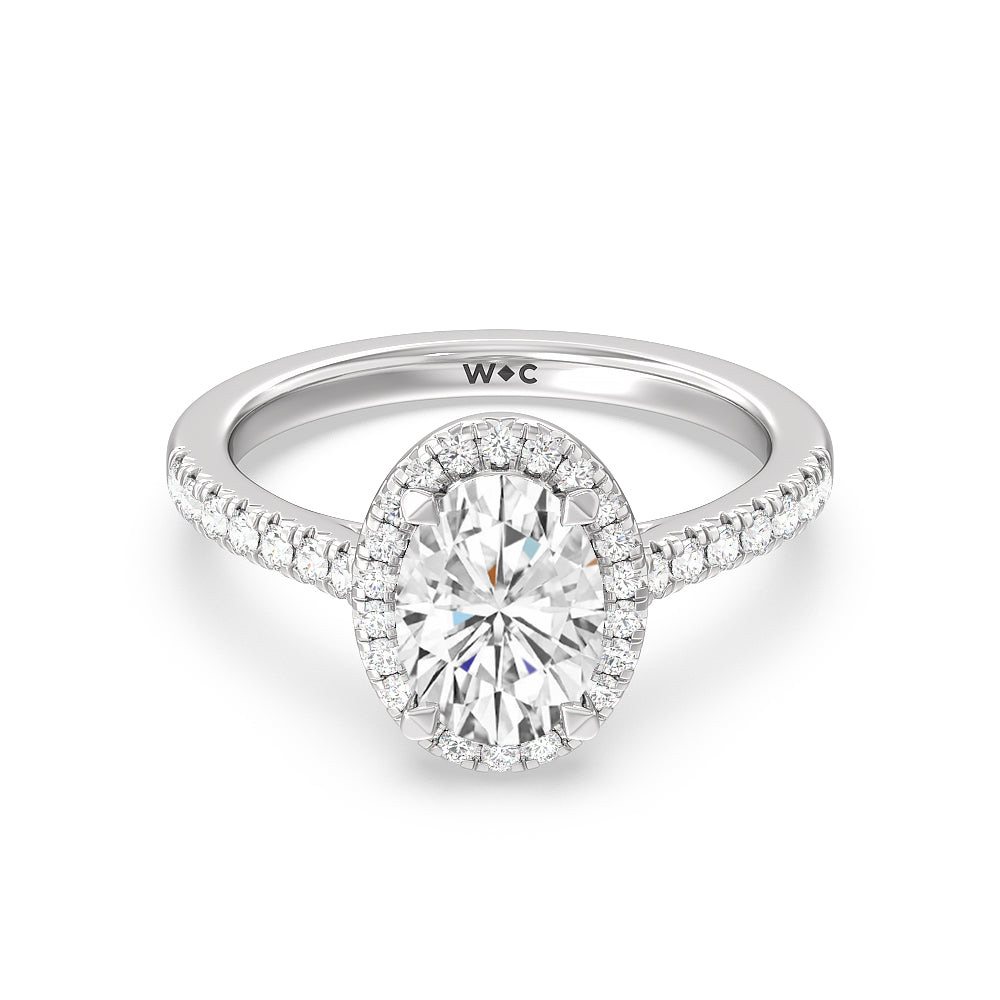
With Clarity · Engagement ring
Oval halo lab-grown diamond cathedral ring
- 2.03 ct center diamond
- About 2.38 ct total weight
- 14K white gold
- Halo and diamond-set shoulders
- Listed in size 6.5
The visible halo creates a larger bright outline around the oval center. Check the ring from the side and confirm how a wedding band sits beside it.
Price checked September 2, 2026.
See at With ClarityWhere to buy a lab-grown diamond engagement ring
Start with the design and service level you want, then compare complete ring prices—not just loose-diamond prices.
| Jeweler | Best for | Our rating | Shop |
|---|---|---|---|
| Ritani | Low diamond prices, broad inventory, and detailed filters | 4.7/5 | See at Ritani |
| Blue Nile | A polished buying experience and James Allen collection designs | 4.6/5 | See at Blue Nile |
| Grown Brilliance | Finished jewelry and engagement-ring design choice | 4.5/5 | See at Grown Brilliance |
| Brilliant Earth | Premium settings and showroom support | 4.5/5 | See at Brilliant Earth |
| With Clarity | Custom design and Home Preview | 4.5/5 | See at With Clarity |
If you have decided that a lab-grown diamond is right for you, continue with our step-by-step engagement-ring buying guide.
Questions and experiences
Join the discussion
Ask a question or share your experience. We review comments before publishing them.