




Ritani is our first choice for a loose lab-grown diamond or a ring you want to build around a carefully chosen stone. Vrai is worth the premium when you love one of its designs. Both can make beautiful jewelry, but they appeal to different buyers: Ritani puts price and diamond choice first; Vrai puts its own jewelry style at the center.
Our comparison favored Ritani for value and diamond-shopping help, while praising Vrai's more distinctive pieces. That remains a useful way to choose between them.
Read our Ritani review Visit Ritani
Quick comparison of Ritani vs. Vrai
| What matters | Ritani | Vrai |
|---|---|---|
| Our review rating | ★ 4.7/5 | ★ 4.3/5 |
| Best for | Choosing a loose diamond and keeping the total cost down | A distinctive setting or finished piece you particularly like |
| Main strength | Price transparency, diamond choice and helpful recommendations | Modern designs and unusual combinations of shapes |
| Grading | Independently graded loose diamonds; check the individual report | Standard in-house grading; optional IGI report for a fee |
| Main drawback | Several policy pages need clarification before ordering | Design premium and refund fees |
These are the scores from our separate seller reviews, not new ratings created for this comparison.
Introduction to Ritani
Ritani was founded in 1999 and makes made-to-order jewelry in New York. It sells mined and lab-grown diamonds, engagement rings, wedding bands, earrings, pendants and other jewelry.
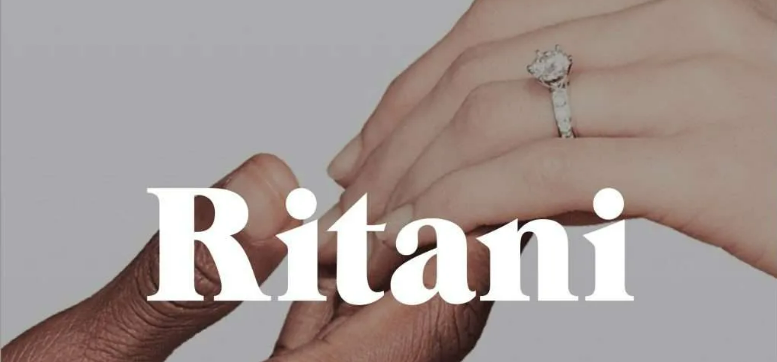
We have bought from Ritani several times. In one ring-builder purchase, we chose a suggested alternative diamond and paid less than $1,000 for a completed ring with a 1.15-carat center stone. It arrived in four days and met our expectations. Our Ritani review includes the photographs and grading report.
For us, Ritani's appeal is not just a low advertised starting price. It gives you enough information and choice to spend your budget on the stone and setting that suit you.
Introduction to Vrai
Vrai began as Vrai and Oro, with simple jewelry designs and a more direct approach to buying them. It is now part of Diamond Foundry and uses its lab-grown diamonds. The design-led character remains its strongest attraction.
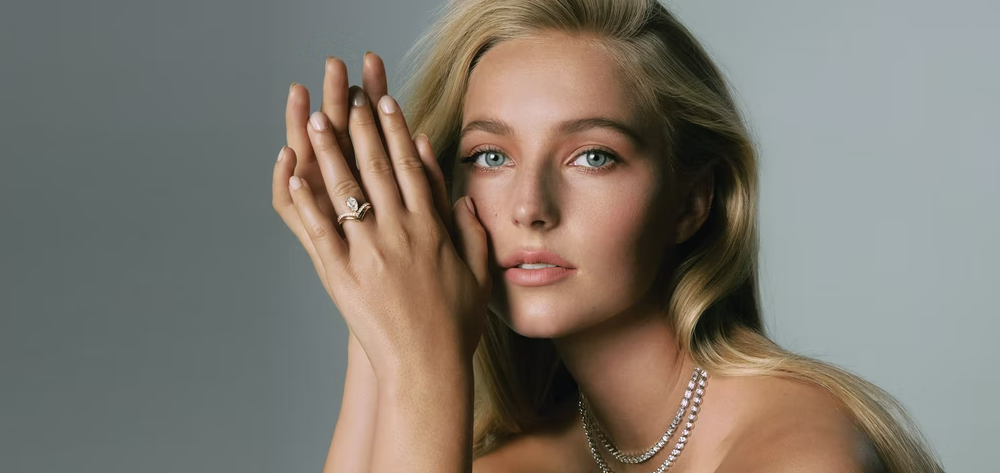
We particularly like its clean settings, less conventional earrings and combinations of diamond shapes. If you have found a Vrai piece you would not replace with a standard solitaire, comparing loose-stone prices alone misses part of the decision. Our Vrai review explains the designs and shopping experience we liked.
Ritani vs. Vrai: lab-grown diamond selection
Our reference search used round lab-grown diamonds weighing 0.93–1.07 carats, with I–J color, VS1–VS2 clarity and the highest qualifying cut label, generally Ideal for IGI-graded stones. Color describes how warm or colorless the stone looks; clarity describes internal and surface features. Cut has a large effect on sparkle.
These were our comparison filters, not a rule that everyone should buy I–J diamonds. With today's lower lab-diamond prices, compare higher color grades too before accepting a noticeable tint.
Ritani diamond quality and inventory
We found 118 matches at Ritani, within a wider inventory of about 97,000 lab-grown and 165,000 mined diamonds. Even a narrow set of grades gave us plenty of stones to inspect.
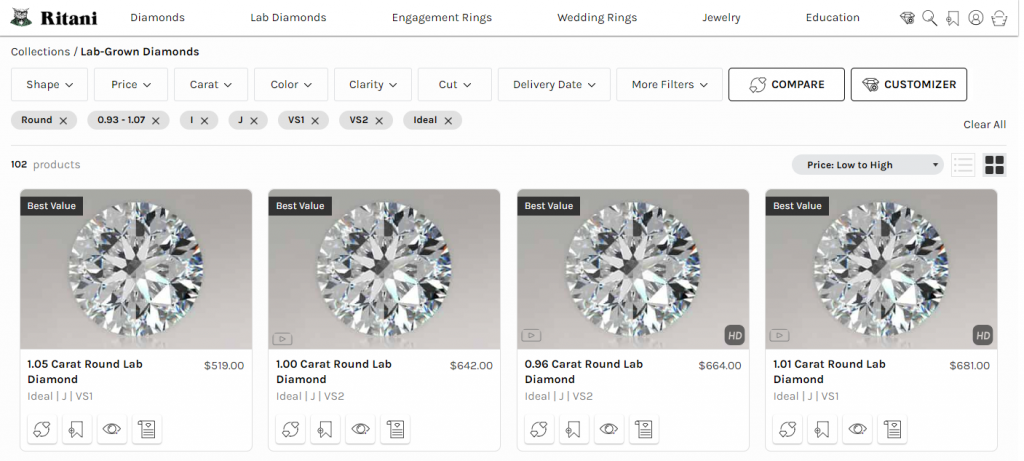
Ritani lets you select loose stones for a ring, earrings or pendant. We prefer this control when diamond quality is the main reason for buying. Start with a shortlist, open the reports, compare the videos, then check whether your chosen setting works with the stone.
Preset jewelry can also be a good purchase. The important distinction is whether you know what diamonds you are getting, not whether the item was sold through a ring builder.
Vrai diamond quality and inventory
Vrai returned 15 matches in our reference search. Its smaller selection did not stop it from offering appealing stones, but Ritani gave us more options within that narrow specification.
Vrai's jewelry range is the stronger reason to browse. Its stud-earring configurator includes shape, metal, size and color choices, plus single-earring or pair options. Customization is not limited to engagement rings. Choosing a grade range for finished jewelry is still different from choosing two individually identified loose diamonds.
Vrai normally grades its diamonds in-house. Its published grading information says it can arrange an IGI report for a non-refundable fee, adding two to three weeks before production. Ask for the fee and timing before ordering if independent grading matters to you.
We prefer an independent report when comparing loose diamonds across sellers. An in-house grade does not prove poor quality, but it is not the same independent check.
Ritani vs. Vrai: price comparison
Ritani diamond prices
Ritani was substantially cheaper in our one-carat reference search. The table records the results of that search.
| Reference search | Qualifying diamonds | Recorded price range |
|---|---|---|
| Ritani | 118 | $519–$1,251 |
| Vrai | 15 | $1,200–$2,000 |
Both searches used the reference filters above, but the grading arrangements differed. They were not identical stones with interchangeable reports.
Ritani remains our preferred starting point for value. Its price breakdown and alternative-diamond suggestions are useful, but the cheapest result is not automatically the best purchase. Compare the actual stone, its report, the setting price and the delivery estimate.
For current examples, use our one-carat price guide. It separates sellers rather than disguising their different price levels inside one market average.
Vrai diamond prices
Vrai makes more sense when the finished design is the reason you want the piece. A premium for earrings you love may be worthwhile; a premium for a loose diamond with similar grades is harder to justify.
If you want optional IGI grading, add that fee before comparing the final price. For earrings and necklaces, check the metal, diamond sizes, color and clarity range, clasp or backing, and return terms. Two pieces with the same total carat weight can feel quite different to wear.
We would choose Ritani for a conventional solitaire or loose stone unless Vrai offers a design or service advantage that matters to you.
Ritani vs. Vrai: shopping experience
The Ritani shopping experience
Ritani's diamond information was a highlight of our research. We liked being able to inspect images and videos, read grading reports, compare suggested alternatives and see the seller's price breakdown.
The recommendations were useful rather than perfect. In our own purchase, a suggested alternative worked out well. Still, compare the suggestion with the diamond you initially chose instead of treating a “good deal” label as a guarantee.
Ritani's in-person option is Free Preview with a Diamond Pro. The public page sets a $1,500 minimum, mainly weekday appointments, a card hold and annual limits. Check your location and order before relying on it. Our Ritani ring-buying guide explains the steps.
The Vrai shopping experience
We found Vrai's website clean and easy to follow, especially when shopping for a finished piece. Its restrained presentation suits the jewelry and makes the designs the focus.
Our support conversations were friendly and accommodating, though Ritani gave us stronger diamond-specific help. We would still start with Ritani if you want assistance choosing between similar loose stones.
At Vrai, ask whether the listing identifies your actual diamond or describes a range that will be supplied. If you can visit a showroom, use it to try the design on. Setting height, how earrings sit, and whether a wedding band fits neatly beside a ring are difficult to judge from a photograph.
Ritani vs. Vrai: sustainability
Ritani sustainability
Ritani sells both mined and lab-grown diamonds and publishes useful buyer education. We would like more product-specific information about the growers, energy sources and metals behind individual pieces.
A large lab-grown inventory does not by itself establish a lower footprint for every diamond. Ask what sourcing information applies to your particular stone rather than relying on the category name.
Vrai sustainability
Vrai gives a clearer account of its connection to the grower. Its mission page describes an American foundry using river-powered energy. That is a meaningful detail for buyers interested in origin.
It is not a reason to call every finished piece “zero-impact.” Growing, cutting, setting and shipping all contribute to making jewelry. We like having a named grower and more specific information, while treating the company's environmental statements as claims to assess alongside the design, grading and price.
Ritani vs. Vrai: shipping and returns
Ritani: free US shipping is advertised. Its returns page gives eligible US orders 30 days from shipment, but the FAQ and older terms disagree about timing, including a 15-day loose-diamond rule. Get the deadline for your item in writing. Use its return label and keep the piece unworn with its documents.
Vrai: US FedEx 2Day costs $10 and Overnight $50, plus applicable taxes. Production time comes before transit. Eligible purchases below $15,000 have a 30-day refund or store-credit option; refunds can lose a $300 engagement-ring fee, $50 band fee ($300 if engraved), or $50 made-to-order-jewelry fee. Store credit waives that fee but locks the refund into a non-refundable gift card. Resized/custom pieces and some Cut for You diamonds are excluded; higher-value orders have different terms.
For either seller, settle fit and design questions before resizing or customizing a piece. A free return label is not the same as an unrestricted refund.
Ritani vs. Vrai: pros and cons
What we like about Ritani
- Strong loose-diamond value and a useful price breakdown.
- Plenty of choice when selecting your own stones.
- Helpful recommendations and good results from our past purchases.
- Diamond Pro preview for qualifying orders and locations.
What we don't like about Ritani
- Conflicting policy wording needs clarification.
- Less of a design-led jewelry collection than Vrai.
- A preview appointment is not the same as a conventional showroom visit.
What we like about Vrai
- Distinctive designs beyond standard solitaires and studs.
- A simple, attractive shopping experience.
- Direct connection to its diamond grower.
- Configuration options on selected jewelry and optional independent grading.
What we don't like about Vrai
- The premium is harder to justify for a loose stone.
- Standard grading is in-house; IGI adds cost and time.
- Refund fees make experimenting with an uncertain design expensive.
Summary of Ritani vs. Vrai
Choose Ritani if you want a well-chosen diamond at a low price. Choose Vrai if its design is the part you would miss elsewhere. We favor Ritani for a loose lab-grown diamond, a straightforward engagement ring, or jewelry where you want to choose the individual stones.
Vrai is not one of our main five recommendations, but we would not dismiss a piece you genuinely prefer for its design. Compare the complete price and understand the grading and refund conditions before committing.
Read our Ritani review Visit Ritani
Is Ritani better than Vrai?
For most loose-diamond buyers, we recommend Ritani. Its value, choice and shopping help are stronger reasons to buy. Vrai is the more interesting alternative when you want one of its distinctive settings or finished jewelry designs.
More diamond seller comparisons and reviews
If you also want a premium jeweler with a wider showroom network, see Ritani vs. Brilliant Earth. Our recommended jewelers provide the broader shortlist.
About the comparison
The reference search, prices and screenshots support the comparison. Our Ritani review gives the details of the ring purchase behind our assessment.
Questions and experiences
Join the discussion
Ask a question or share your experience. We review comments before publishing them.