



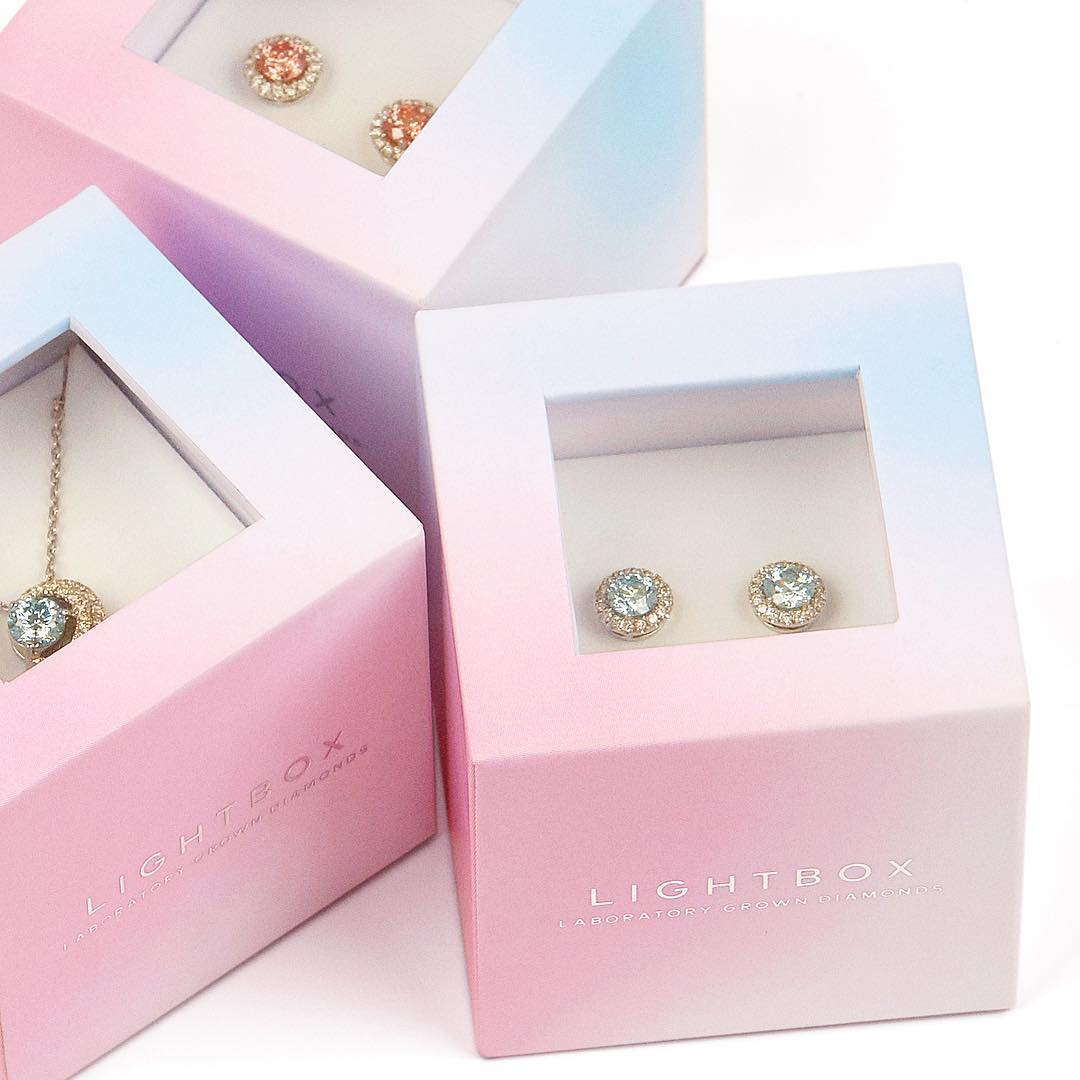


What happened to Lightbox Jewelry?
Lightbox Jewelry has closed its online store. De Beers announced its intention to close the business on May 8, 2025. When we checked the Lightbox website on September 9, 2026, it displayed “This store is unavailable.”
De Beers said it was shifting its focus back to natural-diamond jewelry and discussing the sale of some Lightbox assets, including inventory. That announcement was about closing Lightbox, not moving it into another consumer jewelry brand. Read the De Beers announcement.
For a new purchase, we would start with the alternatives above. If you already own a Lightbox piece, the closure does not change the diamond in your jewelry. The practical questions are who can help with repairs and whether any remaining warranty applies.
If you need help with an existing purchase
Keep your receipt, order emails, and any warranty documents. Start with the seller named on your receipt: a purchase from another retailer may have different support arrangements from an order placed directly with Lightbox.
De Beers said warranties and after-sales support would continue during the closure process. We have not confirmed an ongoing support route in September 2026, so we would not promise that the former contact details or warranty process still work. For a repair, a local jeweler can assess the piece and explain your options before you agree to any work.
Was Lightbox Jewelry legit?
Yes. Lightbox was a real lab-grown diamond jewelry brand owned by De Beers, launched in 2018. Its closure does not mean the diamonds it sold were imitation stones.
Our reservations were about the choice, grading information, and service, rather than whether it was a real jeweler. We rated the former store 2.9 out of 5 and generally found better places to buy.
Our Lightbox review: the story behind the brand
Lightbox caught our attention because it came from De Beers, a company closely associated with mined diamonds. Its diamonds were produced by Element Six, another De Beers business.
The launch promise was memorable: $800 per carat, before the setting. At the time, that made lab-grown diamonds easier to understand and put a clear price in front of shoppers who might never have considered diamond jewelry.
What bothered us was how the brand framed the choice. Lightbox positioned lab-grown diamonds mainly as accessible fashion jewelry, while its parent continued to promote natural diamonds for life's bigger occasions. We did not agree that a diamond grown in a laboratory was somehow less suitable for an engagement ring.
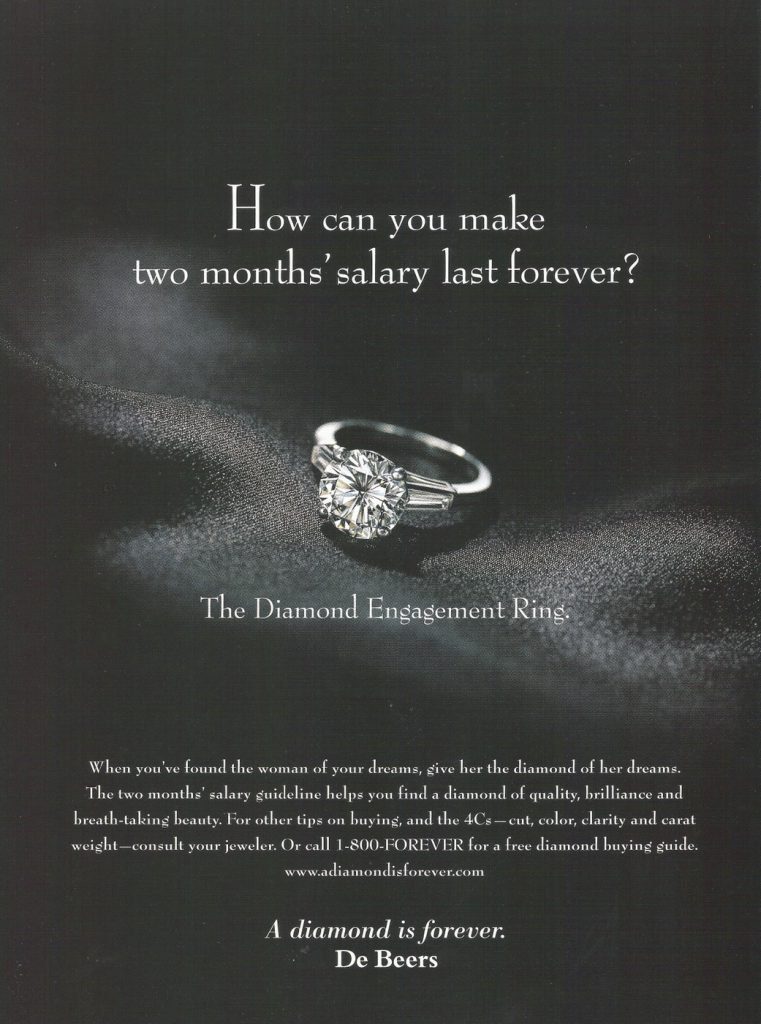
That remains our advice: choose a ring you love at a price you can afford. A salary-based spending rule is not a useful way to set your budget.
Lightbox sold lab-grown diamonds, not diamond lookalikes
Lightbox's appeal was real diamond jewelry in white, pink, and blue. A laboratory-grown diamond is not cubic zirconia or moissanite. GIA explains that natural and lab-grown diamonds have essentially the same chemical, physical, and optical properties, although specialist testing can distinguish their origin. GIA's explanation.
Our review questioned the way Lightbox emphasized the differences between natural and lab-grown stones in its marketing:
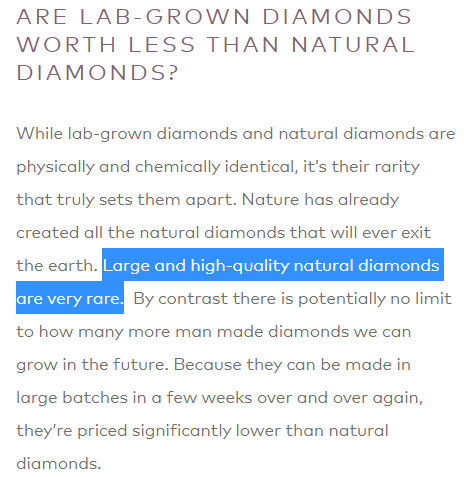
For us, the more useful comparison was the quality and price of the actual piece. Neither a natural origin nor a lab-grown label tells you how well a diamond is cut. The environmental impact also depends on how and where a diamond is produced; we would not call every lab-grown diamond automatically sustainable.
Lightbox's low-cost promise
The simple price-per-carat approach was a big part of Lightbox's identity. It suited shoppers looking for a birthday gift, everyday earrings, or a colorful pendant without learning how to choose a loose diamond.
We liked that simplicity. What we did not like was the trade-off: less control over the stone and less information for comparing it with another jeweler's diamond.
Why were Lightbox diamonds so cheap?
Lightbox sold lab-grown diamonds through a limited, easy-to-shop range. In the pieces covered by our review, shoppers chose a jewelry style and diamond options rather than selecting an individually graded stone.
Lightbox's $800-per-carat launch price was one of its defining ideas. Lab-grown diamond prices have since fallen substantially, so compare any remaining or secondhand Lightbox jewelry with current alternatives, including the metal, diamond sizes, condition and return terms. Our one-carat price guide provides a 2026 loose-diamond benchmark.
Lightbox Jewelry diamond quality
Our review covered both the standard range, described as Basic, and the higher-priced Finest collection. We welcomed the extra information about those ranges, but it did not fully solve our main concern: Lightbox was describing its own diamonds rather than supplying independent reports with the pieces we reviewed.
What did you get for the advertised price?
You could choose from the jewelry and diamond options on offer, but our shopping tests did not give us the same control as selecting a particular loose stone with its own report and video.
These were the color, clarity, and cut descriptions shown in our research:
| Lightbox's description | Basic range | Finest range |
|---|---|---|
| Color | Near colorless | Colorless |
| Clarity | VS1–VS2: very slightly included | VVS1–VVS2: very, very slightly included |
| Cut | Very Good | Excellent |
These are the specifications Lightbox published for its two collections. The pieces we reviewed did not come with independent grading reports.
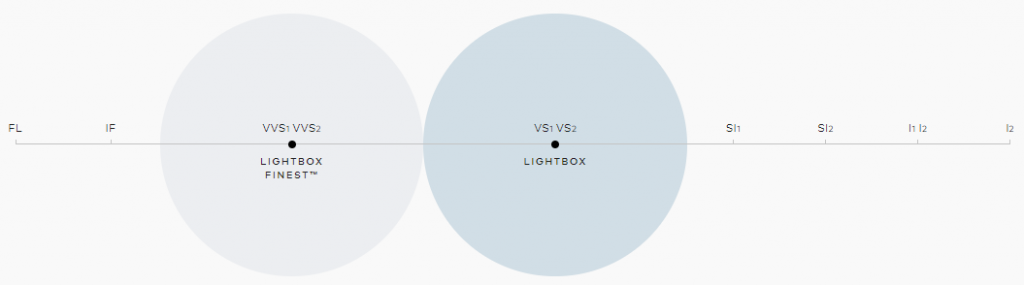
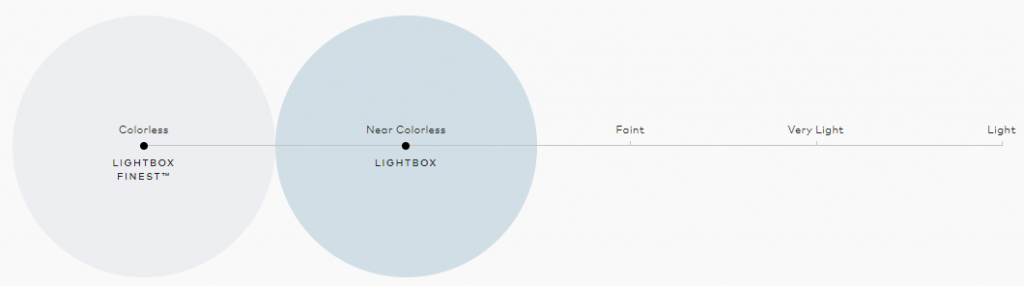
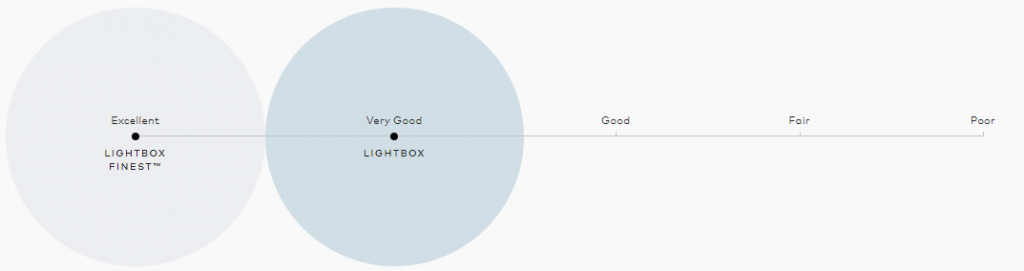
Higher color and clarity grades can look reassuring, but they are not always the best place to spend more. A diamond that looks white in its setting and has no flaws visible to the naked eye may be all you need. For a pink or blue diamond, the color you actually see is especially important.
For a white round diamond, we put more emphasis on the cut: how well its proportions and finish help it return light. Our concern was that the Basic range's “Very Good” label fell below the Excellent or Ideal labels we usually sought when comparing round diamonds.
That is a reason to look more closely, not proof that every Basic diamond was unattractive. Equally, Finest's higher label did not establish that it met another laboratory's criteria. We would want to inspect the actual diamond rather than decide from the collection name.
Lightbox Jewelry diamond certification
The jewelry we covered did not include independent grading reports for its diamonds. That mattered most for a substantial stone, where small differences in quality can affect the comparison with another seller.
A grading report is not a guarantee that you will love a diamond. It does, however, give you information assessed outside the seller's own sales description. For an engagement-ring center stone, we prefer that extra detail and the ability to inspect the diamond before buying.
Small diamonds in finished jewelry are often sold without individual reports, so the lack of one is not, by itself, proof of a bad piece. Our criticism of Lightbox was the combination of limited choice, in-house descriptions, and difficulty making a like-for-like comparison.
Lightbox Jewelry buying experience
The buying experience was one of Lightbox's strengths if you wanted an uncomplicated gift. You did not have to work through thousands of diamonds or decide between tiny differences in grades.
The same simplicity was a drawback if you wanted more control. Our shopping tests found fewer options for choosing the stone, setting, and specifications separately than at our preferred loose-diamond sellers.
The selection and filters we tested
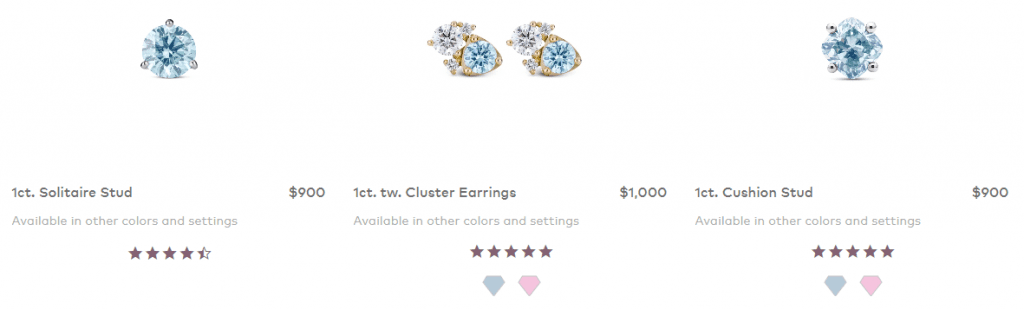
We browsed the ring and earring ranges, tried the filters, and looked for different weights and diamond colors. The ring styles we encountered leaned toward fashion jewelry rather than a broad selection of classic engagement-ring settings.
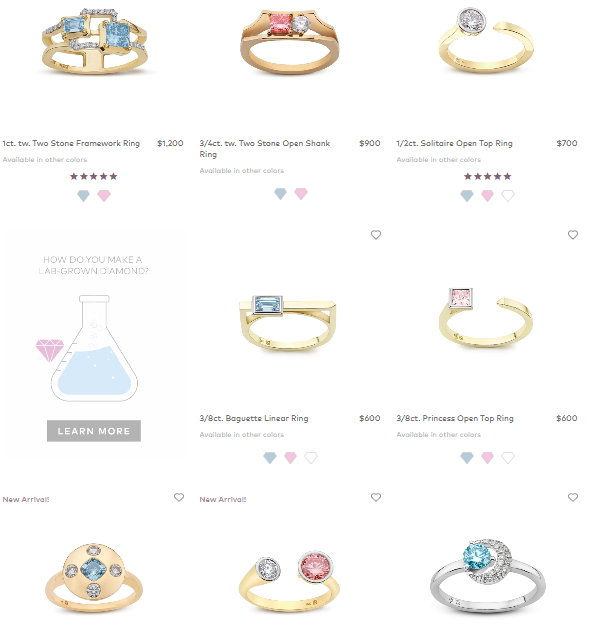
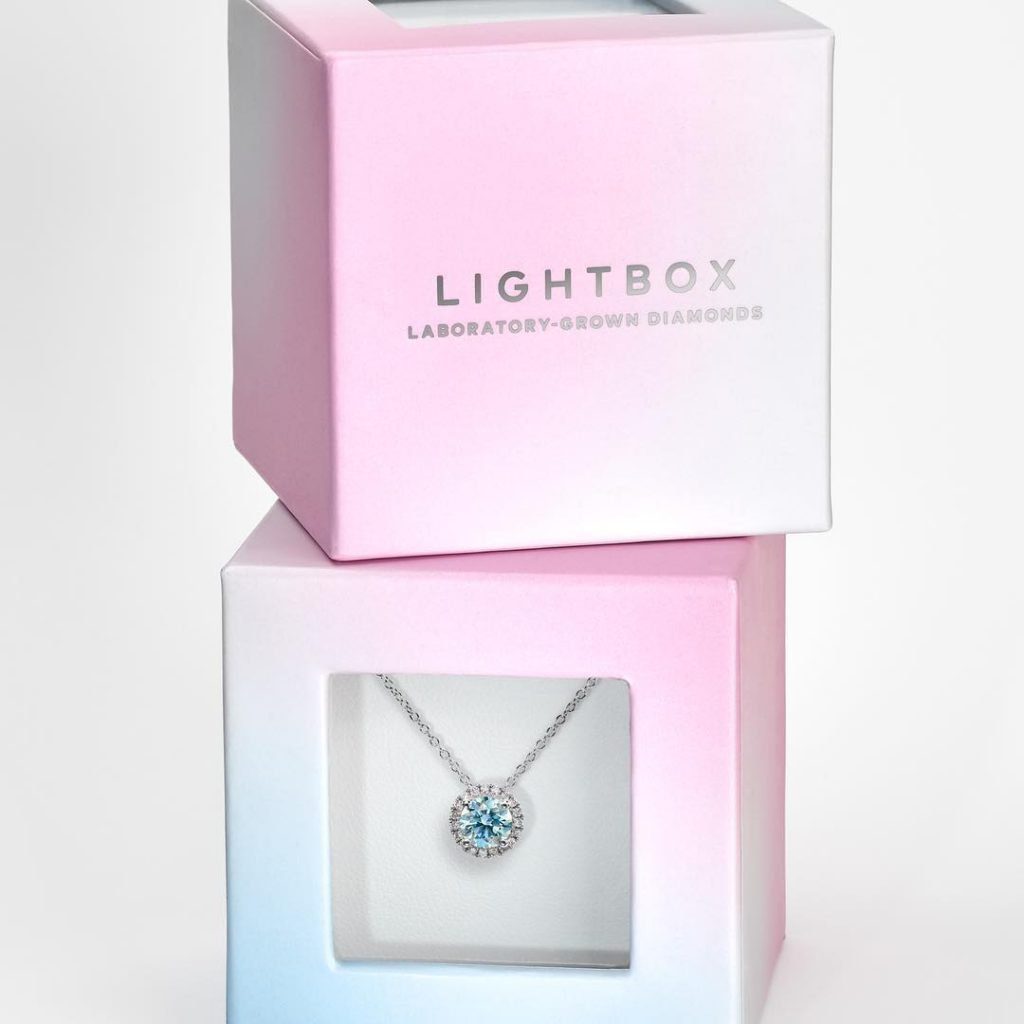
Pink and blue diamonds were a highlight. We liked the colors and found them across several jewelry styles. White-diamond availability was less consistent in the sizes we searched.
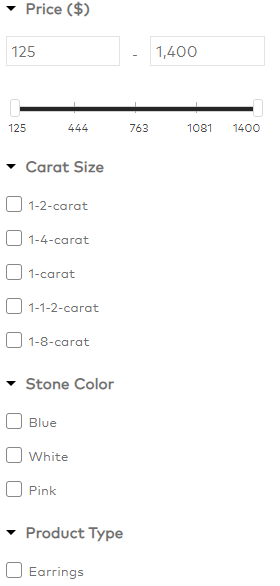
In the earring search documented in our review, the half-carat total-weight selection included some classic designs. Moving up to one carat narrowed the choice considerably, and we did not find the white-diamond option we wanted.
That is a useful detail when shopping elsewhere, too: one carat total weight in a pair of earrings usually means about half a carat per earring, not a one-carat diamond in each ear.
If you liked choosing a finished design rather than building a piece from scratch, we would start with our Grown Brilliance review. If choosing the individual diamond matters more, our Ritani review explains why it is one of our favorites.
Lightbox Jewelry customer service
Our review described sending support questions through Lightbox's available channels. Replies took anything from several hours to days, and some inquiries went unanswered. We also found the emphasis on Facebook Messenger limiting for shoppers who did not want to use a social account.
The answers we received were more useful for routine shopping questions than for choosing between diamond specifications. That fell short of the specialist help we wanted before a significant purchase.
Delivery and returns before closure
Before closure, Lightbox offered free standard shipping, charged extra for overnight delivery and accepted unworn jewelry for return within 30 days of receipt. Exchanges required a return and a separate purchase.
If another retailer is selling remaining Lightbox stock, its own return window, final-sale restrictions and repair arrangements apply.
What our readers thought about Lightbox Jewelry
A LabGrownCarats reader also shared an account of delivery problems. We present it separately from our own service experience.
A reader's delivery experience
Poor customer service
Sparkle Lover, December 10, 2023, reported a customs-clearance delay, difficulty getting help from Lightbox, and receiving a second pair of earrings that then had to be returned. The reader said resolving the situation took more than a month and involved hours on the phone with FedEx.
The account reinforces the communication concerns we found in our own support tests.
What do you think about Lightbox Jewelry?
If you already own a piece, your experience may be different from ours. The most useful things to consider are how the jewelry has worn, whether the setting remains secure, and what help you have received when you needed it.
Our final verdict on Lightbox Jewelry
Our last rating for the former Lightbox store was 2.9/5. The closure does not change our assessment of the shopping experience that Lightbox offered.
Lightbox made buying diamond jewelry easy, and we liked the appeal of its pink and blue pieces. But it was not our first choice for a carefully selected diamond. We wanted better information about the individual stone, more choice, and more consistent help.
If you own a Lightbox piece and enjoy wearing it, there is no reason to stop because the store has closed. If you are shopping now, compare current jewelers before choosing remaining Lightbox stock solely for its low-price reputation.
For a new purchase, these are the current jewelers we would compare first.
| Jeweler | Best for | Our rating | Shop |
|---|---|---|---|
| Ritani | Loose-diamond prices, selection and value | 4.7/5 | See lab-grown diamonds at Ritani |
| Grown Brilliance | Finished jewelry and distinctive designs | 4.5/5 | See at Grown Brilliance |
| Brilliant Earth | Settings, showrooms and sourcing information | 4.5/5 | See at Brilliant Earth |
How we reviewed Lightbox Jewelry
Rolf Hartmann led the review, which examined Lightbox's website, collection descriptions, shopping filters, diamond options and customer-service responses. The screenshots document the store, jewelry and advertised specifications behind our assessment.
In September 2026, we checked De Beers' closure announcement and the storefront, and added advice for existing customers and people considering remaining stock.
Our rating criteria
The assessment considered price, diamond and jewelry selection, quality information, shopping experience, customer service, environmental information, shipping, and returns. The final 2.9/5 is our editorial rating of the former store, not a customer-review score.
The experience behind this review
LabGrownCarats began with our own search for lab-grown diamond jewelry. We have since compared sellers, bought jewelry, and tested shopping and return experiences across the site. Our Lightbox assessment draws on the collection, shopping tools and service research described above. The contributor profiles below explain who worked on the review.
Our editorial approach
We recommend jewelers for specific reasons, such as price, design, or help choosing a stone. Our Lightbox verdict remains less positive than our verdicts on the alternatives above. A familiar brand name is not enough to earn our recommendation.
Questions and experiences
Join the discussion
Ask a question or share your experience. We review comments before publishing them.