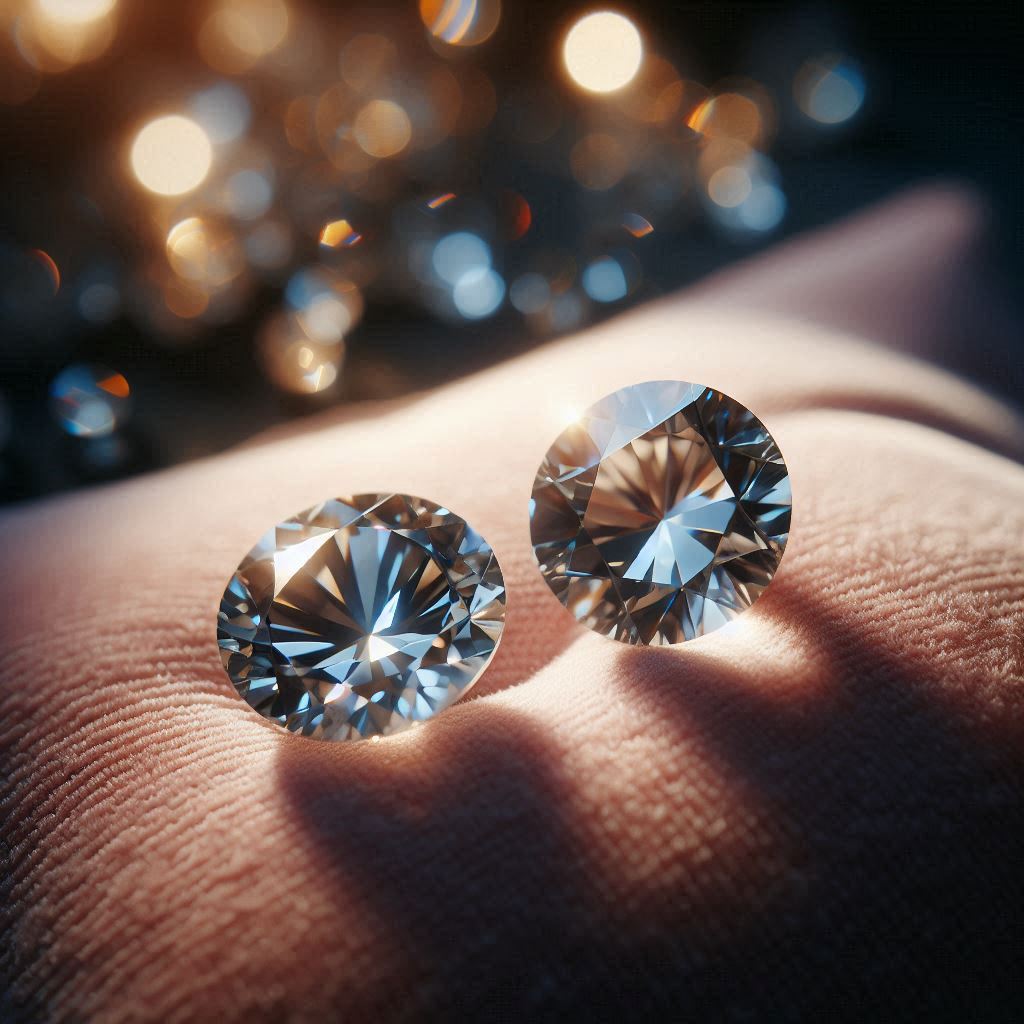





A lab-grown diamond is a real diamond. Cubic zirconia is a different material made to look like one. Both can sparkle beautifully, but they suit different purchases. We prefer lab-grown diamonds for an engagement ring worn every day. Cubic zirconia makes sense for inexpensive fashion jewelry or a temporary ring.
The choice is about more than the first impression in a product photograph. Consider how often you will wear the piece, how well it will resist scratches and how much you want to spend.
The main differences at a glance
| What matters | Lab-grown diamond | Cubic zirconia |
|---|---|---|
| Is it diamond? | Yes, crystalline carbon | No, zirconium dioxide |
| Scratch resistance | 10 on the Mohs scale | About 8–8.5 on the Mohs scale |
| Appearance | Diamond's balance of white sparkle and colored flashes | More colorful flashes, with a different optical character |
| Everyday wear | Our preference for a lasting engagement ring | More likely to show surface wear over time |
| Cost | Much less than mined diamond, but more than CZ | The lowest-cost option of the two |
| Identification | A jeweler can test the material; origin needs further checks | Can be separated from diamond with suitable testing |
For a longer explanation of weight, structure and optical differences, see our detailed lab-grown diamond and cubic zirconia comparison.
Cubic zirconia: the affordable diamond simulant
Cubic zirconia, usually shortened to CZ, is made from zirconium dioxide. A simulant imitates another gemstone's appearance without being that gemstone. Lab-grown diamond is not another name for CZ.
CZ is hard enough for many jewelry uses. It is less resistant to scratching than diamond, however, which matters most in a ring that regularly brushes against other objects. Earrings and pendants usually face less of that contact.
Surface wear can reduce CZ's shine over time. Dirt can also dull either stone, so a cloudy appearance alone does not identify the material. Diamond keeps its resistance to scratching, but a hard knock can still chip it. Neither material makes a ring indestructible.
CZ can be attractive, especially when a low price or a large look is the priority. You do not need to dismiss it as poor jewelry to recognize that it is not diamond. GIA's guide to imitation gems explains the distinction and CZ's different optical properties.
Lab-grown diamonds: real diamond at a lower price
Lab-grown and mined diamonds share the same essential carbon crystal structure and diamond properties. One grows in controlled conditions; the other forms naturally within the earth. Both are real diamonds, as GIA explains in its laboratory-grown diamond Q&A.
The saving is a major reason we recommend lab-grown diamonds for engagement rings. Savings around 60–80% compared with mined diamonds are possible, depending on the grades and seller. Our lab-grown and mined diamond price comparison explains the difference. You can put that saving toward a better cut, a larger stone, a setting you love or simply a smaller bill.
Do not confuse a lower price with every lab-grown stone having the same quality. Cut, color, clarity and carat weight still affect appearance and price. We would choose a well-cut diamond that looks bright and clean rather than pay for a high grade that makes no visible difference.
Growing a diamond avoids mining that stone and the associated excavation. Renewable or low-carbon electricity strengthens the environmental benefit; the grower's energy use and the setting's materials also matter.
Our engagement-ring buying guide covers choosing the stone and setting together. For the budget, compare the diamond, metal and setting costs in our lab-grown engagement-ring cost guide.
Lab-grown diamonds vs. cubic zirconia FAQs
Are lab-grown diamonds better than cubic zirconia?
For long-term daily wear, we would choose lab-grown diamond. It offers greater resistance to scratching and diamond's lasting optical character. CZ's advantage is its much lower initial price, which can be useful for occasional jewelry or a travel ring.
Are cubic zirconia and lab-grown diamonds alike?
They can look similar, particularly in small stones or photographs. They are not the same substance. Lab-grown diamonds are crystalline carbon; CZ is zirconium dioxide. That difference affects hardness, weight, light performance and how they respond to testing.
How do you tell the difference between cubic zirconia and a lab-created diamond?
A gemologist can compare optical properties, density and heat conduction. In plain language, these tests examine how the stone bends light, how much it weighs for its size and how quickly it transfers heat.
Colored flashes or surface wear may give a visual clue, but neither is a reliable home test. Ask a jeweler to identify the material rather than trying to scratch it or exposing jewelry to heat.
Can jewelers tell the difference between lab-grown diamonds and cubic zirconia?
Yes. A properly equipped jeweler can usually separate diamond from CZ using routine gemological tests. That is different from telling a lab-grown diamond from a mined one. GIA says confirming diamond origin requires advanced testing, not simply looking at the stone.
Do lab-grown diamonds pass a diamond tester?
Yes, a thermal diamond tester normally identifies a lab-grown diamond as diamond. It measures heat conduction, not whether the diamond grew in the earth or a laboratory.
Some electrical or combined testers can misread certain lab-grown diamonds as moissanite. An unexpected handheld result needs follow-up, not an immediate conclusion that the stone is fake. IGI explains the differences between handheld testers.
Does cubic zirconia pass a diamond tester?
Normally, no. A correctly used thermal tester can distinguish CZ from diamond because CZ transfers heat differently. A handheld result is one part of identification, not proof of a stone's origin or quality.
Our choice: for an engagement ring or a piece you want to wear often for years, lab-grown diamond gives you real diamond without the mined-diamond price. Choose CZ when a very low purchase price matters more than lasting scratch resistance.
Questions and experiences
Join the discussion
Ask a question or share your experience. We review comments before publishing them.