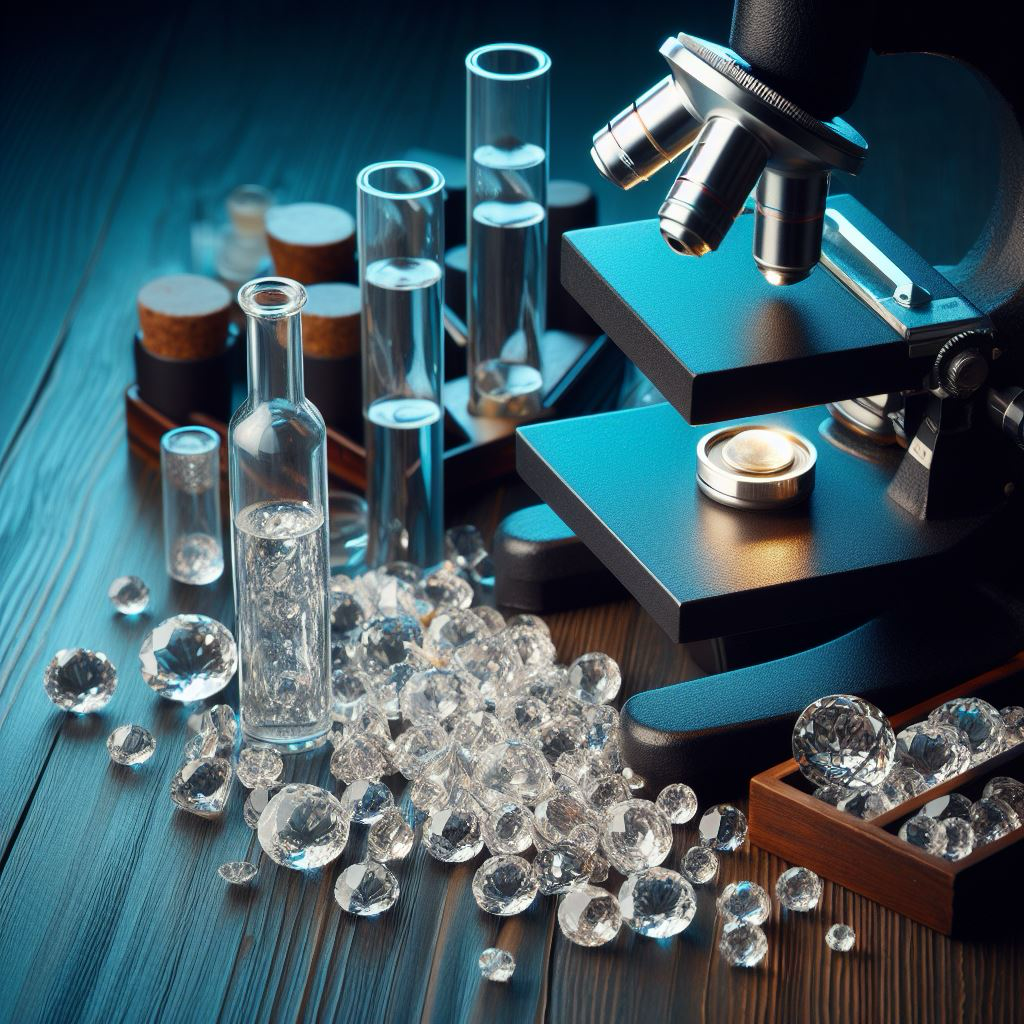





“Synthetic diamond” is another name for a laboratory-grown diamond. For jewelry, lab-grown is the more familiar term; it does not mean cubic zirconia, moissanite, or another imitation.
The price depends on carat weight, cut, color, clarity, shape, grading report, and seller. Current qualifying loose-diamond ranges from our 2026 price guides are:
| Carat weight | Observed price range | Typical price in our comparison | Detailed guide |
|---|---|---|---|
| 0.5 carats | $162–$595 | About $352 | Half-carat prices |
| 0.75 carats | $207–$743 | About $475 | 0.75-carat prices |
| 1 carat | $247–$1,204 | About $606 | One-carat prices |
| 1.5 carats | $365–$1,206 | About $970 | 1.5-carat prices |
| 2 carats | $520–$2,100 | About $1,063 | Two-carat prices |
| 3 carats | $773–$3,980 | About $2,745 | Three-carat prices |
These are loose-diamond prices before a setting. They reflect qualifying stones in our comparisons, not every diamond listed at each weight.
We build these comparisons from current seller catalog and API data, using defined carat, shape, color, clarity and grading-laboratory rules. That prevents a very low-grade stone from being compared with a much stronger one simply because they share the same carat weight. The detailed guides show the qualifying sample and collection date.
Even with the decreasing prices of synthetic diamonds, purchasing any diamond is a significant investment. Understanding how to find the best lab-grown diamonds and where to get the best value for your money is critical. That’s why we’ve created several guides to assist our readers.
We recommend starting by reading these popular articles:
- Guide to Buying a Lab-Grown Diamond – Top Tips to Saving and Getting a Better Diamond!
- 10 Tips to Save money on a Lab-Grown Diamond Engagement Ring
- Guide to the best places to buy lab-grown diamonds
- Our list of the best jewelers for lab-created engagement rings
Before comparing prices, define the grades you actually need. Paying more does not help if the difference is visible only on the grading report.
What are synthetic diamonds?
Diamonds created in a laboratory are known as synthetic, laboratory-grown or lab-created diamonds. They have the same carbon crystal structure as mined diamonds, but a different origin. They should not be confused with imitations such as cubic zirconia or moissanite.
Synthetic diamonds, also known as lab-grown or lab-created diamonds, have the same carbon crystal structure and broadly the same physical and optical properties as mined diamonds. Their origin, supply chain, market price, and resale market differ.
Synthetic diamonds are 60-80% cheaper than mined diamonds. That means you can save or buy better and bigger diamonds with the same budget.
But there are more benefits to lab-grown diamonds.
Lab diamonds are more:
- Free from the conflict risks attached to mining and trading rough diamonds.
- Able to make a strong environmental case when grown using renewable electricity, while avoiding the local land, water, and community effects of mining.
Understanding synthetic diamond prices
The 4Cs are the first thing you should learn about lab-created diamonds. We recommend starting with our easy-to-read guide to the 4Cs of synthetic diamonds. However, you can skip ahead if you are in a hurry or want to know how much you will have to pay for a synthetic diamond.
In short, the (synthetic) diamond 4Cs are:
Consider these three things when shopping for a synthetic diamond if you need a quick diamond-buying refresher.
- Sparkle depends primarily on cut and proportions. Do not buy a larger brilliant-shaped diamond with poor light performance simply to reach a target carat weight. Prioritize cut, then balance color, clarity, and size.
- Balance quality and size. A well-cut brilliant diamond can look brighter than a heavier stone with weak light performance. Prioritize cut and visual appearance, then choose color, clarity and carat weight around your budget.
- If possible, choose a synthetic diamond with a weight slightly lower than the popular “round” weights. For example, choose a 0.96-carat lab diamond over a 1.0-carat lab diamond. Avoiding round weights can save you a lot of money, and the best part is that no one will notice.
Now that you understand why synthetic diamond costs fluctuate let’s compare pricing for various synthetic diamond carats. We regularly collect and update synthetic diamond prices from the leading online diamond jewelers.
Using a reference diamond, we compare the pricing of synthetic diamonds. A round brilliant-cut lab-grown diamond with the 4C grades we suggest for most lab diamonds serves as the reference synthetic diamond. They are as follows:
- [Carat weights](/lab-grown-diamond-carats/): 0.5 to 6.0 (plus-minus a little)
- [Cut grade](/lab-grown-diamond-cut/): Excellent or Ideal (whichever is the best, depending on the laboratory)
- [Color grade](/lab-grown-diamond-color/): E in our controlled price tables; many buyers can save by starting around G–H
- [Clarity grade](/lab-grown-diamond-clarity/): VVS2 in our controlled tables; VS1–VS2 is often a more economical starting point for an individual purchase
- [Shape](/lab-grown-diamond-shapes/): Round Brilliant
- [Origin](/what-you-need-to-know/): Lab-created
Our reference diamond may not be the best for every jewelry necessity, but it is what we propose for the most common lab diamond jewelry demands. Expect to pay more for higher-grade synthetic diamonds and less if you relax them. Just be careful not to reduce the diamond cut grade!
Synthetic diamond prices
The price table above combines qualifying examples from the sellers covered in our detailed guides. Seller prices can differ substantially for similar report grades, so compare the exact diamond, video and complete ring cost rather than assuming one retailer is always cheapest. A large catalog can still be useful for a second comparison; our Brilliance.com review explains why we would check its individual listings and return conditions rather than infer value from inventory size alone.
Prices and inventories change frequently. The linked carat guides show the collection date, qualifying sample, and seller-level results.
Why you should choose a synthetic diamond
To begin with, lab-grown diamonds are up to 60-80% less expensive than mined counterparts with identical diamond 4C grades. And if you’re lucky, you might be able to save even more money during lab diamond sales. We monitor the market closely and are the first to know when diamond retailers announce specials or sales.
Lower prices are not the only reason to consider a lab-grown diamond. They avoid diamond mining and its local land, water, labor and community risks. Their environmental advantage is strongest when production uses renewable electricity, so energy sourcing still matters. You can explore those issues in the following articles:
- Why lab-grown diamonds are the sustainable, environmentally, and ethical diamond choice
- What you need to know before buying a lab-grown diamond
Sustainability and price
Do not assume that a higher price proves a smaller environmental footprint. Lab-grown production requires substantial electricity, so the growth facility’s energy source matters. Renewable energy and transparent sourcing strengthen the environmental case; recycled precious metals and responsible setting production matter too.
Compare the evidence behind each brand’s claim. Our Brilliant Earth review, VRAI review, and Pandora diamond review explain their different approaches.
Where to buy synthetic diamonds and synthetic diamond jewelry
Start with sellers that show the exact diamond, provide its grading report and make it easy to compare measurements and prices. Our ratings also consider the complete buying experience, jewelry quality, service and return terms.
| Jeweler | Best for | Our rating | Compare diamonds |
|---|---|---|---|
| Ritani | Low loose-diamond prices, selection and value | 4.7/5 | See at Ritani |
| Blue Nile | A polished buying experience and the James Allen collection | 4.6/5 | See at Blue Nile |
| Grown Brilliance | Finished jewelry and distinctive ring designs | 4.5/5 | See at Grown Brilliance |
| With Clarity | Custom engagement rings and guided design | 4.5/5 | See at With Clarity |
| Brilliant Earth | Premium settings and showroom support | 4.5/5 | See at Brilliant Earth |
In-depth synthetic diamond price guides
We compile and list prices for the most popular lab-grown diamond carat weights. Compare synthetic diamonds in our detailed guides below.
- Prices for a ½-carat lab diamond
- Prices for a 3/4-carat lab diamond
- Prices for a 1-carat lab diamond
- Prices for a 1.5-carat lab diamond
- Prices for a 2-carat lab diamond
- Prices for a 3-carat lab diamond
- Prices for a 4-carat lab diamond
- Prices for a 5-carat lab diamond
- Prices for a 6-carat lab diamond
- Prices for a lab diamond engagement ring
- Prices for lab diamond earrings
Questions and experiences
Join the discussion
Ask a question or share your experience. We review comments before publishing them.