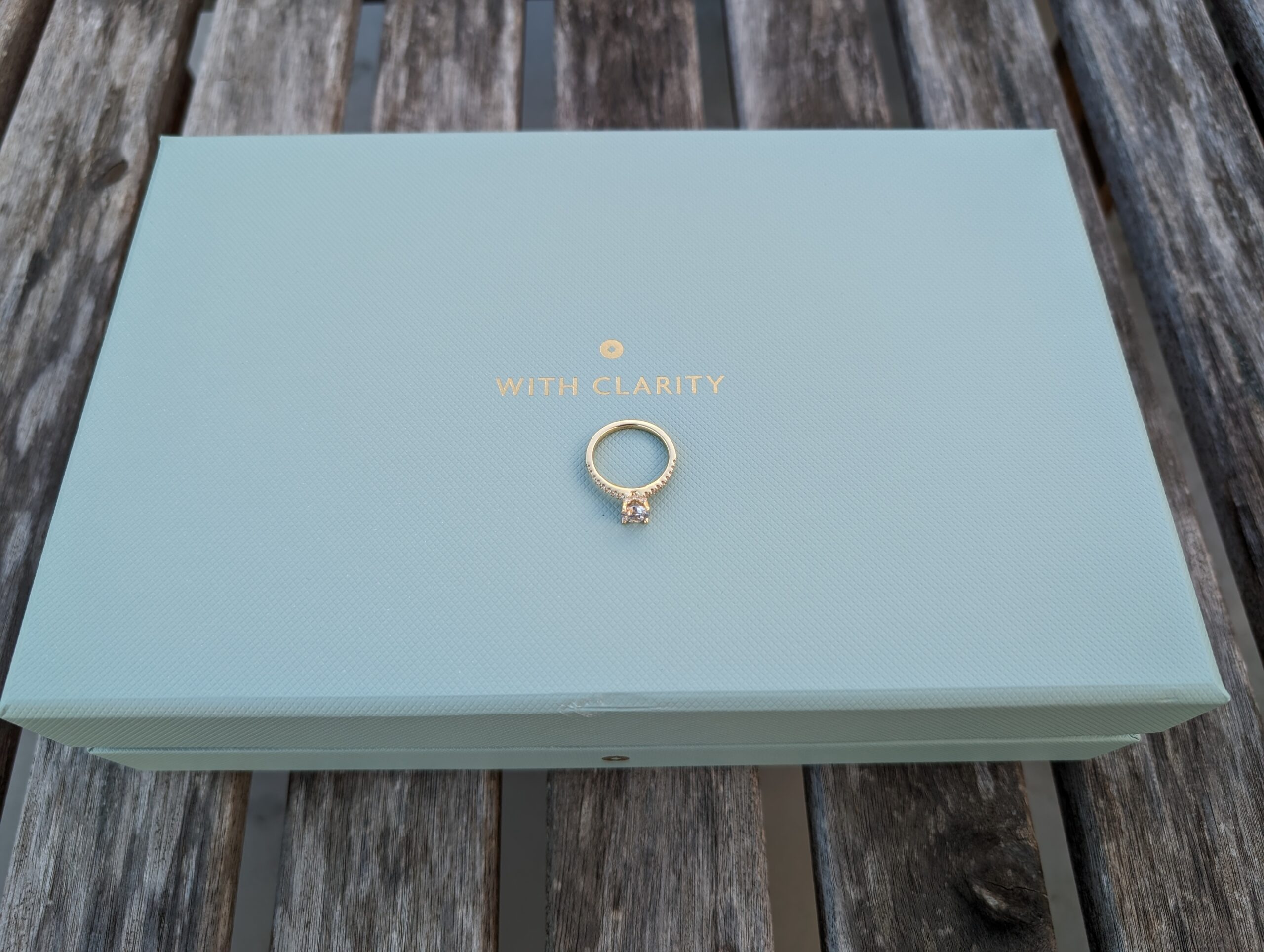





Open a diamond jewelry gift when it arrives, rather than leaving the parcel sealed until the celebration. Check that it matches your order, that the setting and fastenings look sound, and that the documents are present. That leaves time to sort out a wrong size, missing item or visible fault before you wrap it.
Our purchases from Ritani, Grown Brilliance and With Clarity have given us jewelry, packaging and grading documents to compare in person. The checklist below turns those practical checks into a simple arrival routine.
The five-minute arrival check
Use a clear table, good light and a soft cloth or tray so a small earring back cannot roll away. Keep the shipping label and paperwork to one side.
| Check | What you want to see | If something is wrong |
|---|---|---|
| Order details | Correct design, metal, size and diamond specifications | Photograph the item and order confirmation; ask the seller to resolve the mismatch |
| Number of pieces | Both earrings, all backs, the correct chain and included accessories | Leave the packaging intact and report missing parts promptly |
| Setting and finish | Even-looking settings, no obvious bent prongs, rough edges or loose stones | Stop handling or trying on the piece and ask for inspection or replacement |
| Fastenings | Earring backs and clasps that close as intended without force | Ask for help rather than bending or tightening the mechanism yourself |
| Documents | The reports, receipts and care or warranty information promised with the order | Ask the seller for the missing document before the return deadline |
A good result should feel reassuring: the piece looks like what you chose, the parts work together, and the records match the purchase. These checks cover what you can see and use before wrapping the gift.
1. Compare the piece with your order
Check the metal and color first, then the item’s size and dimensions. A white-gold design can look similar to platinum in a photograph, so compare the order description and any markings rather than guessing from color alone.
Read diamond weights carefully. One carat total weight in a two-stone pair of studs usually means about half a carat per ear, not one carat in each earring. A necklace or bracelet total includes all its diamonds. Match the wording of your invoice instead of comparing that total with a single center stone.
For a custom ring, compare the chosen setting, center-diamond shape and metal with your confirmation. We ordered a 1.11-carat round lab-grown diamond in With Clarity’s yellow-gold Chevron Hidden Halo setting. Those specific choices gave us a useful reference when the ring arrived; its neat prongs, even hidden halo and polish were part of our positive assessment.
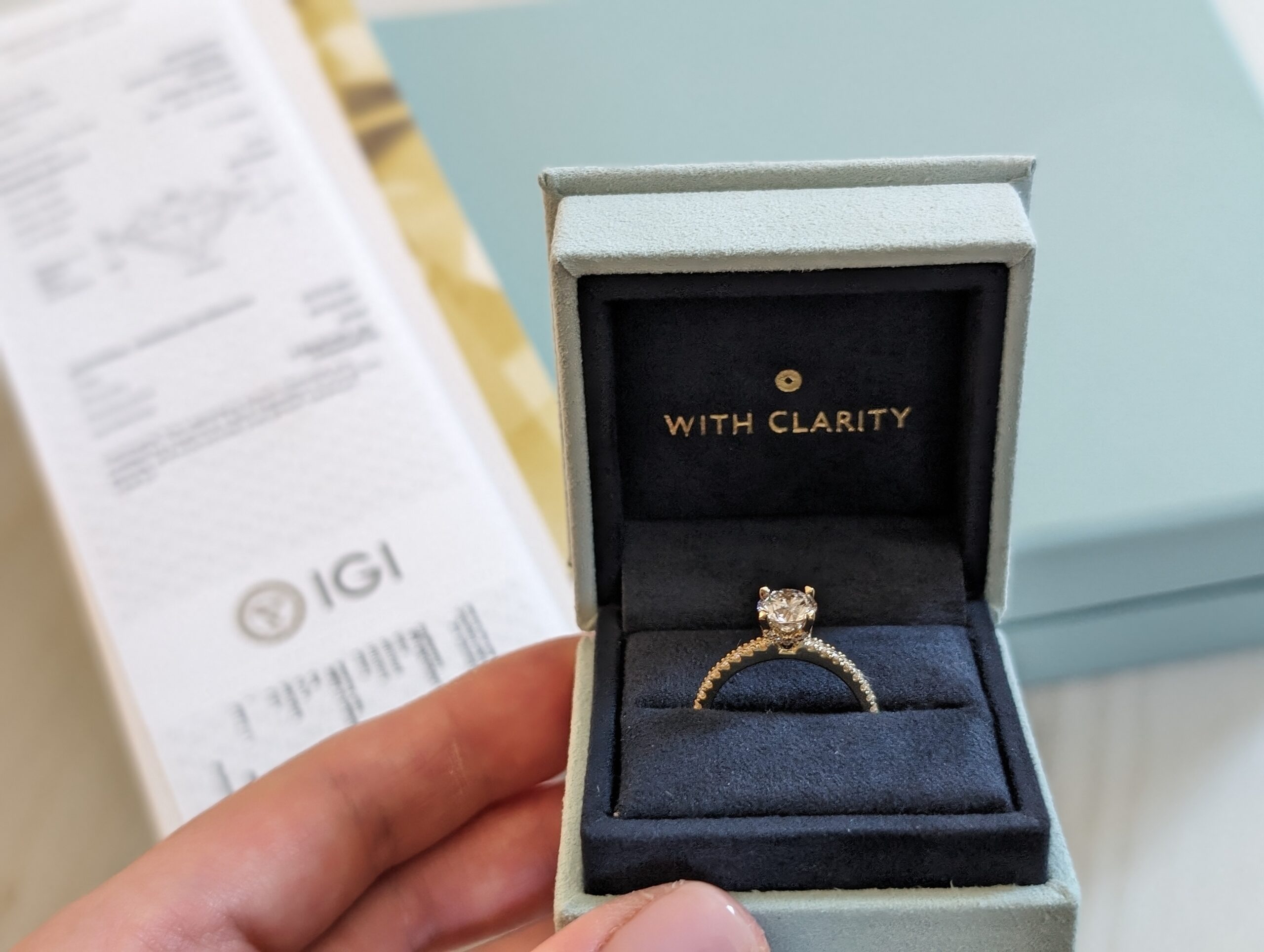
See our With Clarity review for the purchase and photographs. The same order-to-item comparison is useful for a simple pendant or pair of studs.
2. Look at the setting and finish
First look at the jewelry at normal viewing distance. Turn it slowly in daylight or even room light. Check the front, sides and back for an obviously crooked setting, a missing accent stone, a bent prong or a rough edge.
Sparkle changes with lighting. A diamond that looks lively under spotlights will look different in soft indoor light; that difference alone does not show a fault. For a pair of studs, compare them beside each other in the same light. You want a pleasing match in visible size, color and overall appearance, rather than identical flashes from every angle.
A magnifier can help you show a concern to the seller, but an enlarged photograph makes tiny details look much bigger. Start with whether the issue is visible or affects how the piece sits and works.
GIA identifies gaps and damaged prongs as warning signs worth inspecting. If you see movement or suspect a loose stone, do not shake the piece, push on the diamond or try to tighten the setting. Send the seller a clear photograph and ask for the next step. GIA’s setting-care advice.
3. Check the fastening for this type of jewelry
Earrings
Make sure both posts and all the supplied backs are present. Check that the backs fit their intended posts. Screw backs should thread without being forced; friction backs should grip as intended. If you are unsure how a locking back opens, ask the seller before experimenting.
Look at a stud from the side as well as the front. A larger setting can sit differently on the ear, and a backing that feels secure can still be awkward for its wearer. For a gift, check the parts without wearing the earrings yourself.
Necklaces and pendants
Close and open the clasp gently. Check that the pendant and chain are the versions you ordered and that the chain runs freely through the pendant if that design is meant to move. Lay an adjustable chain beside a ruler to check its usable lengths without pulling it tight.
A fixed pendant is not necessarily faulty because it cannot be removed from its chain. Some designs are made that way. Compare the listing before treating a design feature as a problem.
Bracelets and rings
For a bracelet, check the main clasp and any safety catches. Move the bracelet gently through its normal curve; do not bend a rigid piece to make it fit. Compare the listed length with the recipient’s fit needs.
For a ring, compare the ordered size and design. A full eternity band or unusual setting may have limited resizing options. If the fit seems wrong, contact the seller before having another jeweler alter it.
4. Match the paperwork
If the purchase includes an individual grading report, compare its number and listed diamond details with the order. Use the grading laboratory’s own report-check service when you want to verify a report. A printed appraisal is a different document from a diamond grading report.
A center diamond may have its own report while small accents are described by the seller’s stated grade range. Check what was promised for your piece rather than assuming every tiny diamond needs a separate report. If a document or origin description is unclear, ask the seller to explain it in writing.
Keep reports away from wrapping paper that may be thrown out. Missing reports can create extra costs on a return. Our grading and certification guide explains the documents in more detail.
5. Photograph concerns and keep the gift unworn
If the piece looks right, keep it protected in its box until you give it. If something needs attention, take one photograph of the whole item and another showing the concern. Include the order number, a short description and the date it arrived when you contact the seller.
A useful message is:
My order arrived today. The clasp does not close securely / the item differs from my order in this way: ____. I have attached photographs. Should I return it for inspection or replacement, and will the original return window remain open while this is resolved?
For damaged outer packaging or missing contents, keep the carton, label and packing material as well as the jewelry box. Follow the seller’s instructions before posting anything back.
Our gift-return comparison explains why the date matters, especially for an early Christmas purchase. After the recipient decides to keep the gift, our care and cleaning guide covers longer-term maintenance.
Questions and experiences
Join the discussion
Ask a question or share your experience. We review comments before publishing them.