In this comparison
Start at Ritani if you want to build a loose-diamond shortlist and understand what goes into the price. Include Rare Carat if you find a diamond you like and want to look it up by report number, or if you want a second quote for a simple solitaire. Both give you ways to choose an individual stone and build a ring around it.
The most useful thing I found was a report number that appeared on both sites. I could trace the stone in my Rare Carat cart to an indexed Ritani listing, but could not confirm that the Ritani offer was still available. That makes it a good example of how to compare two listings and where to stop before calling one a saving.
Read our Rare Carat review Read our Ritani review
Rare Carat vs. Ritani at a glance
| What matters to you | Rare Carat | Ritani |
|---|---|---|
| Our editorial review rating | 4.0/5 | 4.7/5 |
| Where to start | Search for a specific report number and build a sample ring | Search a broad loose-diamond catalog and look at the price breakdown |
| What we did | Checked listings, compared report numbers and built a sample cart | Bought a finished solitaire, then revisited the search, report and cart tools |
| What you can compare | A qualifying live offer for the same stone can be considered for a price match | The price breakdown shows the stone cost, fulfillment and markup |
| What to confirm | Availability, price-match eligibility and the completed price | Whether the listing has a working report link, exact-stone media and the ring terms you expect |
Rare Carat’s rating covers online shopping and published terms. The Ritani rating includes a finished ring purchase and broader experience with the seller. The scores reflect those different sets of evidence.
Start with the report number
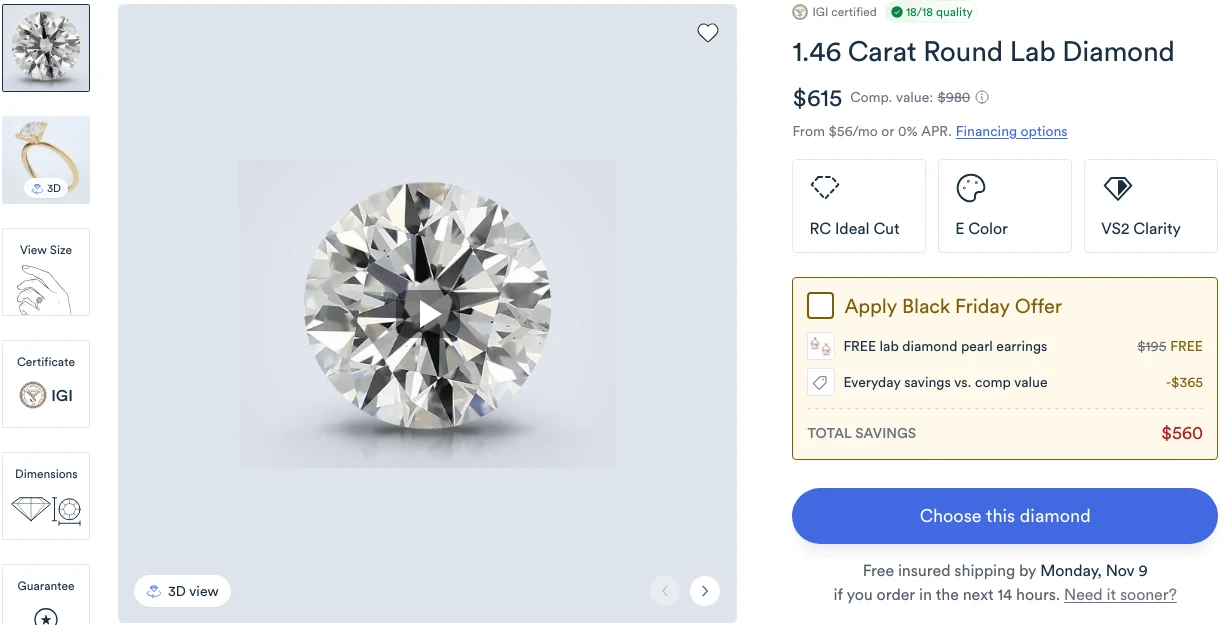
In my Rare Carat check, the $615 round had IGI report LG811691990. I found the same number on an indexed Ritani listing. The number was a stronger clue than the shared E color and VS2 clarity. I could not verify that the Ritani listing was still available to order, so I used it as a lead and stopped short of a price-match request.
If you see the same number, open both product pages and confirm that they refer to the same lab and document. Check the measurements and make sure the quoted price applies to the exact stone. Then ask both sellers to confirm availability. A supplier listing can remain in a search result after the diamond has gone.
Rare Carat’s published policy requires the same report number, an eligible competing price and proof of availability. Ask before buying and keep the links. A second E/VS2 round with a different report can be a better choice on its own merits, but it is a separate comparison. Rare Carat’s price-match terms
What Ritani’s price breakdown tells you
Ritani says it sources diamonds from wholesale suppliers and shows its diamond cost, fulfillment and markup on individual listings. I like being able to see the components, particularly when another page puts a large savings figure next to a comparison value. The amount that matters for your budget is the payable price of an available stone. Use the breakdown to understand that figure. Ritani’s price transparency page
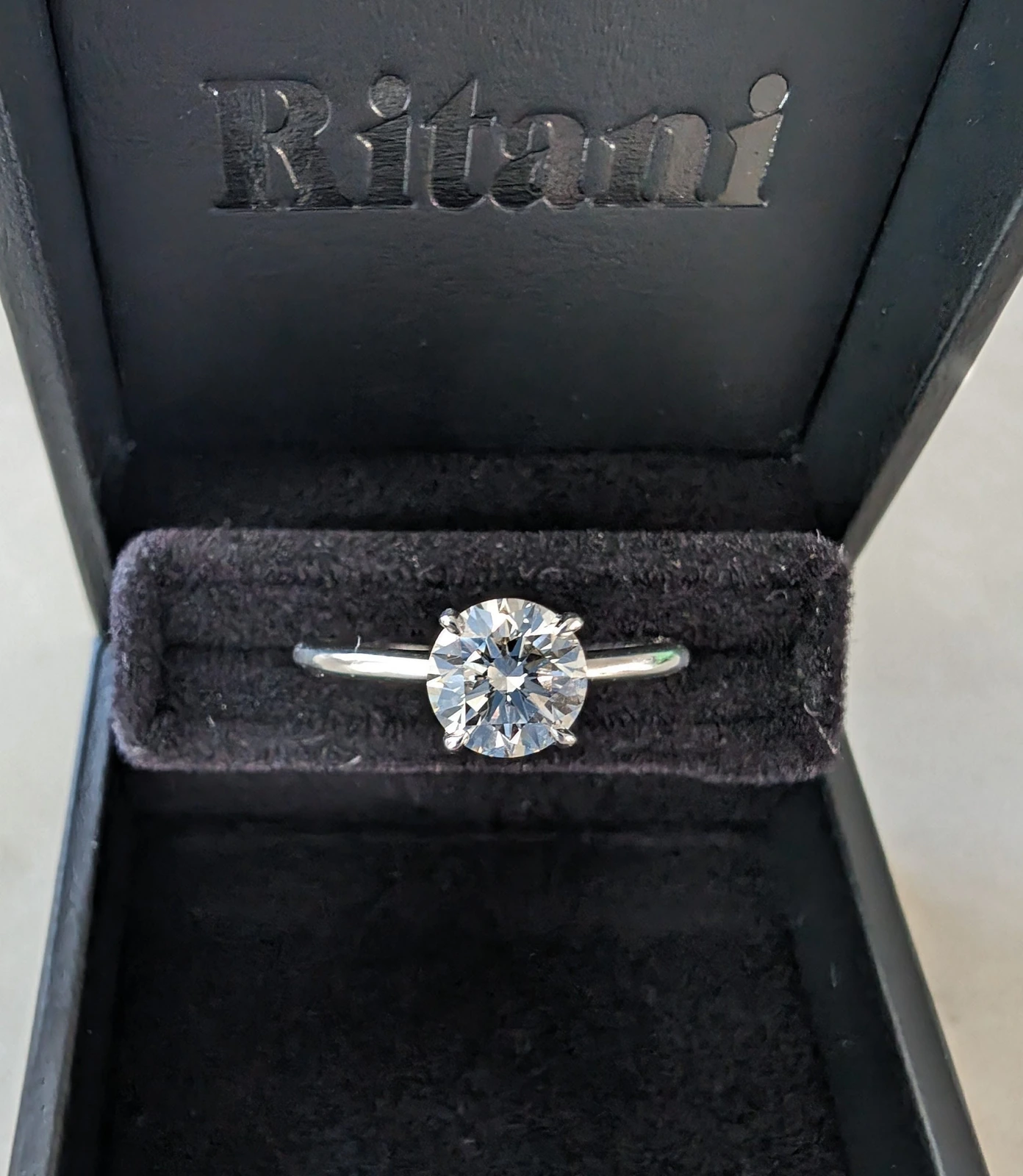
We bought a 1.15-carat round lab-grown diamond in a solitaire from Ritani. The finished ring arrived with its report. In later online checks, some report fields were blank or mislabeled, so I would open the actual document before ordering. I would also confirm the date for the assembled ring. A supplier has to provide the stone before the ring can be finished.
What the Rare Carat cart told me
I started with rounds from 1.45 to 1.60 carats and found four selectable E/VS2 stones from $615 to $790. Two other stones I reached through indexed listings were unavailable. Starting inside Rare Carat’s live search gave me better options. I would keep a second diamond in mind until the seller confirms the first.
I chose the 1.46-carat round and added the Linda Comfort-Fit solitaire in 14K white gold. The cart showed the two prices separately. A slim 1.5 mm band was a good starting point for my sample, but if you prefer more width, ask for that exact setting price before deciding how much to put toward the diamond.
Compare the finished ring prices
| What we priced or bought | What it cost | What the figure covers |
|---|---|---|
| Rare Carat 1.46 ct E/VS2 round | $615 | Loose-diamond price from November 7, 2026 |
| Rare Carat Linda Comfort-Fit setting | $600 | 14K white-gold solitaire |
| Rare Carat completed sample cart | $1,215 | Cart estimate before tax with free shipping shown |
| Ritani 1.15 ct round solitaire | Under $1,000 | Our earlier purchase of a different stone and setting |
The Ritani purchase gives us firsthand evidence about one finished ring. The Rare Carat cart gives us an estimate for a different order. To get a price difference you can act on, ask both jewelers to quote the same report number if the stone is available through both. Then add settings you would actually wear.
If there is no shared report, compare two individual stones of similar shape and face-up size. Review the reports, then watch the videos. A lower price may be an easy choice if the cheaper stone looks good and fits the setting you want. If the other setting suits you better, put the difference in the context of the whole ring.
What to put on each quote
Write down the report number, the setting name and metal, the price to assemble the ring, tax and the estimated delivery date. Ask whether a quoted discount applies to the stone or the setting and how long the quote holds. If you are still choosing a ring size, check the cost of resizing and how that affects your ability to return the piece.
Returns and resizing
Both retailers publish a standard 30-day window from shipment for eligible US orders. Check the deadline and exclusions for your exact purchase. Rare Carat excludes items sent in for resizing. Ritani describes exclusions for some altered, special or personalized items. Keep the grading report and original packaging until you decide to keep the ring. Rare Carat returns · Ritani returns
Which jeweler would I choose?
For a loose diamond, I would start at Ritani and compare the reports and actual-stone media for a few candidates. If the same report appears at Rare Carat, get a live quote there as well. For a ring, choose the two settings you like first and compare the full orders. I would give more weight to a setting I want to wear and a price I can confirm than to the largest advertised discount.
Frequently asked questions
Do Rare Carat and Ritani sell the same diamonds?
Some listings can share a grading report number. Check the laboratory, report number and availability for the specific stone.
Will Rare Carat match a Ritani price?
Ask about the exact offer before you order. Rare Carat requires the same report number and an eligible, available competing listing.
Can I get a complete engagement ring from both?
Yes. We built a sample Rare Carat cart with a diamond and setting, and we bought a completed solitaire from Ritani. Ask which mounts fit your exact stone and when the completed ring can ship.
How we compared the two
We used our Rare Carat listing and cart checks, the archived indexed result for the shared report number, our finished Ritani purchase and subsequent shopping checks. We did not confirm a live price match. The full evidence is in the Rare Carat review and Ritani review.
Questions and experiences
Join the discussion
Ask a question or share your experience. We review comments before publishing them.